Iurii RoguliaIurii Rogulia
AboutServicesPricingProjectsStackReviewsPhrasesBlog
Contact
Iuriiย ships.

Iurii Rogulia, IT partner for business & fractional CTO. Professionally building software since 2001.

Think of a number
PricingQuality checklistPrivacy PolicyCookie Policy

Business

TMI Iurii Rogulia
VAT ID: FI29845875
DUNS: 368664211
Lappeenranta, Finland ๐Ÿ‡ซ๐Ÿ‡ฎ

[email protected]
  1. Home
  2. /
  3. Blog
  4. /
  5. Fractional IT Partner vs In-House IT Department: Cost Breakdown

Iuriiย Advises: Fractional IT Partner vs In-House IT Department: Cost Breakdown

One IT Person Instead of a Department

March 30, 2026ยท 5 min read

Fractional IT partner vs in-house IT department: most growing businesses don't need a full team. One experienced partner covers the same scope for less.

Topics

BusinessIT StrategyAutomationCTO
Fractional IT Partner vs In-House IT Department: Cost Breakdown

On this page

  • What a Single Experienced IT Partner Covers
  • What a Solo IT Partner Cannot Replace
  • The Cost Math
  • Who This Actually Works For

"We need to hire an IT team."

I hear this from companies between 30 and 150 employees. Usually they're wrong โ€” not because they don't need IT help, but because the IT help they need doesn't require a team.

The assumption comes from a reasonable place. The company has grown. Systems are creaking. The founder is no longer the right person to handle this. Someone needs to own it. The instinct is to hire a department.

But there's a step worth taking before that: figuring out what you actually need.

What a Single Experienced IT Partner Covers

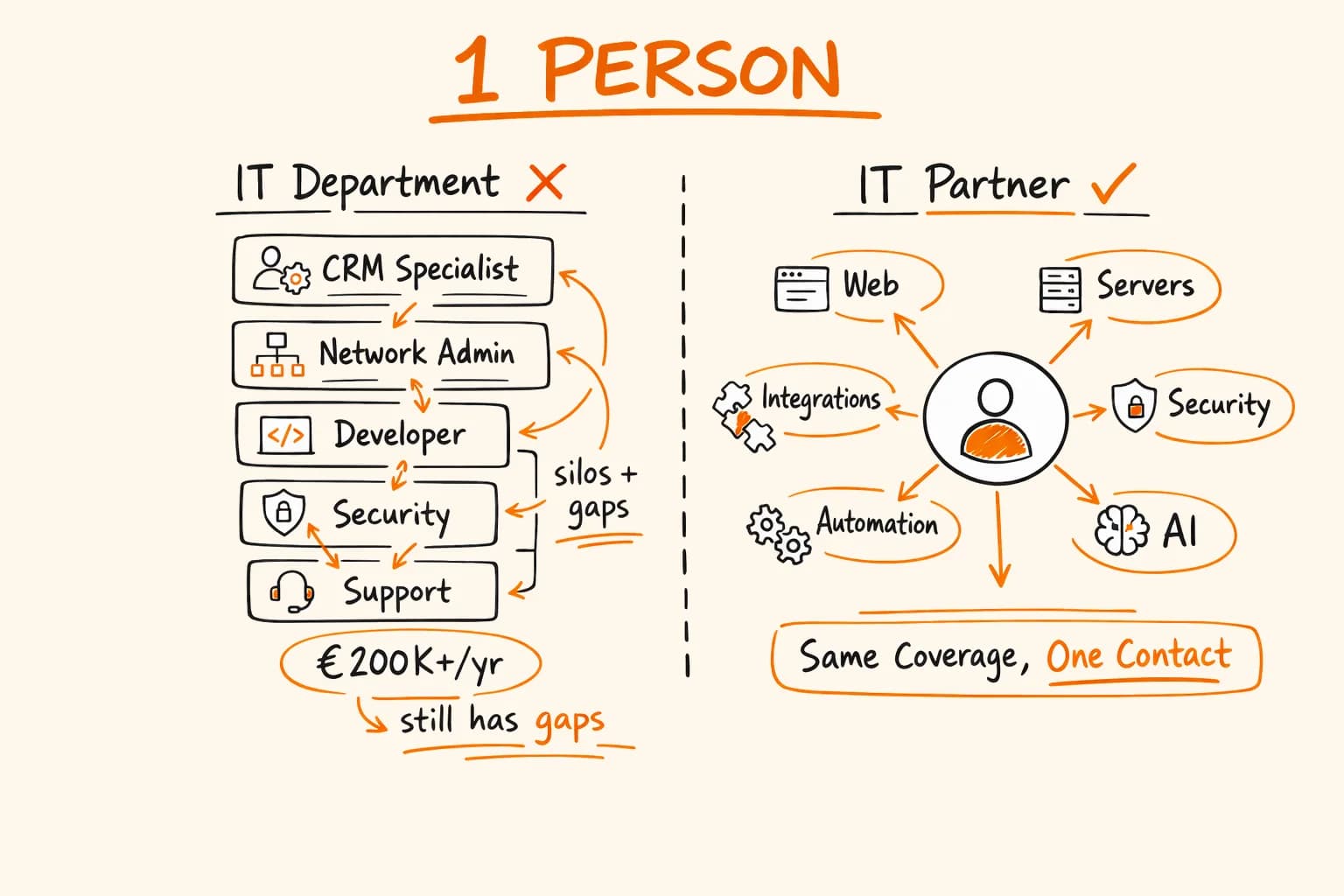
Here is what I cover for the companies I work with, typically without a team:

Website and web applications. Building, maintaining, and updating your public presence and customer-facing tools. This includes the work most agencies charge separately for every time something needs to change.

Server infrastructure. Hosting, databases, backups, uptime. Making sure the things that need to run keep running, and that when something fails there is a recovery procedure.

Integrations. Your CRM, accounting software, e-commerce platform, and logistics system all need to share data. Connecting them โ€” and keeping those connections working as vendors update their APIs โ€” is ongoing work that saves your team significant time every week.

Automation. When I audited Pikkuna's order pipeline, managers were spending 15โ€“30 minutes per order copying data between systems by hand. After automation, the same process takes under 2 minutes with no human involvement. That kind of work โ€” identifying what is manual and making it not manual โ€” is one of the highest-value things an experienced IT partner does.

AI tools. Not the hype version. Practical applications that save time or improve decisions. A customer support chatbot that handles 70% of incoming tickets without a human. A document classifier that processes paperwork your team used to handle manually.

Security. Access management, basic hardening, ensuring that people who left the company two years ago don't still have active logins. Not compliance engineering for a bank โ€” practical security for a company that uses technology to run its business.

Technical decision-making. When a vendor recommends something, when you're choosing a new tool, when a developer proposes an architecture โ€” you need someone to evaluate that recommendation. Someone who has seen enough systems to know which suggestions are good and which ones will cause problems in 18 months. This is the value of fractional CTO coverage โ€” technical judgment that scales with your needs, not your payroll.

Related service

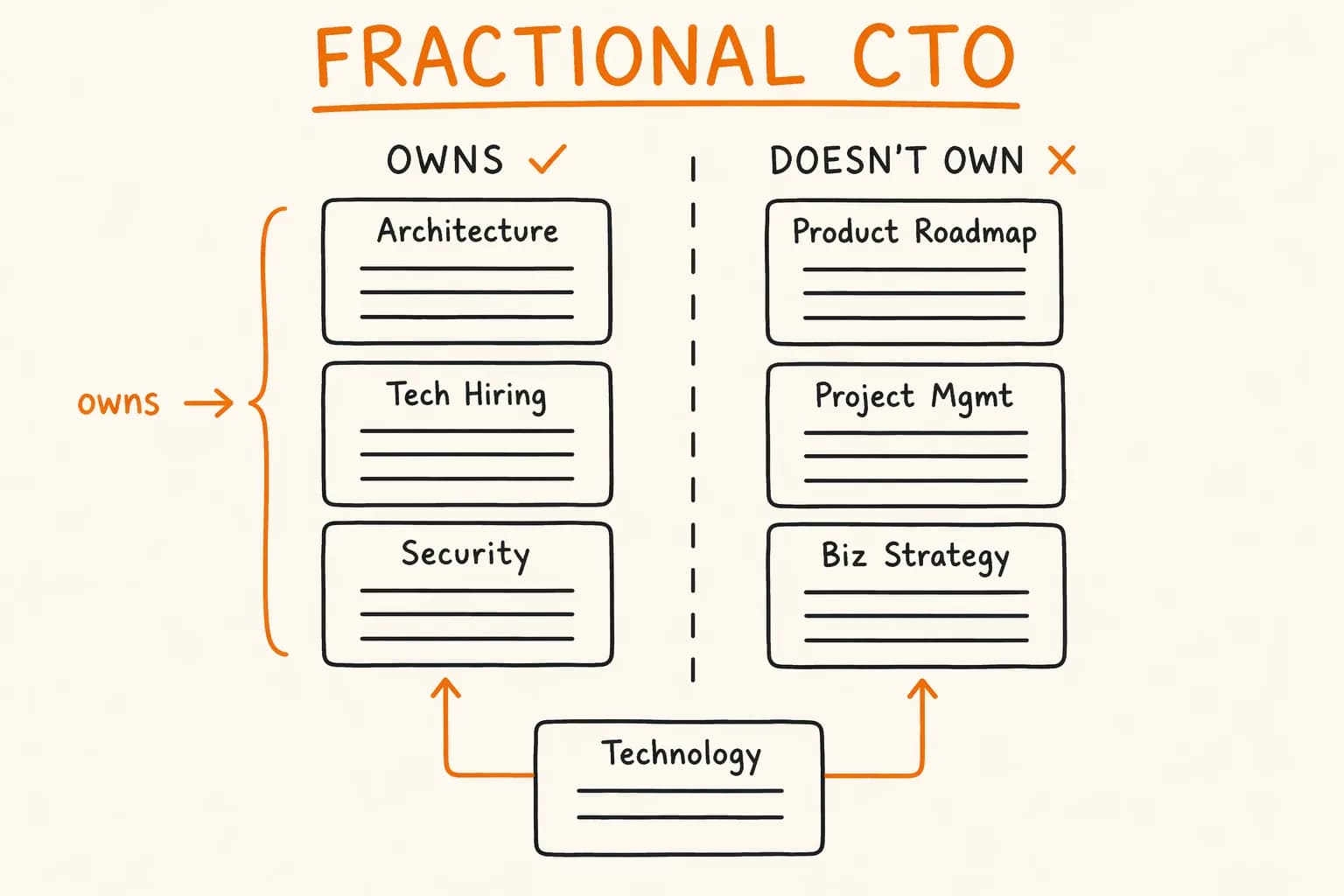
Fractional CTO

Before you hire an IT team, let's figure out whether you actually need one. For most companies between 30 and 150 people, one experienced IT partner covers the full functional scope โ€” at a fraction of the cost.

More about this service โ†’

What a Solo IT Partner Cannot Replace

I'll be direct about the limits, because pretending they don't exist wastes everyone's time.

A dedicated in-house helpdesk makes sense if you have 200+ people and laptops and printers are breaking constantly. That's a volume problem that requires physical presence and dedicated staffing.

A dedicated security team makes sense if you're in an industry with strict compliance requirements โ€” banking, healthcare, anything handling sensitive personal data at scale. Those environments need specialists who do nothing but security.

An internal product team makes sense if software is your core product โ€” if you're a SaaS company and the application you're building is the business itself, not the infrastructure that runs it.

The distinction matters: IT as infrastructure versus IT as product. If you use technology to run your business, a senior IT partner handles it. If you're in the business of building technology, you need a product team.

The Cost Math

An in-house IT department of three to five people โ€” which is what companies at this stage often imagine building โ€” runs โ‚ฌ200,000 to โ‚ฌ400,000 per year. That's salaries, employer costs, benefits, equipment, onboarding time, and the management overhead of having five more people to coordinate.

And those five people will each be a specialist in something. You'll have someone who knows the network, someone who knows the CRM, someone who handles end-user support. You'll also have gaps in whatever none of them know, plus the coordination cost of getting them to work together.

A senior IT partner on retainer covers a broader functional scope than any individual employee โ€” and at a fraction of the cost. For the range of companies I'm describing, the economics aren't close.

Who This Actually Works For

Companies where IT is infrastructure, not product. You use technology to run your business, but you're not in the business of building technology.

You have between 30 and 150 employees. Your systems are getting more complex as you grow. You've outgrown ad-hoc solutions but you're not yet at the size where a full internal department makes financial sense.

You need someone who can own the technical side, think ahead, and tell you honestly when a decision is good and when it isn't โ€” without the overhead of managing a team.

That is the gap a single experienced partner fills. For most companies at this stage, it's the right answer. If you're not sure what the full scope of that gap is yet, a first-week IT audit is usually the fastest way to find out. And if your systems have grown to the point where nobody is sure who's responsible for them, this post on IT ownership describes exactly what that costs.


If you're about to hire IT staff, it's worth having one conversation first. Let's look at what you actually need before you build a department โ€” the first call costs nothing, and it usually changes the picture.

Iurii Rogulia

Working on something like this?

Fractional CTO

Before you hire an IT team, let's figure out whether you actually need one. For most companies between 30 and 150 people, a senior IT partner covers the full scope at a fraction of the cost.

More about this service

Relevant client work

View all projects
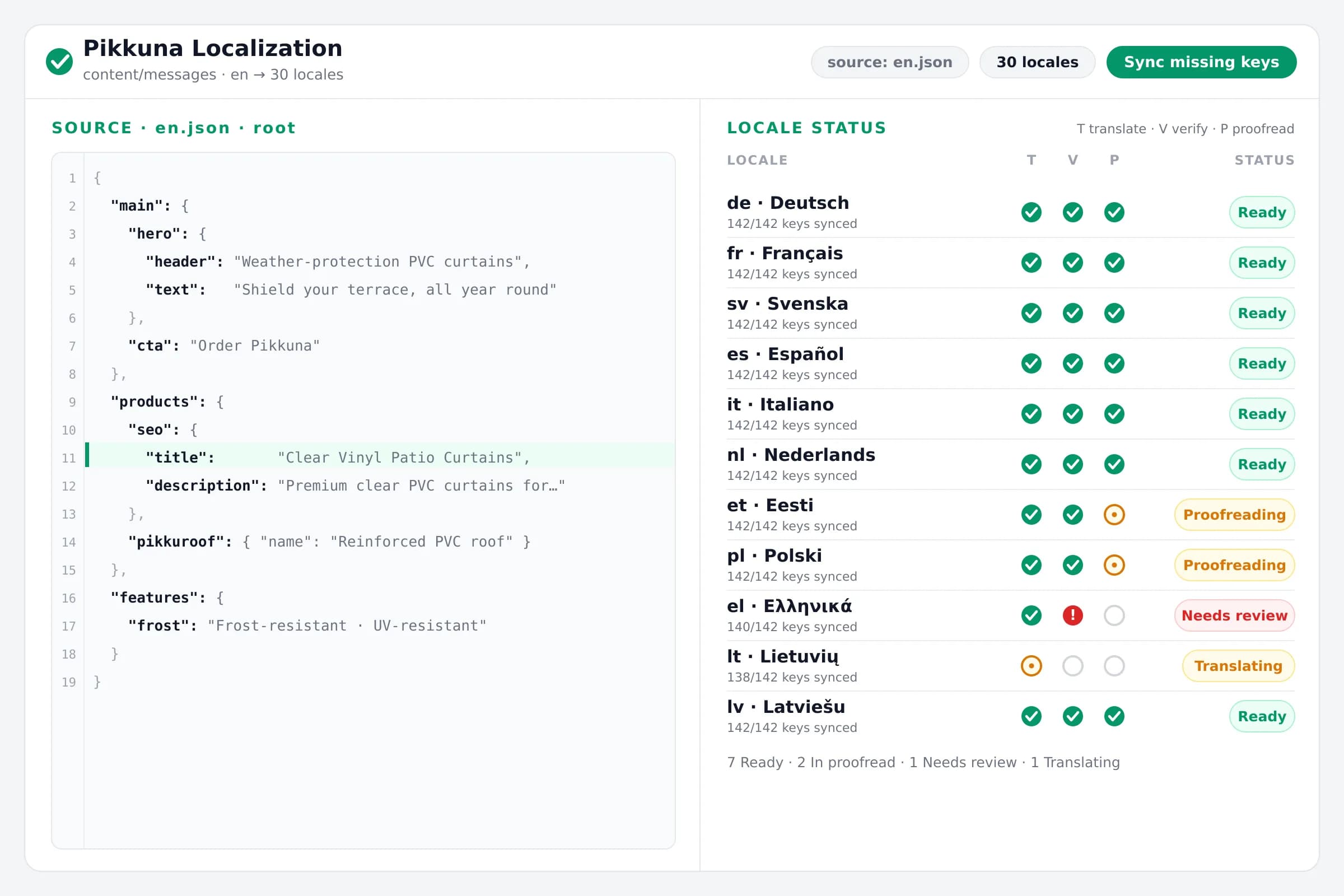
Pikkuna โ€” AI-Powered Localization Pipeline
July 30, 2026
Pikkuna โ€” AI-Powered Localization Pipeline

A production localization pipeline built entirely on the OpenAI API: one English source of truth, SEO-aware translation prompts, cross-model verification with

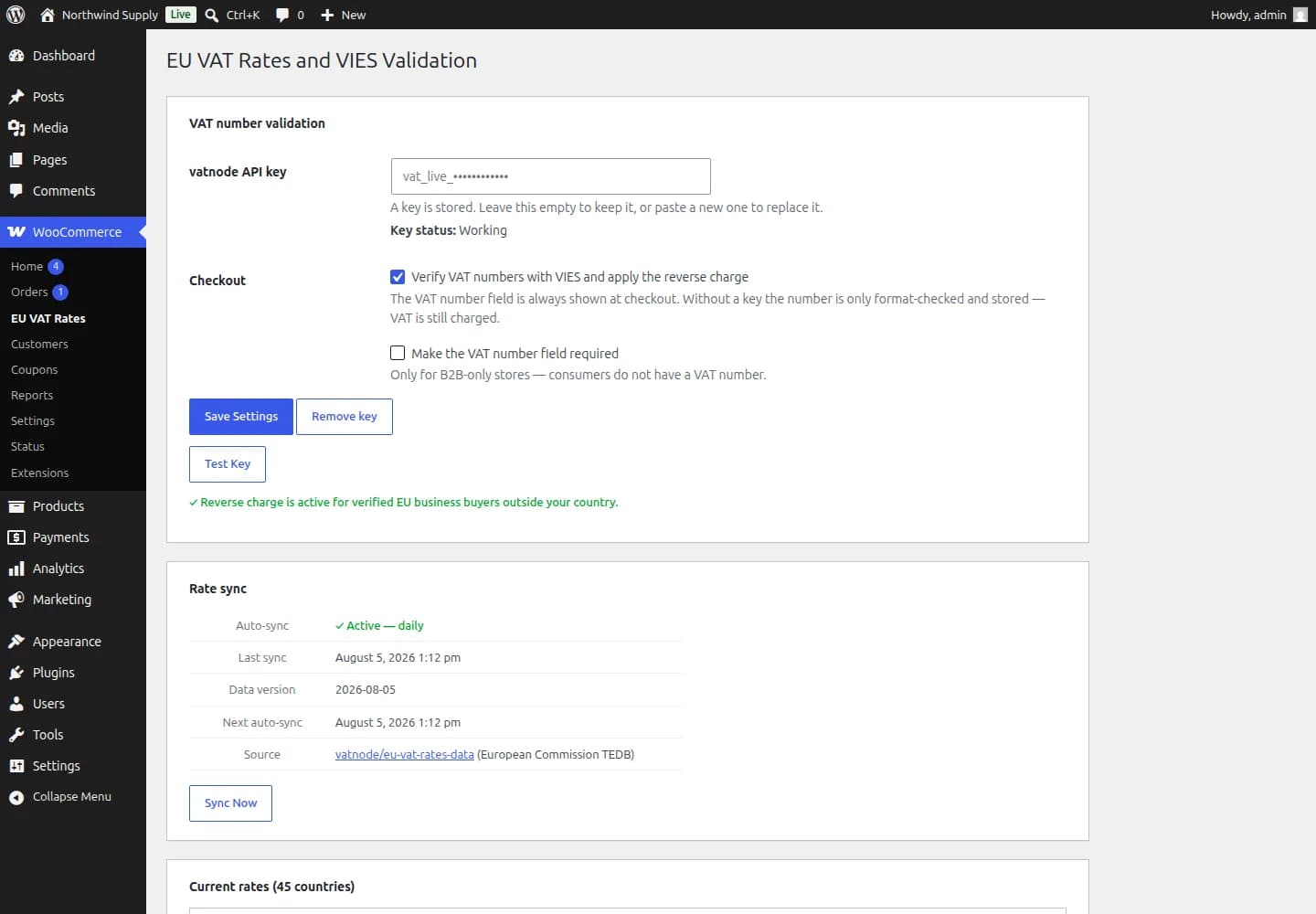
EU VAT Rates for WooCommerce โ€” WordPress Plugin
August 5, 2026
EU VAT Rates for WooCommerce โ€” WordPress Plugin

WordPress plugin that keeps WooCommerce EU tax rates current from the European Commission and applies the B2B reverse charge from a VIES-verified VAT number at

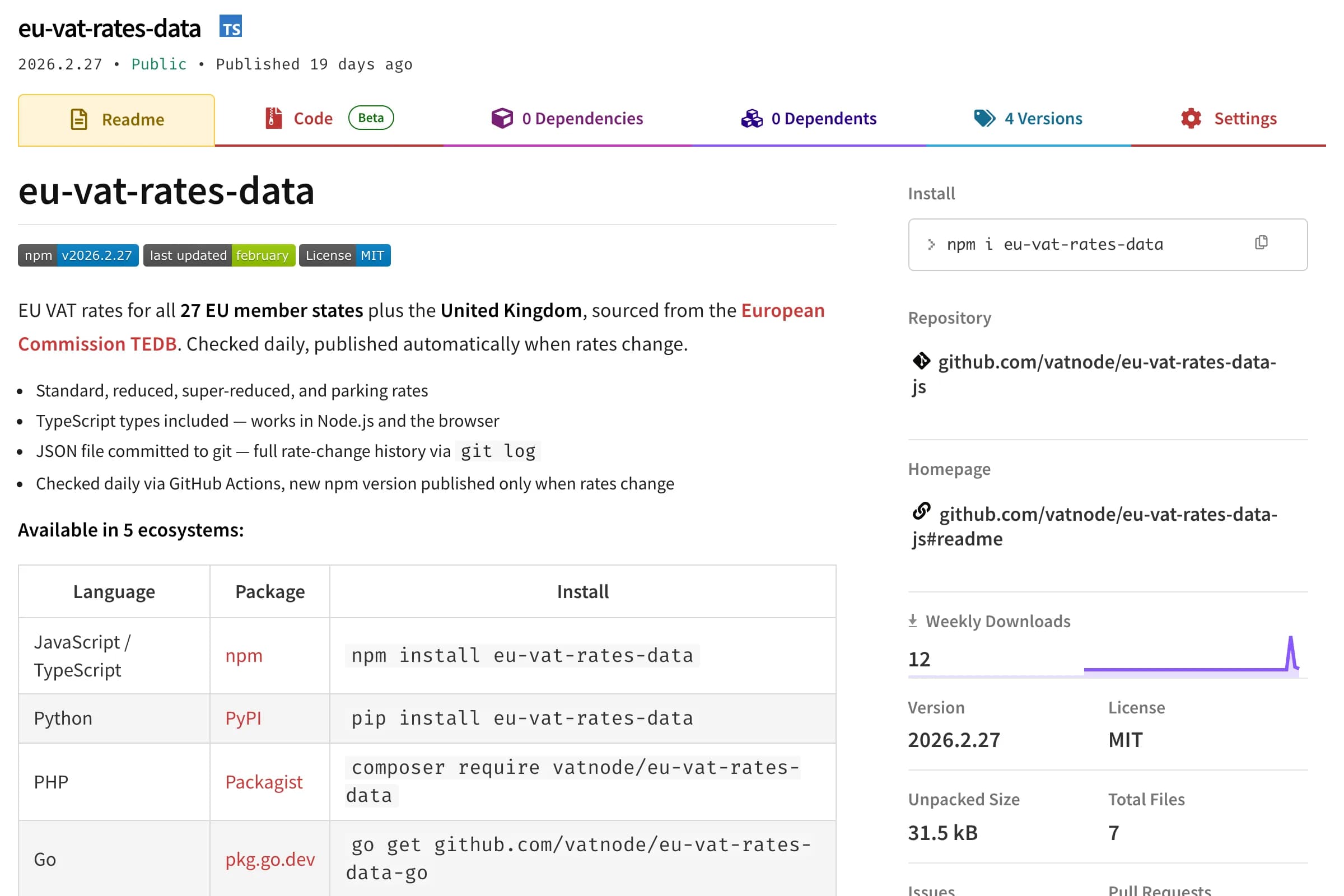
eu-vat-rates-data โ€” Free & Open-Source EU VAT Rates Dataset
February 25, 2026
eu-vat-rates-data โ€” Free & Open-Source EU VAT Rates Dataset

Free, open-source EU VAT rates for all 27 member states + UK. Published as native packages for npm, PyPI, Packagist, Go, and RubyGems.

What clients say

โ€œ

We process thousands of supplier invoices a month and the team was keying them in by hand. Iurii built a pipeline that reads each document, extracts the fields we care about, and routes anything that doesn't match a known template to a human โ€” with a confidence threshold so nothing gets posted automatically that the model wasn't sure about. He was blunt up front that we shouldn't try to automate the low-confidence cases, and that honesty is exactly why finance trusts the system. It's handled around 85% of the volume for two months now with no bad postings we've had to reverse.

Lena Brandt ๐Ÿ‡ฉ๐Ÿ‡ช

Head of Product

Stack

Python

Services

OpenAI

Topics

AIDocument ProcessingLLMAutomation
โ€œ

We'd just raised and needed to double the engineering team fast, but nobody internally had hired at that scale or owned the architecture decisions that came with it. A full-time CTO was a six-month search we didn't have time for. Iurii held the role two days a week in the meantime โ€” he set up the interview loop, sat in on the senior candidates, killed a rewrite the team was quietly drifting toward, and made the infrastructure call before it turned into a fire. When we finally hired someone permanent the handover took a week because everything was already documented. He ran it like an owner, not a consultant billing hours.

Kasper Holm ๐Ÿ‡ฉ๐Ÿ‡ฐ

CEO

Topics

LeadershipCTOHiringArchitectureStrategy
โ€œ

I'm a non-technical founder and I'd been making technology decisions by guessing, which was getting expensive. Iurii joined as a fractional CTO one day a week and the difference was immediate โ€” he set up a sane roadmap, vetted two contractors I was about to overpay, and translated what the dev team was telling me into plain language so I could actually make calls. He's not there to write all the code; he's there so I stop making the wrong bets.

Matteo Conti ๐Ÿ‡ฎ๐Ÿ‡น

Founder

Topics

LeadershipCTOHiringStrategy

Related articles

Fractional CTO: What They Do, Cost, and When to Hire One
April 30, 2026ยท 11 min
Fractional CTO: What They Do, Cost, and When to Hire One

Fractional CTO is one of the most misused titles in tech consulting. Here's what the role actually covers, what it doesn't, and how to spot the real thing.

Topics

LeadershipIT StrategyBusinessFreelanceCTO
Freelance Developer vs IT Partner: What's the Difference?
April 8, 2026ยท 4 min
Freelance Developer vs IT Partner: What's the Difference?

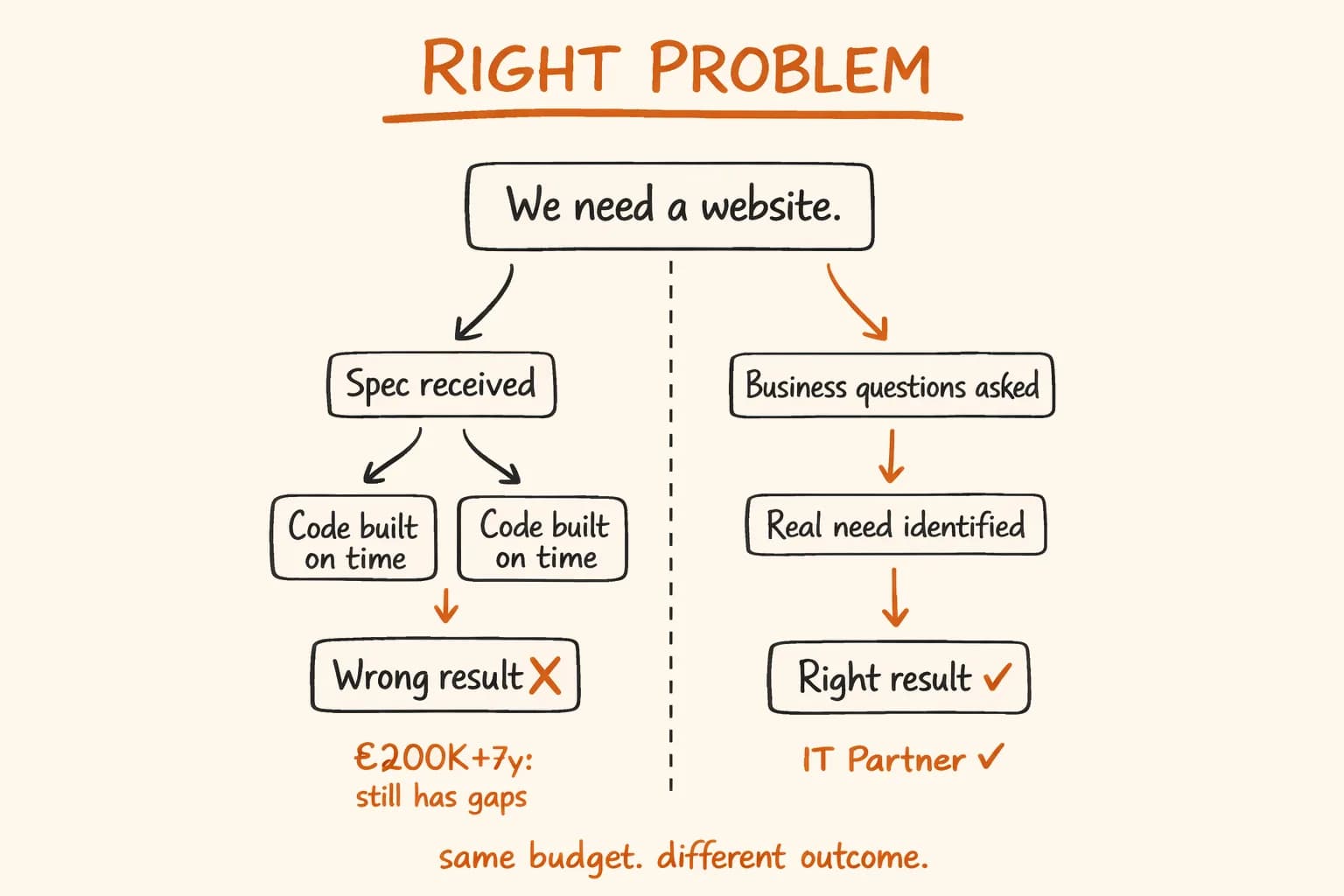
A developer builds what you ask for. An IT partner asks what you actually need. The difference is the difference between wasted budget and a result that works.

Topics

BusinessIT StrategyLeadershipCTO
IT Audit Checklist: What to Expect in Week One
March 25, 2026ยท 5 min
IT Audit Checklist: What to Expect in Week One

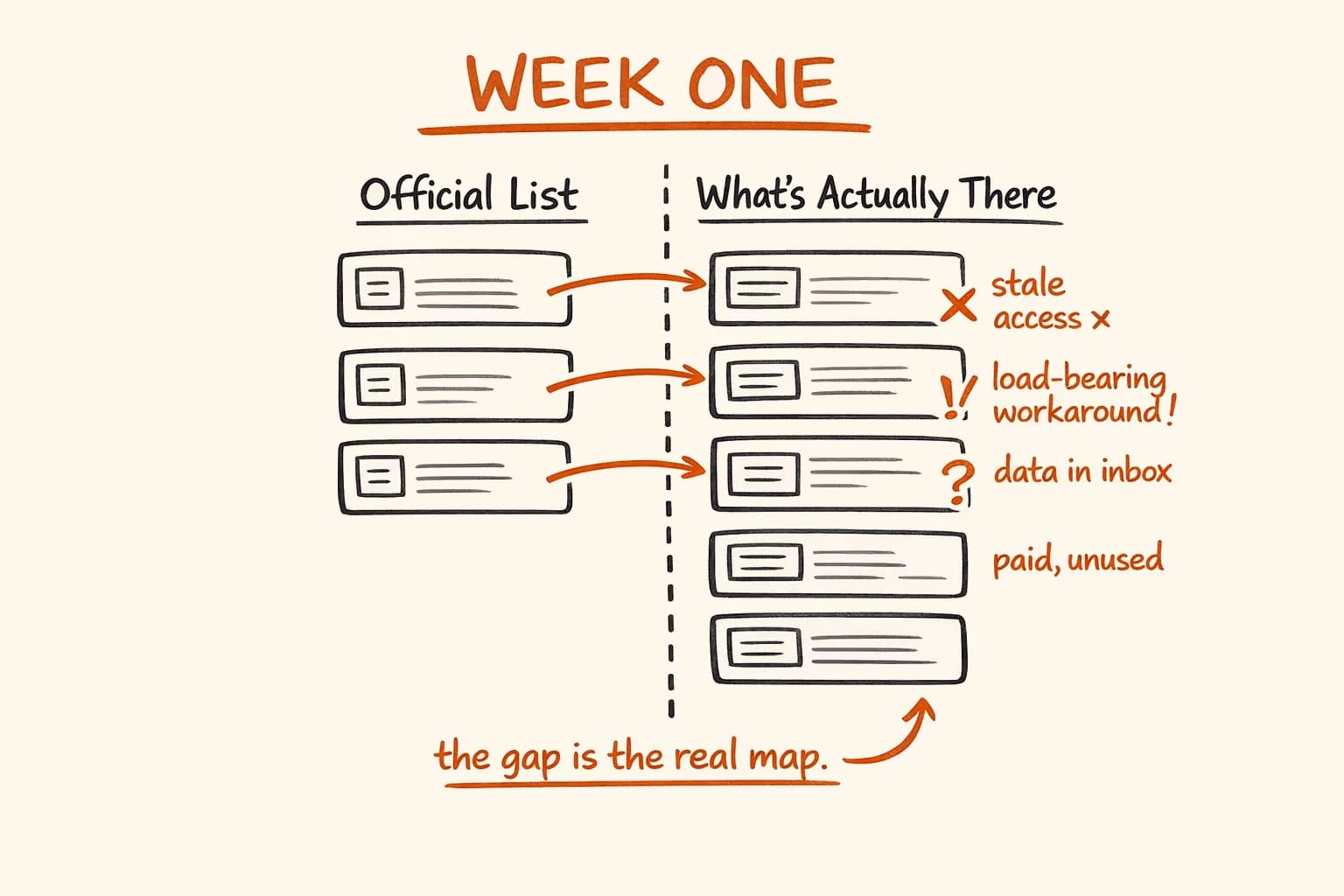
IT audit first week checklist: what I map before fixing anything for a new business client โ€” usually different from what anyone in the company thinks.

Topics

BusinessIT StrategyProcessCTO
5 Signs Your Business IT Setup Is Costing You Money
March 23, 2026ยท 5 min
5 Signs Your Business IT Setup Is Costing You Money

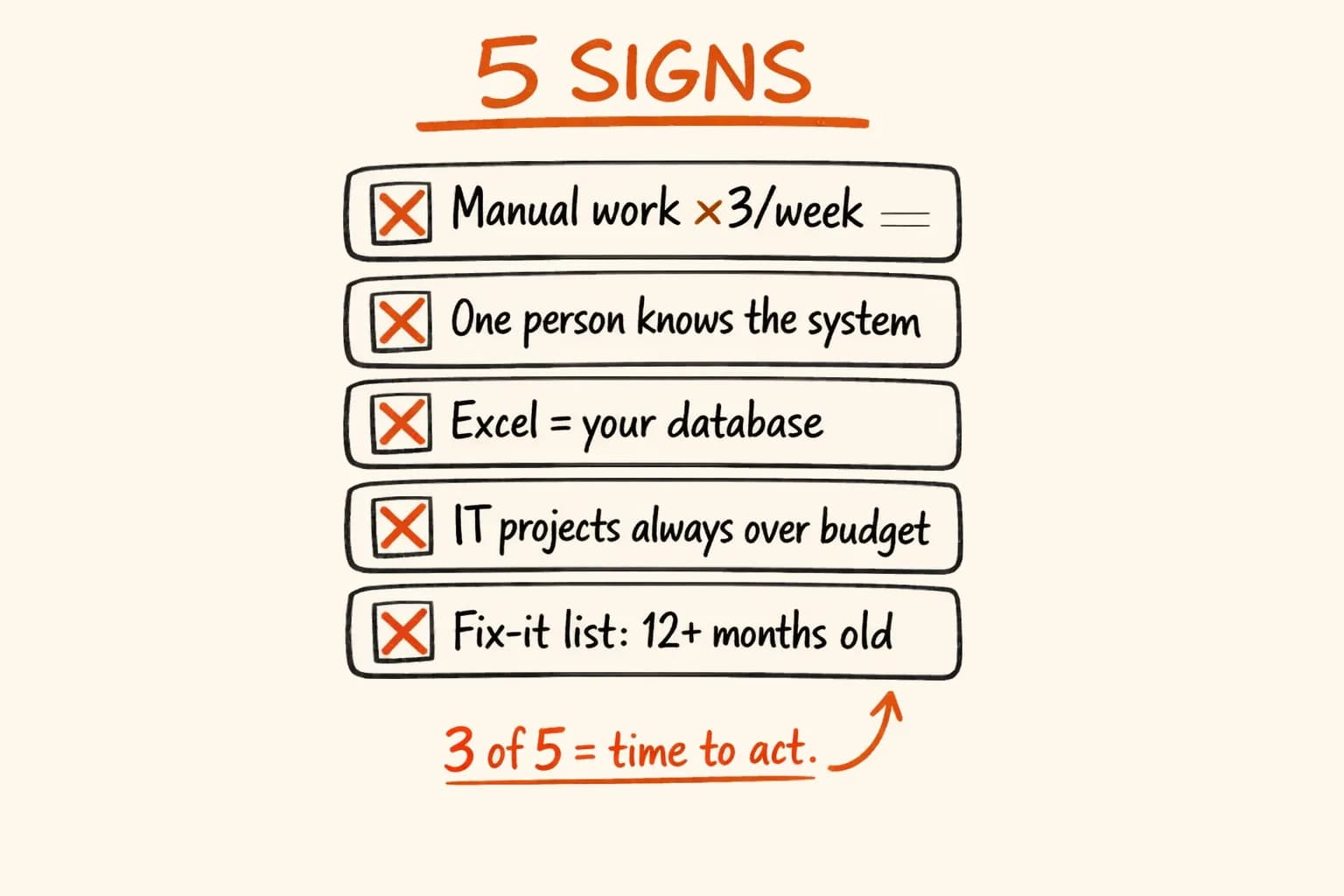
5 signs your business IT is holding you back: a self-diagnostic for founders and managers. If three of these apply, your IT setup is costing you money.

Topics

BusinessIT StrategyCTO
No IT Manager? The Hidden Cost of Unmanaged IT for SMBs
March 18, 2026ยท 5 min
No IT Manager? The Hidden Cost of Unmanaged IT for SMBs

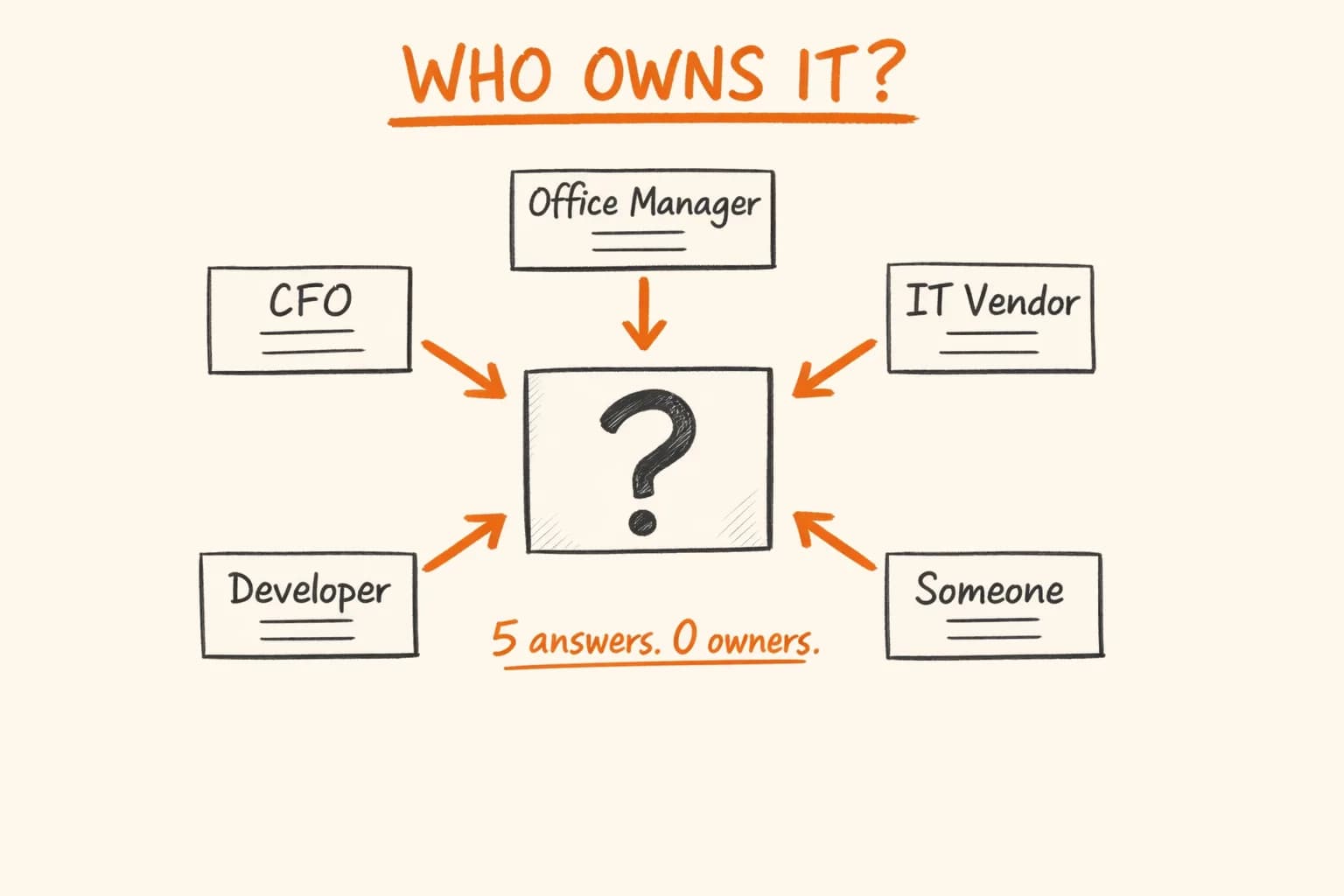
Who is responsible for your business IT? Most growing companies have IT no one actually owns. What that costs in wasted hours, unmanaged risk, and the fix.

Topics

BusinessIT StrategyLeadershipCTO