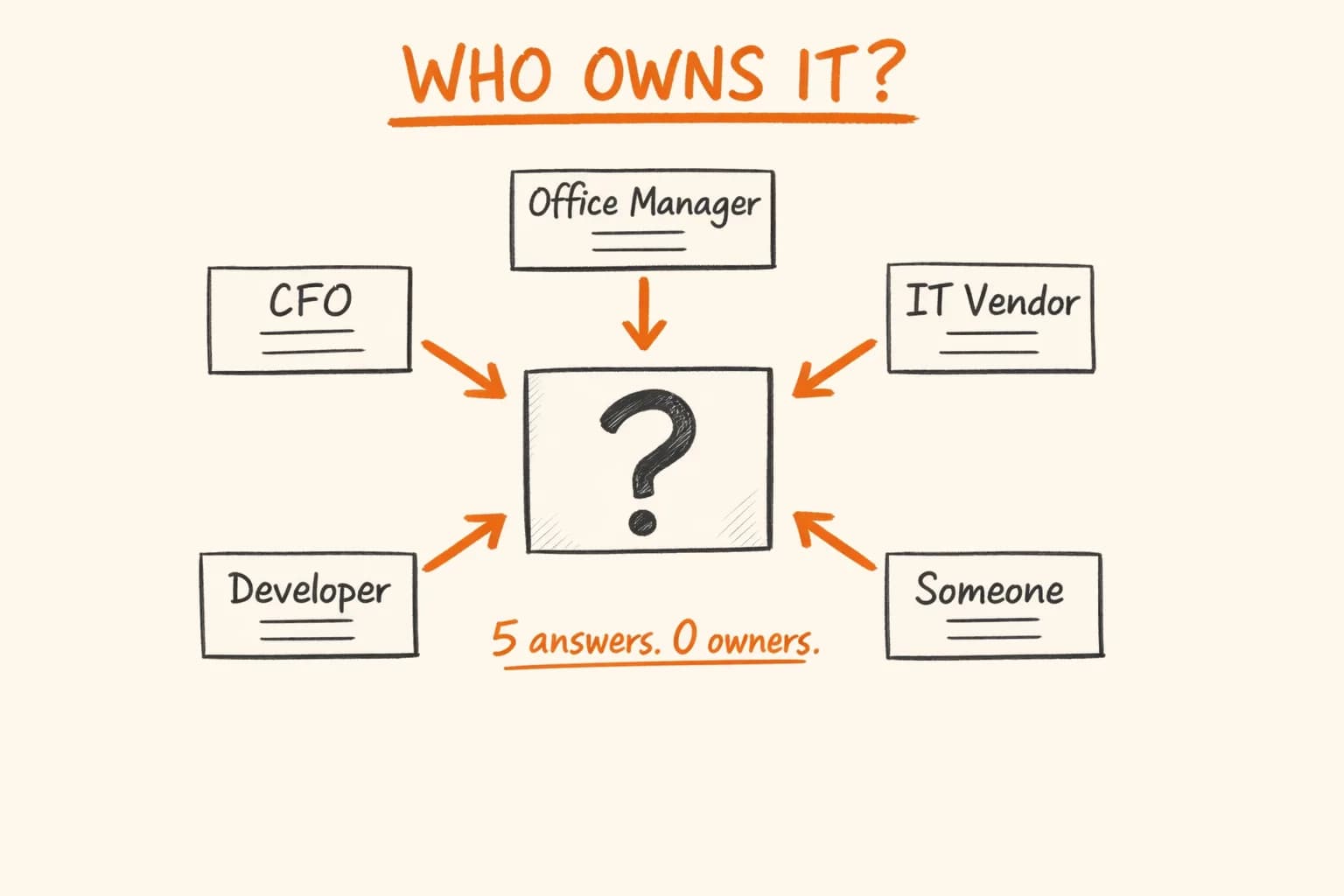
I walk into a new client’s company and ask one question: ‘Who is responsible for your IT?’
I get five different answers.
The CFO says it’s the IT vendor they’ve been with since 2019. The office manager says she handles ‘the day-to-day stuff.’ The developer who built their website says he does the technical things. A department manager says there’s a guy who takes care of ‘those things.’ And the CEO, when I finally reach him, says he assumed someone on the team had it covered.
Nobody has it covered.
This is not unusual. For companies between 20 and 200 people, this is the norm.
What ‘Nobody Owns It’ Actually Looks Like
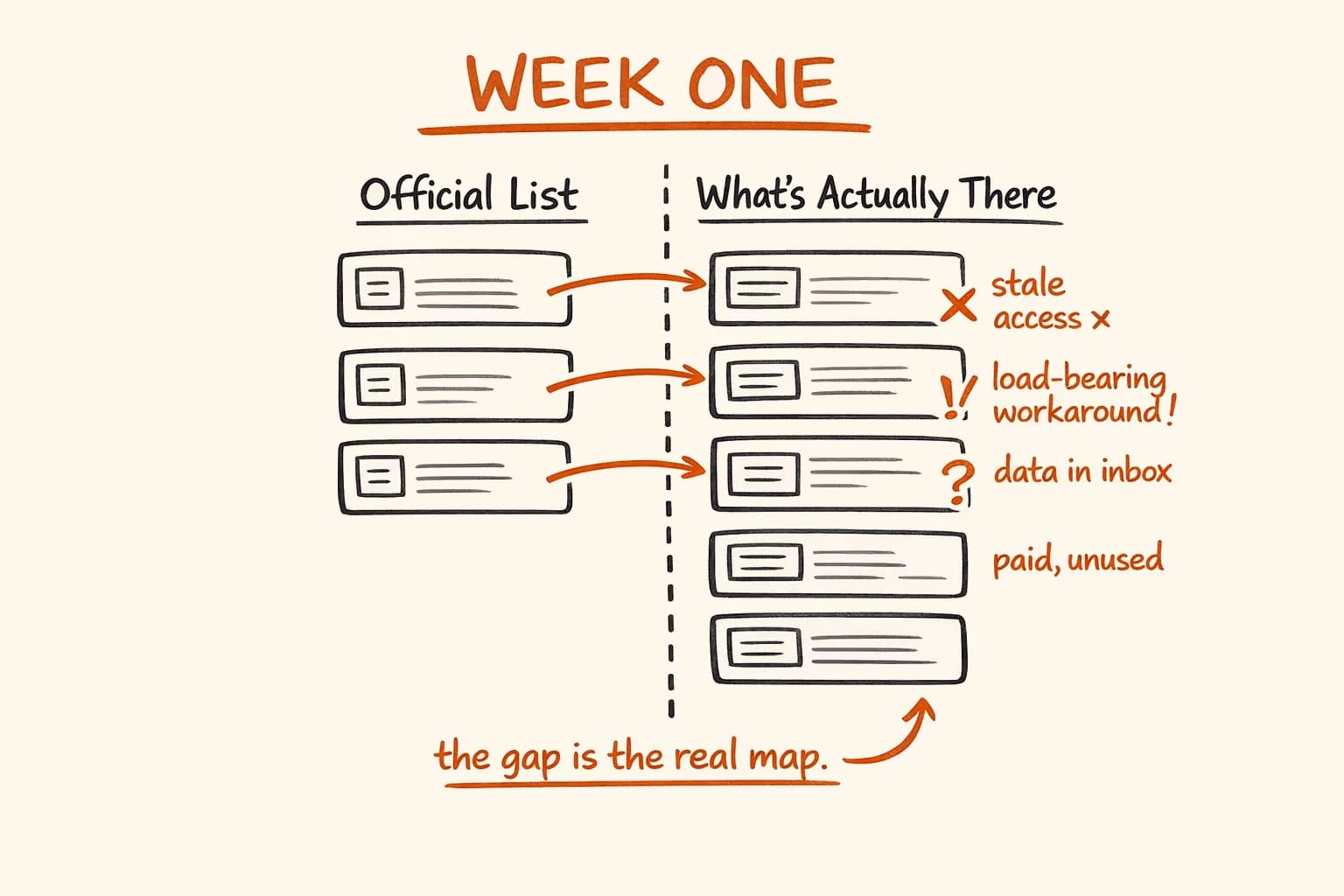
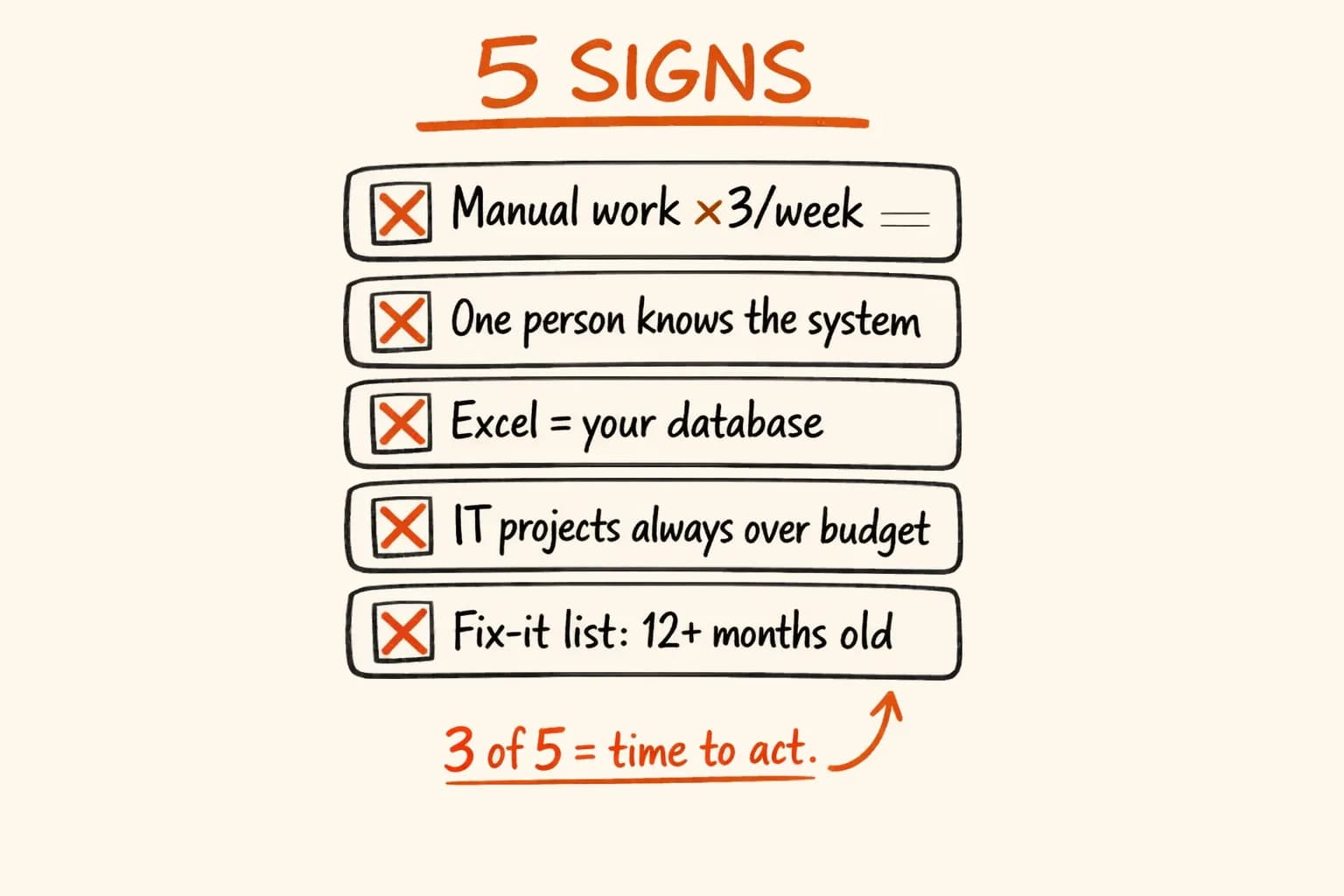
There are five patterns I see repeatedly. Almost every growing business has at least two of them running simultaneously. If you want to verify which ones apply to your company, the first-week IT audit covers exactly how to find them.
Shadow IT. Employees have built their own systems to solve problems the official systems don’t solve. Customer contacts live in a personal spreadsheet. Orders are tracked in a WhatsApp group. A department runs on a Google Sheet that three people edit simultaneously and nobody backs up. These solutions work until they don’t – and when they stop working, the knowledge of how they worked often walks out the door with the person who built them.
The one person who knows. In most companies I work with, there is one employee who understands how a critical system actually operates. Not the vendor. Not IT. One specific person, usually not even in a technical role, who has accumulated institutional knowledge through years of working around the system’s limitations. When that person is on vacation, things stop. When they get sick, someone is quietly panicking. When they leave, the system is effectively lost.
Vendor capture. The company can’t change anything – pricing, a feature, an integration – without calling the vendor and waiting. The vendor has become the de facto IT department without the accountability of one. Every request goes through them. Every quote surprises you.
Workarounds that became the process. Someone built a temporary fix in 2022 to handle a billing exception. It’s now how billing works. Nobody remembers why it exists. Everyone is afraid to change it. There are three more of these in other departments.
Security gaps nobody thinks about until something goes wrong. Former employees still have access to systems. Passwords are shared in email threads from 2021. The backup hasn’t been checked since it was set up. None of this is malicious – it’s just unmanaged.
What This Costs
The labour cost alone is measurable. If three employees each spend two hours a week on manual workarounds – re-entering data between systems, generating reports by hand, doing things that should be automatic – that’s 300+ hours per year. At an average fully-loaded cost of €50/hour, that’s €15,000 annually, every year, on problems that shouldn’t exist. In one real case, a 50-person distributor was losing 40+ hours per month to a single manual order process – the full story is here.
The risk cost is harder to quantify but larger. The ‘one person who knows’ is a single point of failure. If that person leaves during a critical period – a product launch, a busy season, a system migration – the cost can be significant. I’ve seen companies pay an emergency consultant three times the going rate just to reverse-engineer a system their former employee built and never documented.
The vendor capture cost compounds over time. When you can’t move without a vendor’s permission, you pay for that dependency in every contract renewal. You pay for it when their priorities don’t match yours. You pay for it when the technology they use stops being the right technology.
The Fix Is Not What You Think
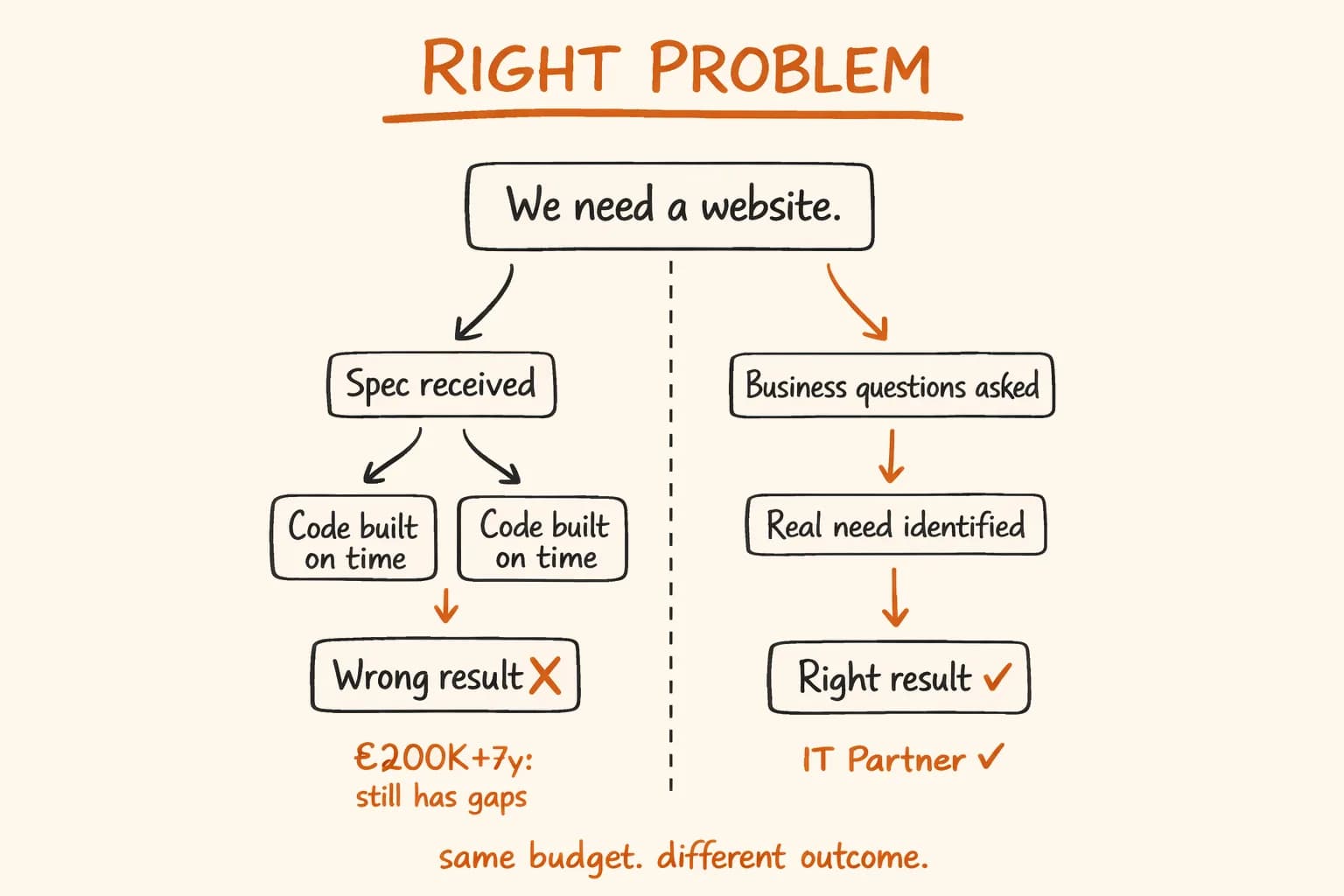
Most business owners assume the solution is hiring an IT person, or signing a contract with a managed IT firm, or buying better software. Sometimes those are the right answers. Often they’re not.
The actual fix is simpler and harder: assign ownership.
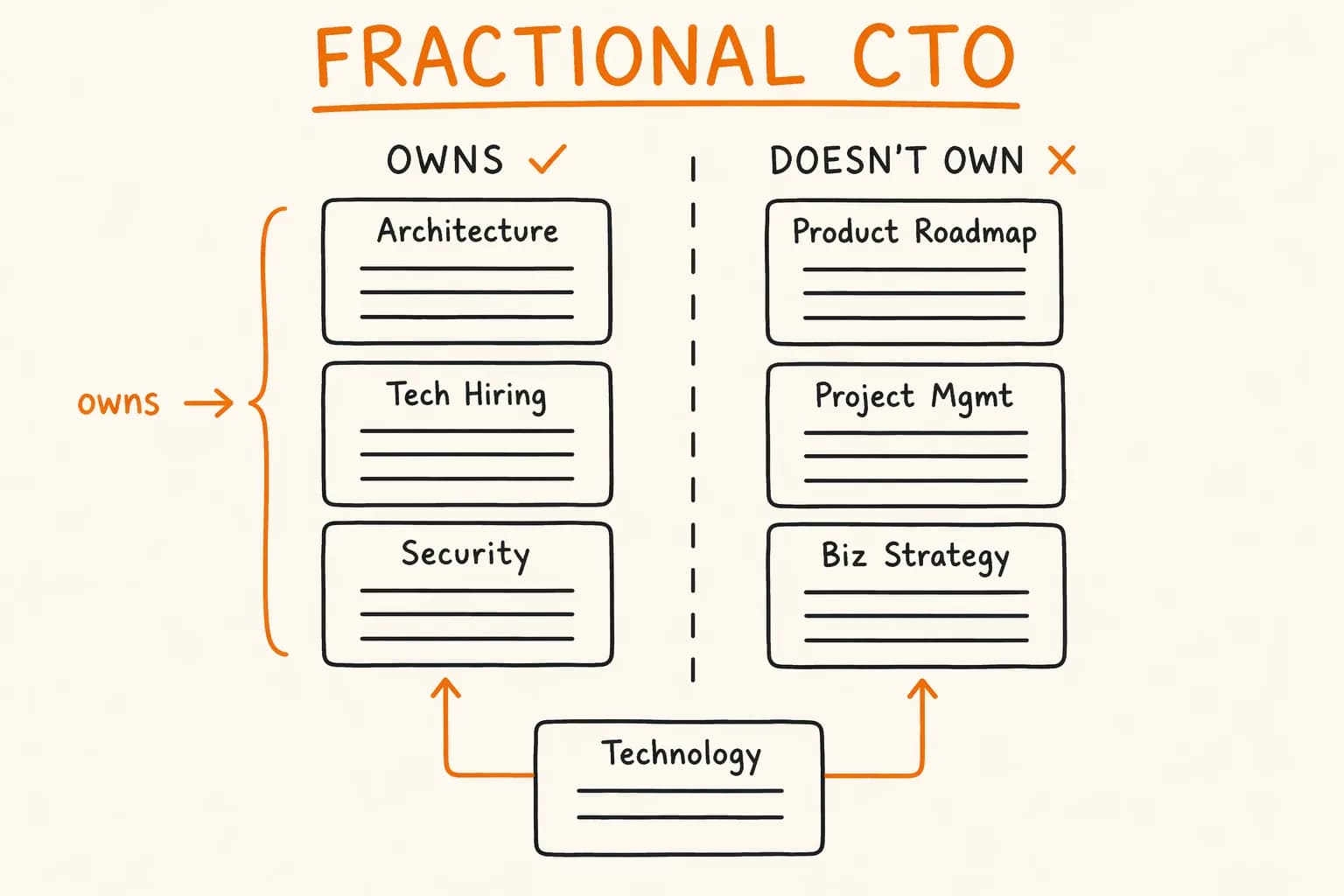
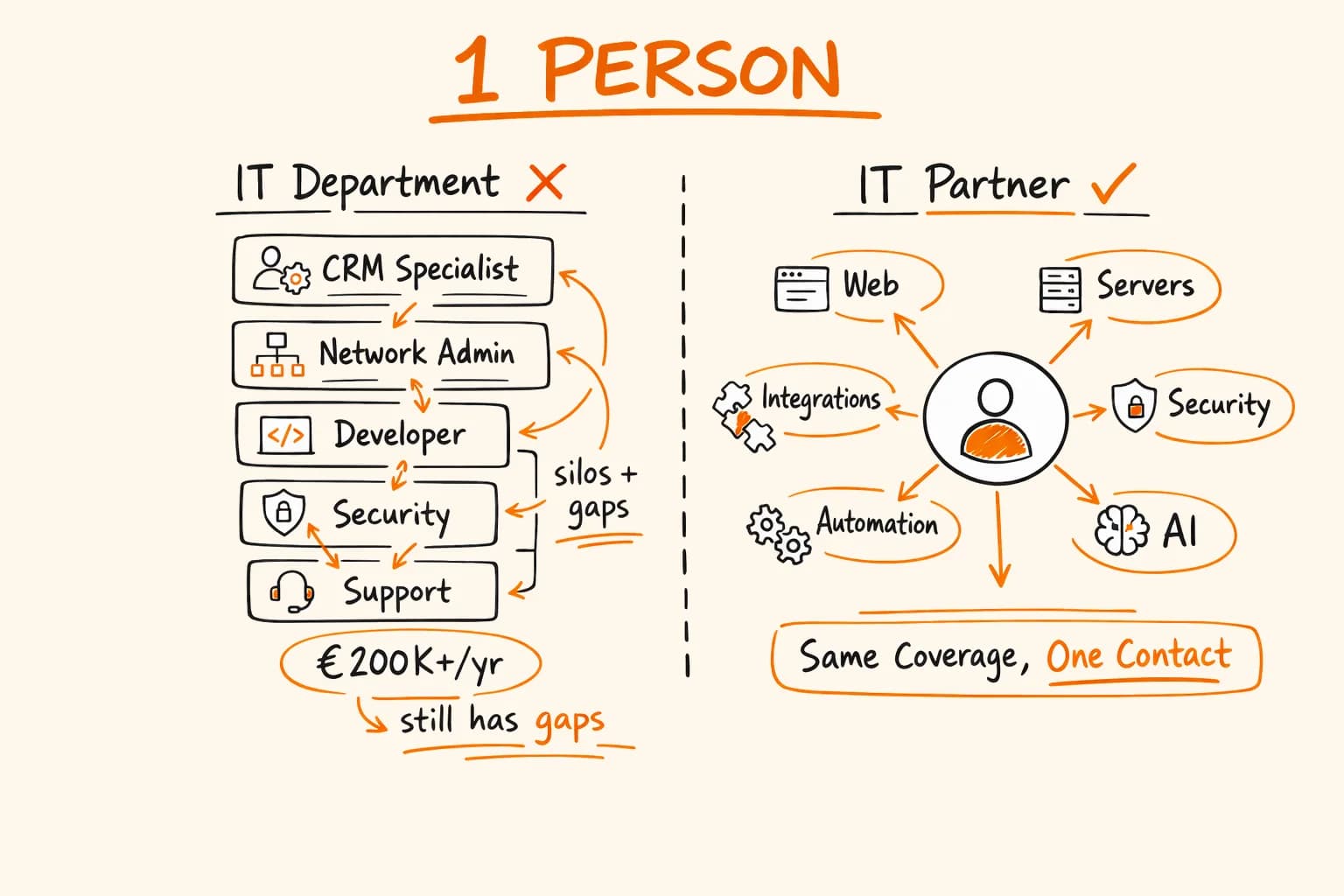
One person – internal or external – needs to be responsible for the whole picture. Not the email server. Not the CRM. The whole picture: what systems exist, how they connect, who has access, what’s fragile, what’s a risk, and what should be done about it in what order.
That person doesn’t need to do everything themselves. They need to know what’s happening and be accountable for it. In a company of 50 people, that might be a part-time responsibility. In a company of 200, it might be a dedicated role or an external fractional CTO engagement. The size of the solution scales with the size of the business.
What doesn’t scale is having no one responsible. That’s not a cost-saving measure. It’s a cost that’s already accumulating – silently, every week, in wasted hours and unmanaged risk. For most companies at this stage, the economics of one IT partner vs. a full department are not close.
If you’re not sure who owns your IT right now – that’s your answer. Get in touch and let’s figure out what that’s actually costing you.