Iurii RoguliaIurii Rogulia
AboutServicesPricingProjectsStackReviewsPhrasesBlog
Contact
Iuriiย ships.

Iurii Rogulia, IT partner for business & fractional CTO. Professionally building software since 2001.

Think of a number
PricingQuality checklistPrivacy PolicyCookie Policy

Business

TMI Iurii Rogulia
VAT ID: FI29845875
DUNS: 368664211
Lappeenranta, Finland ๐Ÿ‡ซ๐Ÿ‡ฎ

[email protected]
  1. Home
  2. /
  3. Blog
  4. /
  5. Freelance Developer vs IT Partner: What's the Difference?

Iuriiย Advises: Freelance Developer vs IT Partner: What's the Difference?

You Don't Need a Developer. You Need an IT Partner.

April 8, 2026ยท 4 min read

A developer builds what you ask for. An IT partner asks what you actually need. The difference is the difference between wasted budget and a result that works.

Topics

BusinessIT StrategyLeadershipCTO
Freelance Developer vs IT Partner: What's the Difference?

A developer's job is to build what you describe. An IT partner's job is to figure out what you should actually build โ€” and then build it.

That distinction sounds minor. It isn't.

The Same Budget, Two Different Outcomes

Here's a situation I've seen play out more than once.

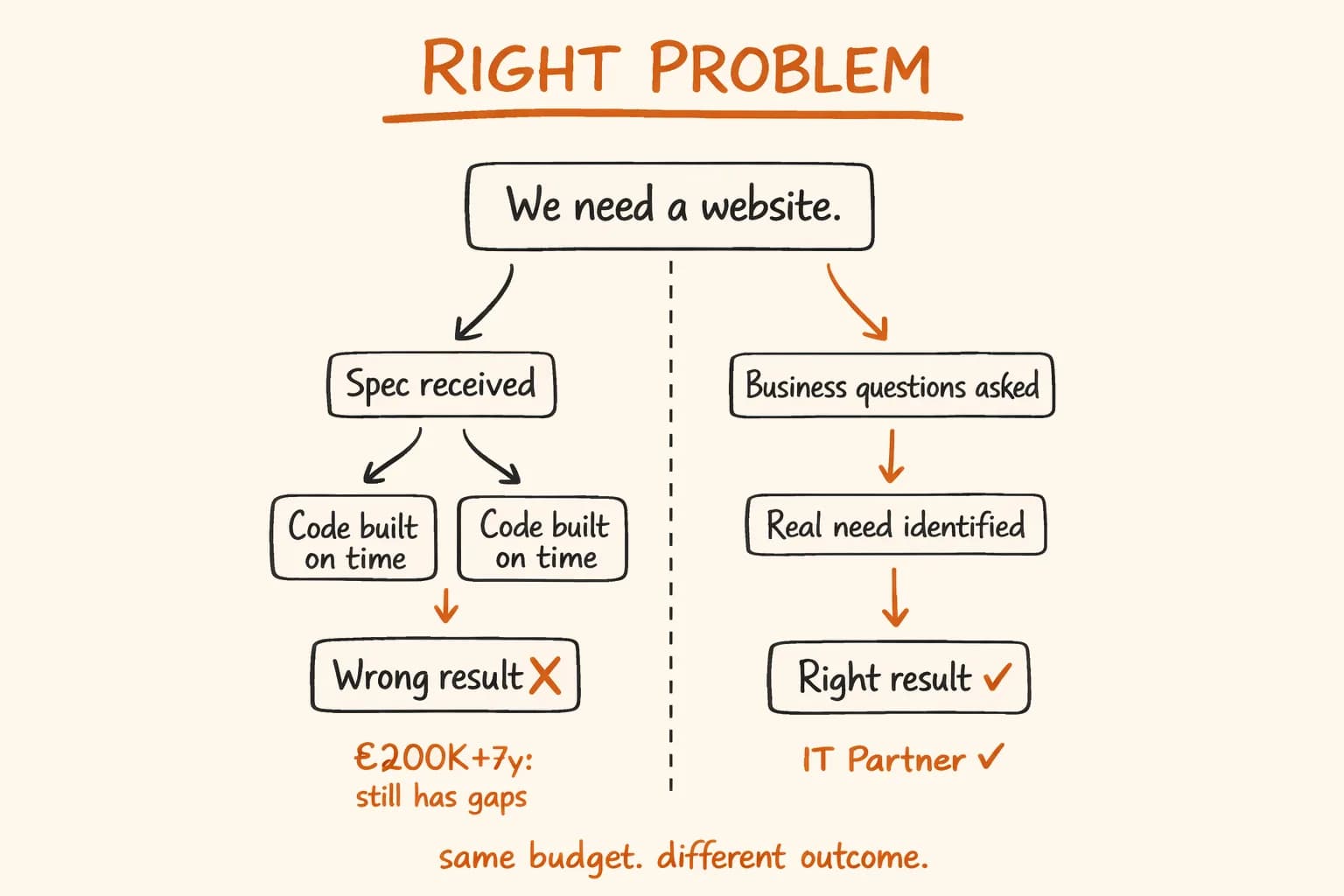
A company comes to a developer with a clear request: "We need a website with a product catalogue and a contact form." The developer builds exactly that. The project delivers on time, on budget, technically correct. Six months later: no traffic, no leads, the catalogue is already out of date because updating it requires technical skills nobody on the team has, and the contact form emails are going to an inbox nobody checks.

The developer didn't do anything wrong. They did their job correctly. The problem is that someone needed to ask the business questions before a line of code was written โ€” and that wasn't the developer's job.

Now take the same company, same budget, same request โ€” but this time they're talking to someone who asks questions first.

Before any design or code, there's a 30-minute conversation. Who are your customers? How do they find you today? What do you want them to do when they arrive at your site? What happens after they submit a form โ€” who sees it, and how fast? After those 30 minutes, the answer might look completely different: you don't need a catalogue at all. You need a landing page built around the three services people actually buy, connected to your CRM so leads don't fall through the cracks.

Same budget. Completely different outcome.

The Questions That Should Come Before the Code

When a new client describes a project to me, I spend the first part of the conversation asking about their business, not the technology. What are they selling, and to whom? What does success look like in 12 months? What's the most painful part of how things work today?

The technology is how we solve the problem. Understanding the problem comes first.

This matters especially for companies hiring outside IT help for the first time. If nobody is asking the business questions, you end up with technically correct solutions to the wrong problems. The code works. It just doesn't do what you needed.

This is also where experience shows. After 25 years of development and 12 years as CTO of a logistics company, I've been involved in enough projects to recognize, early in a conversation, when someone is asking for a thing when they actually need a different thing. Sometimes what they've described is exactly right. But at least the idea has been pressure-tested before anyone starts building. When the stakes are higher โ€” a major platform decision or an acquisition โ€” that same discipline is what technical due diligence provides formally.

Related service

Fractional CTO

If you're not sure whether you need a developer or someone to own the bigger technical picture, that question itself is the answer. I work as an IT partner for growing businesses โ€” asking the hard questions before a line of code is written.

More about this service โ†’

What This Looks Like in Practice

An IT partner relationship doesn't mean your project takes longer or costs more. It means the conversation before the work is different.

Instead of receiving a specification and starting immediately, there's a brief period of asking uncomfortable questions. What problem are we actually solving? Who will maintain this after it's built? What happens when it breaks? Is this the right tool for this job, or is it the tool you happened to think of first?

Those questions take maybe a few hours. They can save months of rebuilding something that technically worked but practically didn't.

The companies I do my best work with are the ones who come in willing to have that conversation โ€” where the brief is a starting point for thinking, not a contract I'm being hired to execute. Those projects tend to be more focused, finish faster, and produce something the client actually uses rather than something that gets quietly shelved. The pi-pi.ee B2B platform โ€” 28 languages, 32 EU markets, six payment methods โ€” started with exactly that kind of conversation, not a specification document. The result was a system the team actually uses across borders, not a deliverable that got filed away. For a broader look at what this ownership model means day-to-day, see what a fractional CTO actually does.


If you have an IT project and you're not sure you're solving the right problem, let's talk before you build anything.
Iurii Rogulia

Working on something like this?

Fractional CTO

If you're not sure whether you need a developer or someone to own the bigger picture, that question itself is the answer.

More about this service

Relevant client work

View all projects
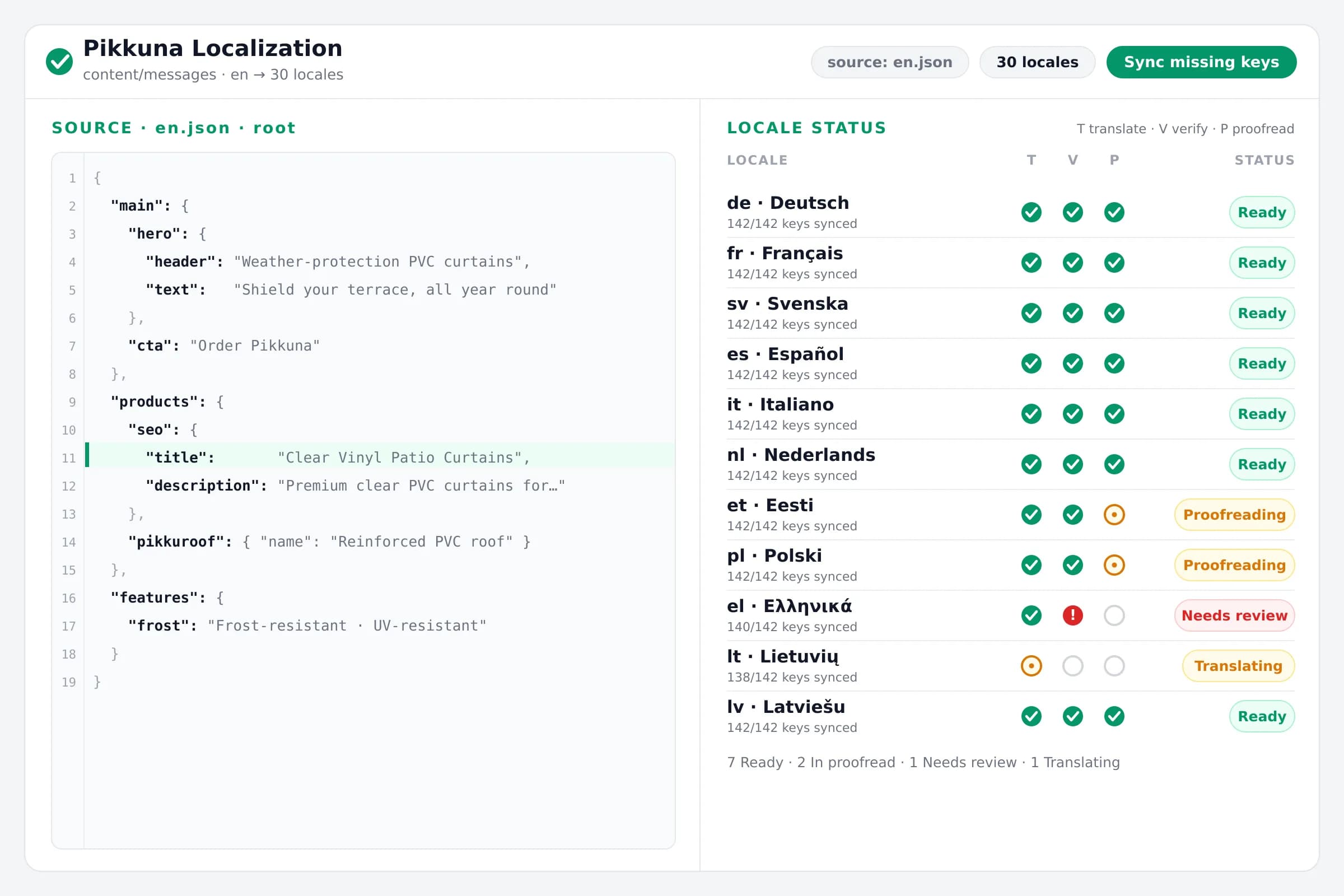
Pikkuna โ€” AI-Powered Localization Pipeline
July 30, 2026
Pikkuna โ€” AI-Powered Localization Pipeline

A production localization pipeline built entirely on the OpenAI API: one English source of truth, SEO-aware translation prompts, cross-model verification with

Pikkuna โ€” i18n RAG AI System
December 15, 2025
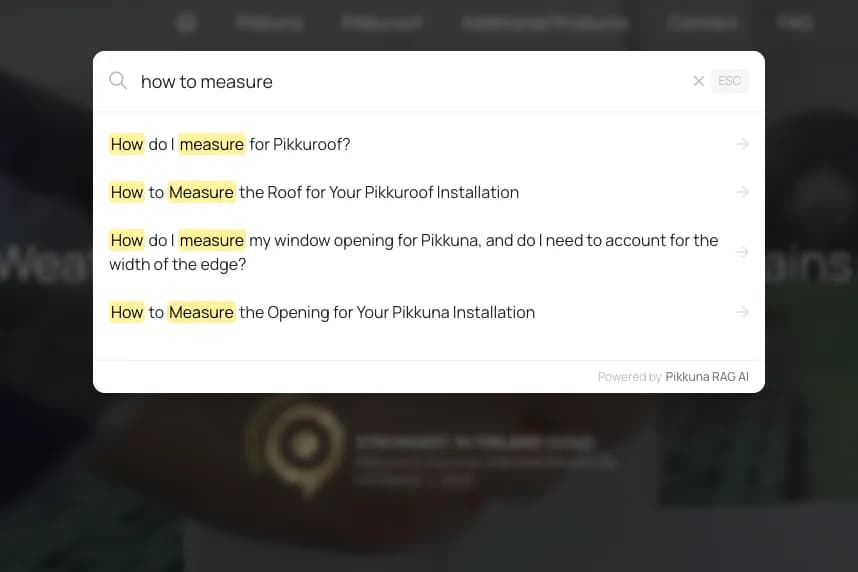
Pikkuna โ€” i18n RAG AI System

RAG system on OpenAI and Upstash Vector with 30 language support. Includes streaming chatbot, hybrid search (semantic + keyword), AI ticket classifier, and

Pikkuna โ€” Real-time SVG Product Configurator
March 10, 2025
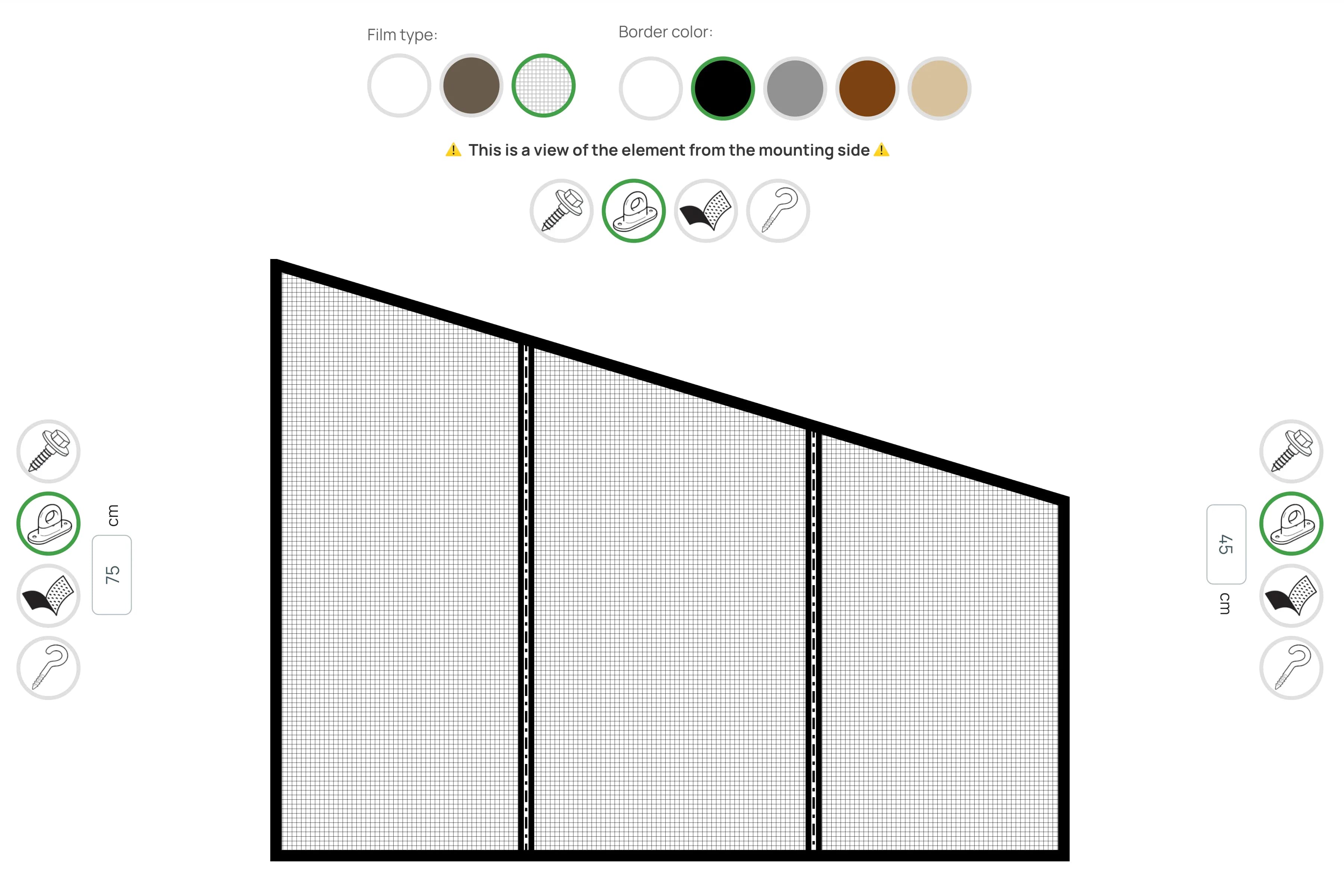
Pikkuna โ€” Real-time SVG Product Configurator

Client-side SVG configurator with live preview for designing vinyl curtains and roofing panels.

What clients say

โ€œ

We'd just raised and needed to double the engineering team fast, but nobody internally had hired at that scale or owned the architecture decisions that came with it. A full-time CTO was a six-month search we didn't have time for. Iurii held the role two days a week in the meantime โ€” he set up the interview loop, sat in on the senior candidates, killed a rewrite the team was quietly drifting toward, and made the infrastructure call before it turned into a fire. When we finally hired someone permanent the handover took a week because everything was already documented. He ran it like an owner, not a consultant billing hours.

Kasper Holm ๐Ÿ‡ฉ๐Ÿ‡ฐ

CEO

Topics

LeadershipCTOHiringArchitectureStrategy
โ€œ

I'm a non-technical founder and I'd been making technology decisions by guessing, which was getting expensive. Iurii joined as a fractional CTO one day a week and the difference was immediate โ€” he set up a sane roadmap, vetted two contractors I was about to overpay, and translated what the dev team was telling me into plain language so I could actually make calls. He's not there to write all the code; he's there so I stop making the wrong bets.

Matteo Conti ๐Ÿ‡ฎ๐Ÿ‡น

Founder

Topics

LeadershipCTOHiringStrategy
โ€œ

We had a small in-house dev team and no one senior enough to make the hard architectural calls. Hiring a full-time CTO didn't make sense at our stage, so we brought Iurii in two days a week. Within a month he'd untangled the deployment process, sat in on hiring interviews, and helped the team push back on a feature request from sales that would have cost us six weeks. He treats the role like a partner, not a consultant billing hours.

Joachim Weber ๐Ÿ‡ฉ๐Ÿ‡ช

CEO

Topics

LeadershipArchitectureCTO

Related articles

Fractional CTO: What They Do, Cost, and When to Hire One
April 30, 2026ยท 11 min
Fractional CTO: What They Do, Cost, and When to Hire One

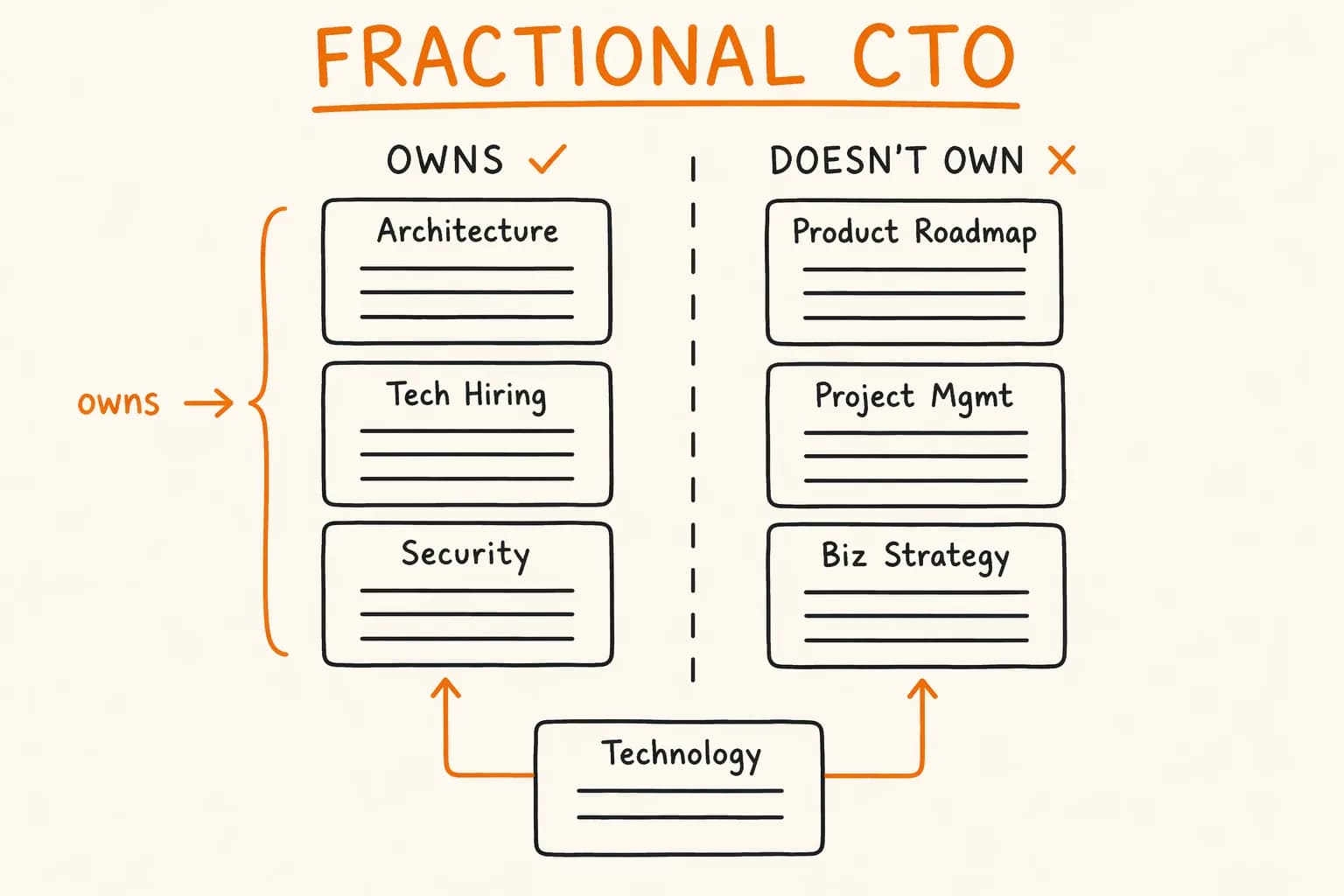
Fractional CTO is one of the most misused titles in tech consulting. Here's what the role actually covers, what it doesn't, and how to spot the real thing.

Topics

LeadershipIT StrategyBusinessFreelanceCTO
No IT Manager? The Hidden Cost of Unmanaged IT for SMBs
March 18, 2026ยท 5 min
No IT Manager? The Hidden Cost of Unmanaged IT for SMBs

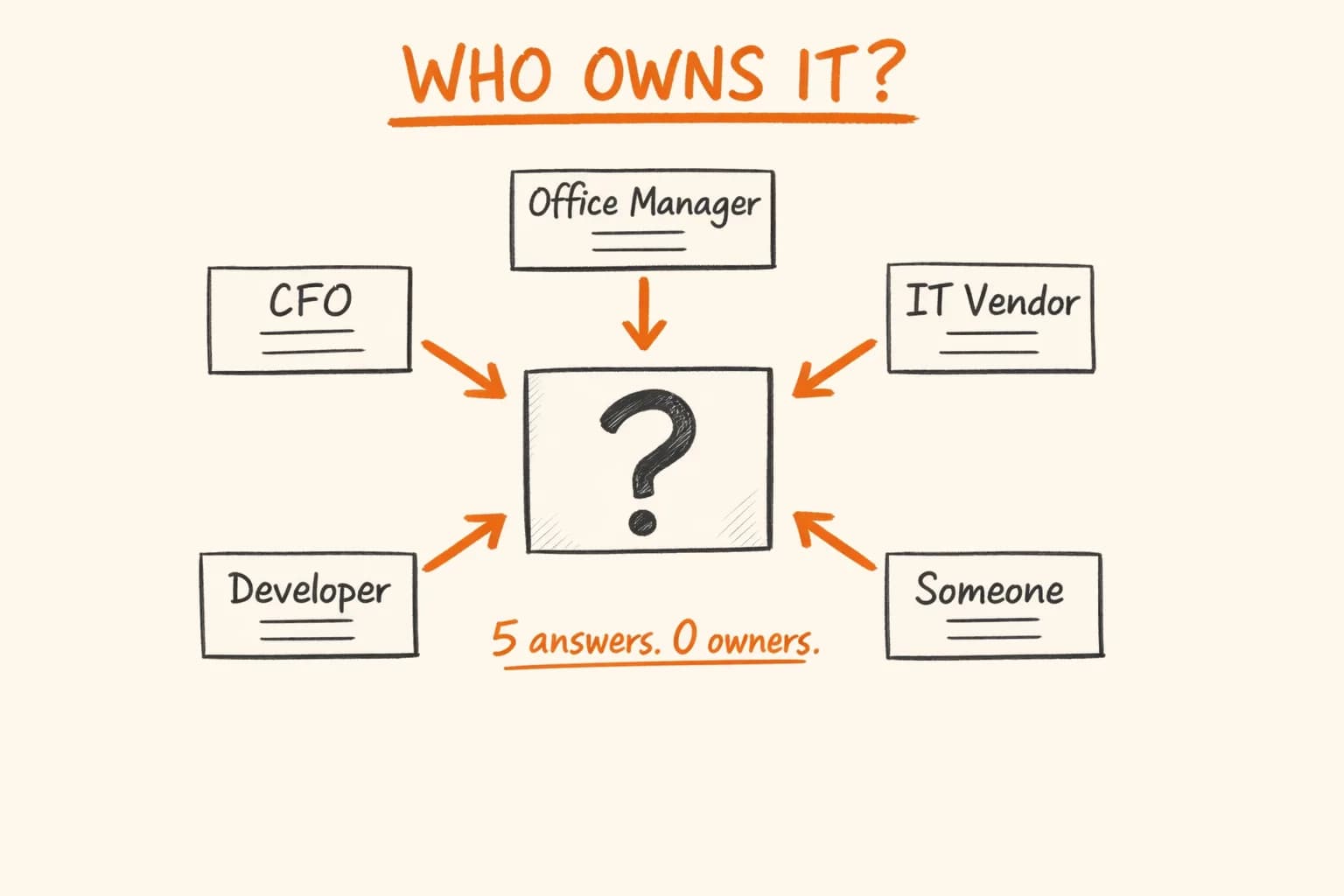
Who is responsible for your business IT? Most growing companies have IT no one actually owns. What that costs in wasted hours, unmanaged risk, and the fix.

Topics

BusinessIT StrategyLeadershipCTO
Fractional IT Partner vs In-House IT Department: Cost Breakdown
March 30, 2026ยท 5 min
Fractional IT Partner vs In-House IT Department: Cost Breakdown

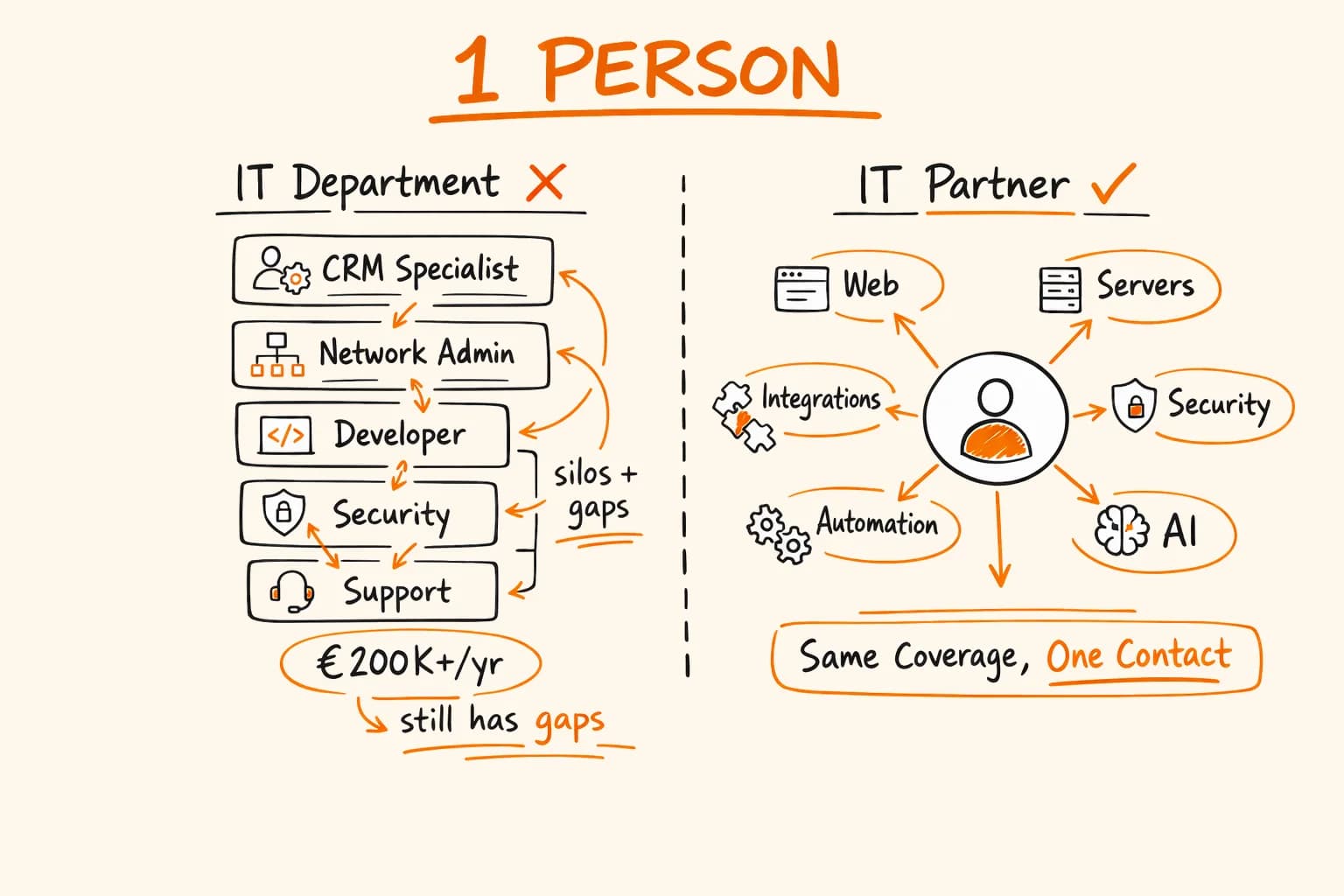
Fractional IT partner vs in-house IT department: most growing businesses don't need a full team. One experienced partner covers the same scope for less.

Topics

BusinessIT StrategyAutomationCTO
IT Audit Checklist: What to Expect in Week One
March 25, 2026ยท 5 min
IT Audit Checklist: What to Expect in Week One

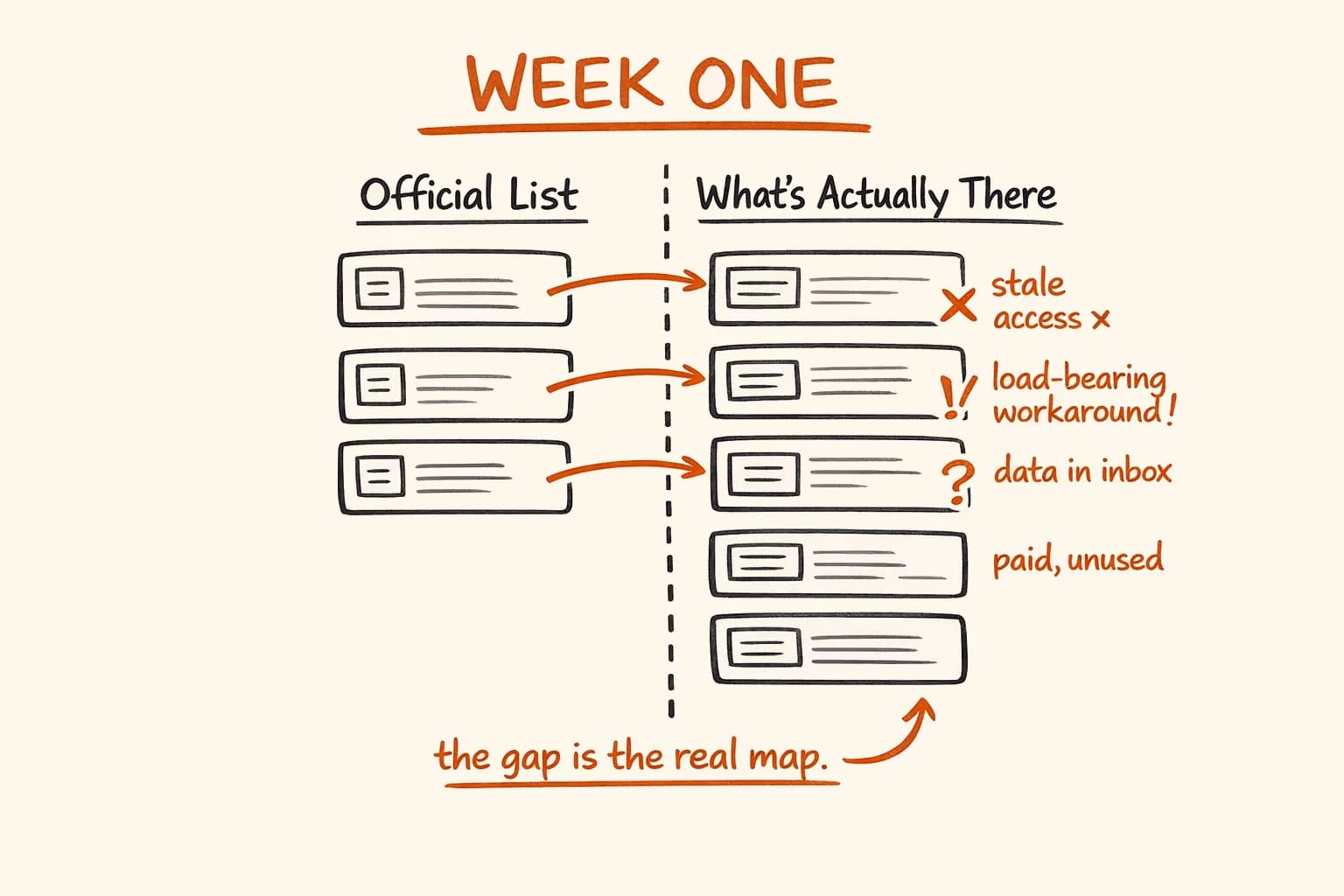
IT audit first week checklist: what I map before fixing anything for a new business client โ€” usually different from what anyone in the company thinks.

Topics

BusinessIT StrategyProcessCTO
5 Signs Your Business IT Setup Is Costing You Money
March 23, 2026ยท 5 min
5 Signs Your Business IT Setup Is Costing You Money

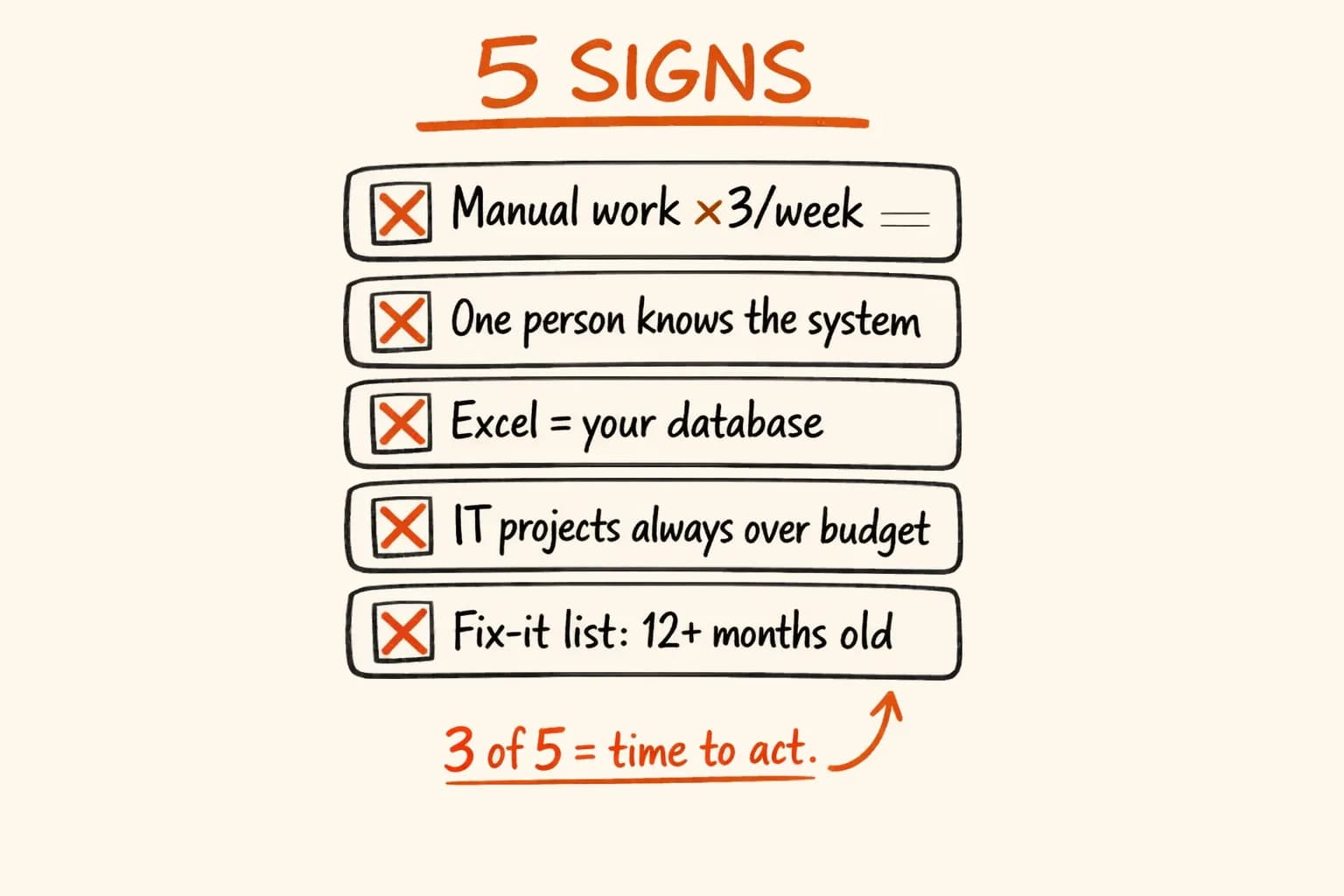
5 signs your business IT is holding you back: a self-diagnostic for founders and managers. If three of these apply, your IT setup is costing you money.

Topics

BusinessIT StrategyCTO