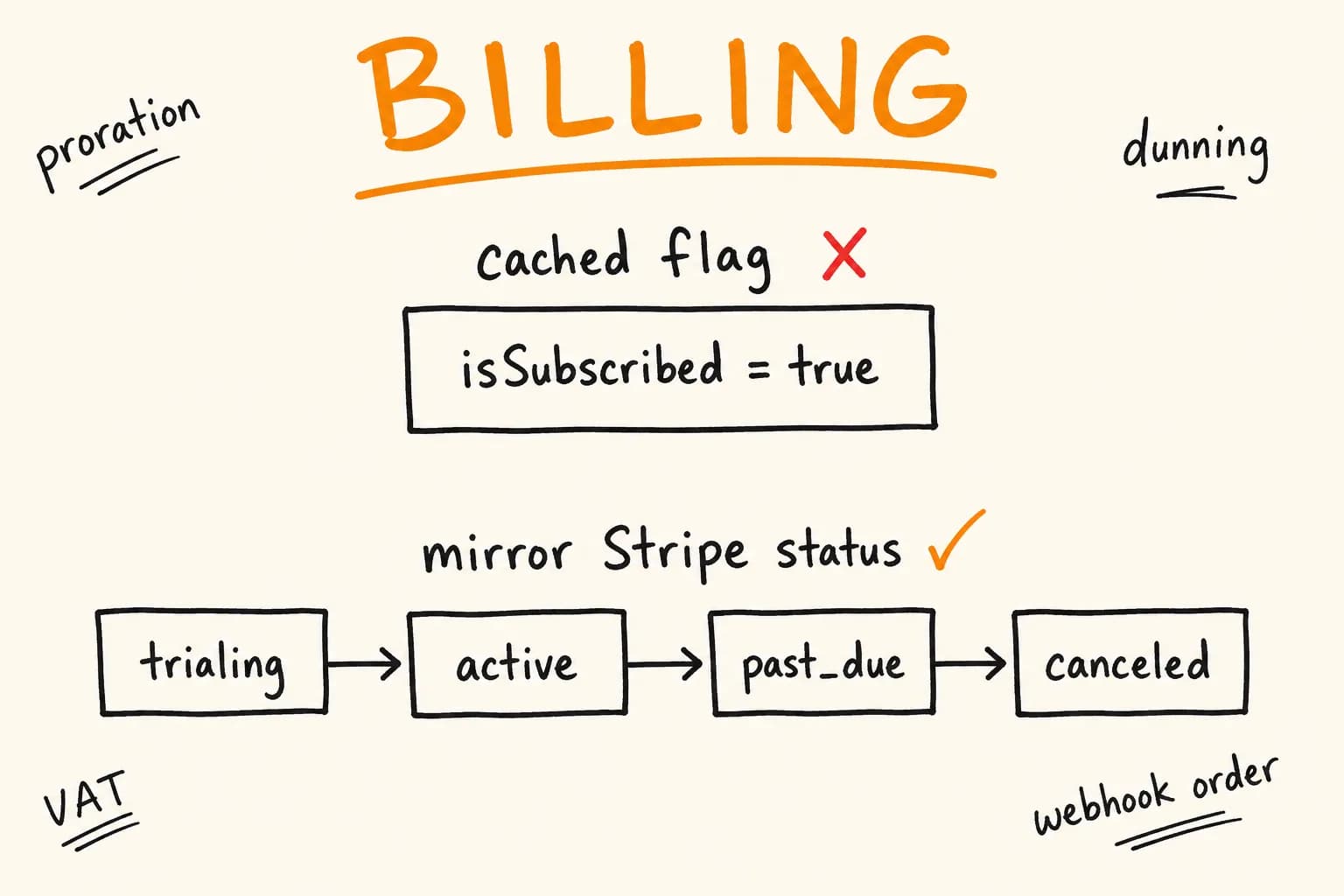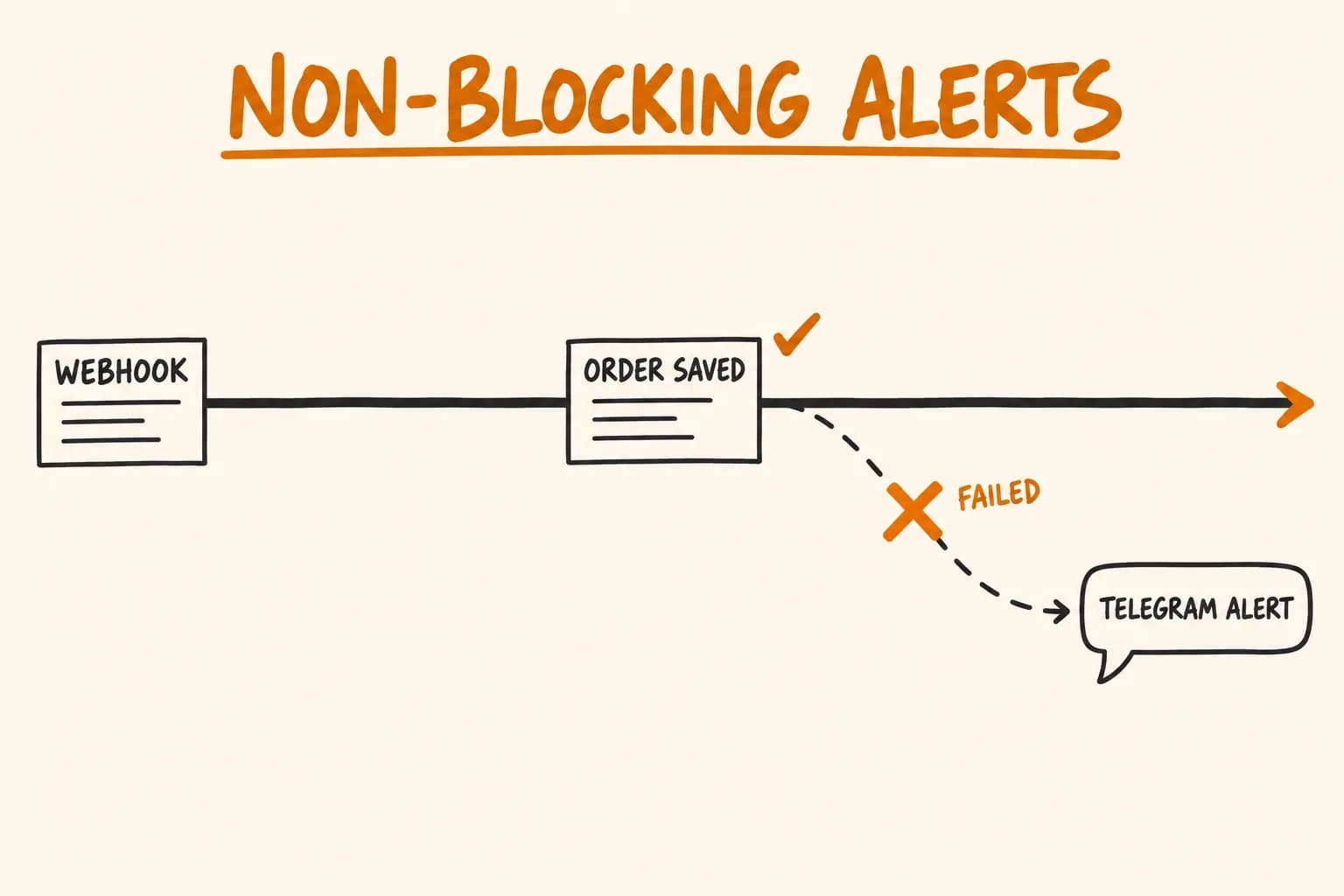
Short answer: in a payment webhook, do the one step you cannot lose first, and let it fail loudly so Stripe redelivers. Only after it has succeeded, send the chat alert, and make that send unable to throw into the handler: catch, log, move on. A Telegram outage then costs you one alert instead of a 500 on a paid order.
The catch is that ‘cannot throw’ is not ‘cannot fail’, and the alert that fails is gone. Below is how I split a Stripe webhook in Pi-Pi, a Next.js and Stripe store whose analytics and order pipeline I built, and then what the design does not protect you from. The snippets are simplified; the structure is what the code does.
What goes wrong when the alert sits in the handler
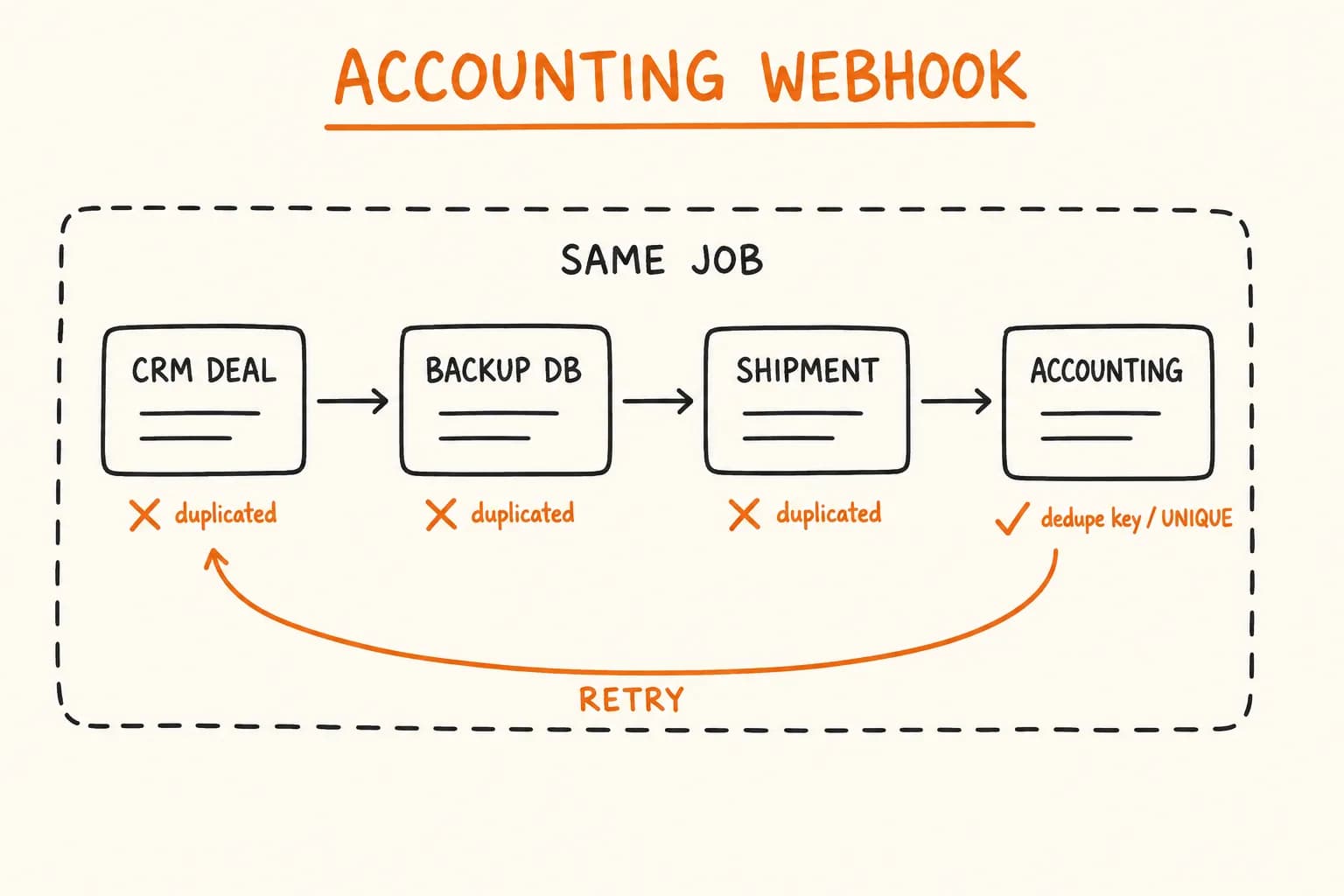
A payment_intent.succeeded handler usually does a few things: record the order, send some emails, post to a chat. The tempting version awaits all of them in order. Then a slow or failing chat API becomes a payment-path problem. If the alert throws and the handler returns 5xx, Stripe treats the delivery as failed and sends the event again. You have turned a nice-to-have into a retry loop on a payment that already went through.
The opposite mistake is also real: alert first, persist second. Now the warehouse is told about an order that your system failed to save.
So the handler needs two classes of work with different failure rules.
Split the handler: critical step, then best-effort steps
In this handler the order of operations is:
- Verify the signature and parse the event.
- Look up the order. If its status is already a post-payment one (
Paidand later), log a duplicate and stop. - Persist the paid order to the CRM. This write sets the status to
Paid, so it is both the sync and the idempotency marker. - Dispatch the notifications, without waiting for them.
- Return 200.
Simplified:
const PROCESSED = ["Paid", "Processing", "Shipped", "Delivered"];

try {
  const existing = await findOrderByNumber(order.number);
  if (existing && PROCESSED.includes(existing.status)) {
    return NextResponse.json({ received: true }); // duplicate delivery
  }

  // Critical: writes status "Paid". Throws on failure.
  await syncPaidOrder(order);

  // Best-effort: not awaited, rejections caught.
  void dispatchNotifications(order).catch((err) =>
    log.error({ err, orderNumber: order.number }, "Notification dispatch failed")
  );
} catch (err) {
  log.error({ err }, "Webhook handler failed");
  return NextResponse.json({ error: "Webhook handler failed" }, { status: 500 });
}

return NextResponse.json({ received: true });
The critical step is awaited and its failure is not swallowed: the outer catch returns 500 and Stripe redelivers. That is intended: an unsynced paid order is worse than a retry. The dispatch, on the other hand, is void with its own .catch, so nothing it does can reach the outer catch.
A side effect of the ordering: if the critical step fails, no alert has gone out yet. The notifications fire on the redelivery that succeeds, not before.
The dispatch: allSettled plus a catch per task
The notifications go out as one batch, and each task carries its own catch:
async function dispatchNotifications(order: Order): Promise<void> {
  await Promise.allSettled([
    sendWarehouseEmail(order).catch((err) => log.error({ err }, "Warehouse email failed")),
    sendTelegramAlert(order).catch((err) => log.error({ err }, "Telegram alert failed")),
    sendInvoiceEmail(order).catch((err) => log.error({ err }, "Invoice email failed")),
    trackPurchase(order).catch((err) => log.error({ err }, "Purchase tracking failed")),
  ]);
}
Promise.allSettled makes the batch wait for every task without short-circuiting on the first rejection. The per-task .catch gives each failure its own log line saying which step died. Together they mean one broken step does not suppress the others. Running it off the response path also keeps heavier work in the batch, such as rendering an invoice PDF, out of the time Stripe waits for its answer.
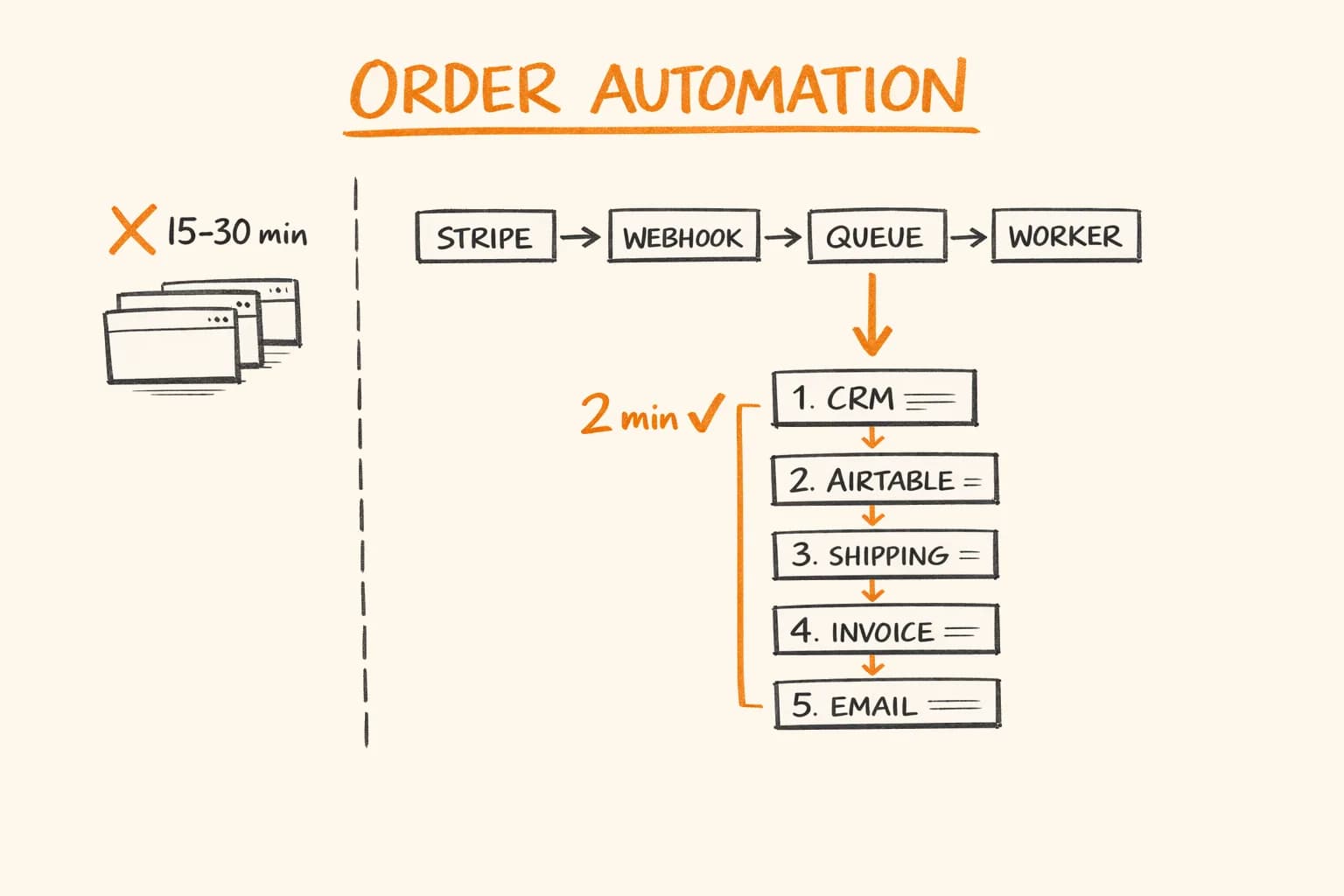
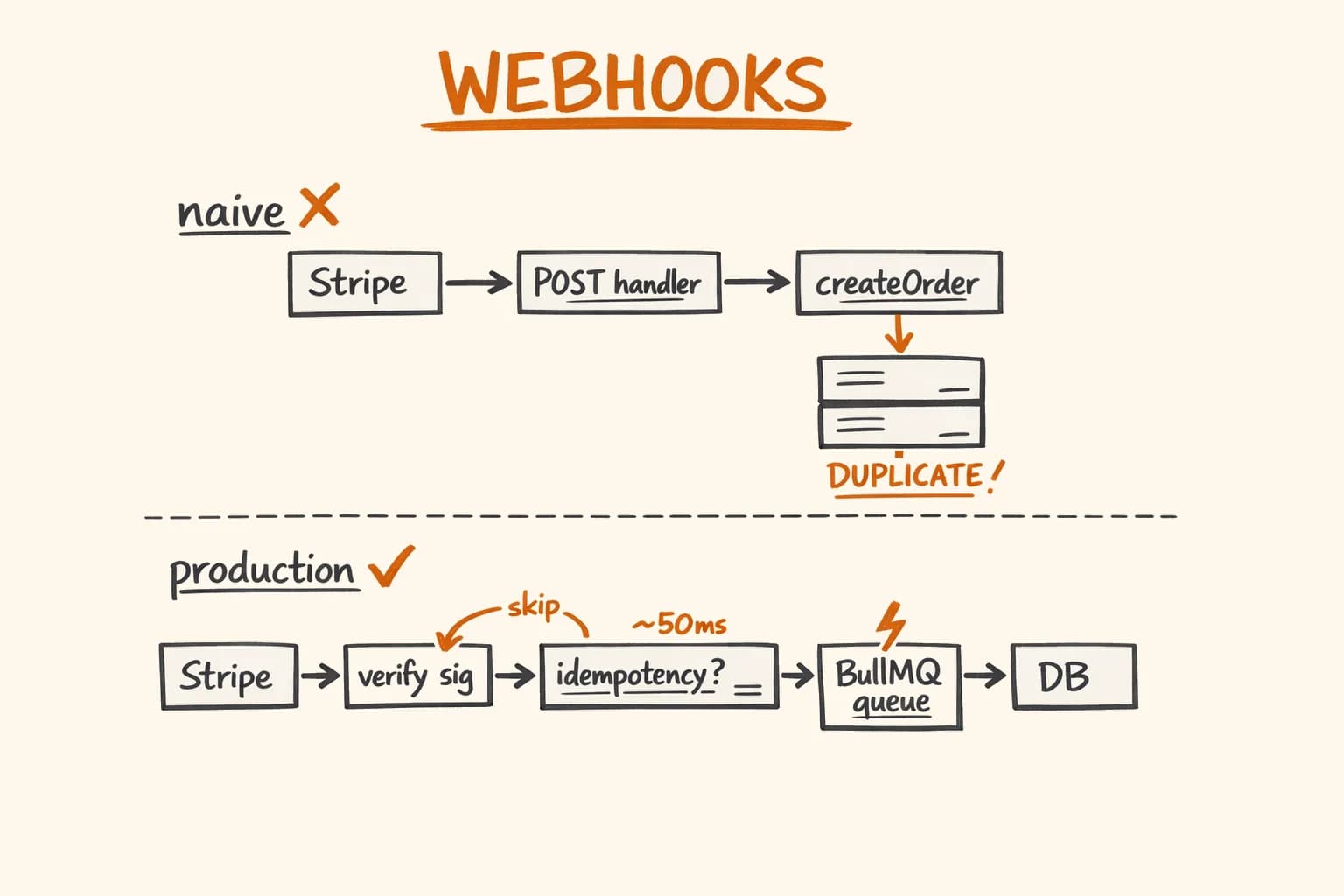
The webhook-side question of how to receive events reliably (queues, signature checks, deduplication) is a different problem; I covered it in Stripe webhooks: idempotency, retries and queue setup. That article uses a queue; the handler here writes to the CRM synchronously. This article starts after the critical step is safe.
The sender contract: try/catch, log, never throw
The Telegram module exports a small function per order source. Each one wraps the whole send in try/catch:
export async function sendTelegramAlert(order: Order): Promise<void> {
  try {
    await postToTelegram(buildMessage(order));
  } catch (err) {
    log.error(
      { err, orderNumber: order.number },
      `Telegram notification failed: ${(err as Error).message}`
    );
  }
}
The helper underneath has two rules:
async function postToTelegram(text: string): Promise<void> {
  const token = process.env.TELEGRAM_BOT_TOKEN;
  if (!token) {
    log.warn("TELEGRAM_BOT_TOKEN not set - skipping Telegram notification");
    return;
  }

  const res = await fetch(`https://api.telegram.org/bot${token}/sendMessage`, {
    method: "POST",
    headers: { "Content-Type": "application/json" },
    body: JSON.stringify({ chat_id: CHAT_ID, text }),
  });

  if (!res.ok) {
    const detail = await res.text();
    throw new Error(`Telegram sendMessage failed (${res.status}): ${redactSecrets(detail)}`);
  }
}
Here text is whatever your message builder produces. Mine is a compact card for the people packing the order; it contains customer data, so it does not appear here, and a placeholder like New paid order <reference>, <n> items is all you need to follow the code.
- Unconfigured means skip, not crash. A missing token logs a warning and returns. A development or preview environment without a bot should still process the webhook.
- A non-2xx response is an error, inside the helper.
fetchonly rejects on network failure; an HTTP error status is a resolved response. So the helper throws explicitly, and the wrapper above it is what turns that throw into a log line. - The response body goes through a redactor. The bot token is part of the request URL, and error text ends up in logs and in an error tracker. I run the body through a secret redactor before it becomes part of the message. That is my reasoning for the redactor, not a guarantee about what Telegram returns.
Note where the try/catch lives: in the exported wrapper, not around the HTTP call everywhere. The helper does throw. The contract is that its callers do not.
An honest point: the swallow is the second layer
Reading this code, you could conclude that the try/catch is what protects the webhook. It is not the only thing. Even without it, a failed alert could not trigger a redelivery here, for two reasons:
- the dispatch is not awaited, so a rejection never reaches the handler’s outer
catch, and its own.catchlogs it; - if Stripe did send the event again, the status check finds
Paidand stops before anything is dispatched twice.
The sender’s try/catch is a second layer. It matters if someone later awaits the dispatch, calls the sender from another place, or removes the outer catch. It also gives a failure one log line with the order reference attached. I would keep it, but I would not claim it is what prevents duplicates. The guard and the fire-and-forget do that.
What this design costs
I would rather you know the limits before copying it.
It needs a long-lived process. Not awaiting the dispatch works because the Node server keeps running after the response is sent. On a platform that freezes or stops the process once the response is returned, un-awaited work is not guaranteed to finish. There you need that platform’s mechanism for work after the response (check its documentation for the exact API), or an outbox. This handler runs on a long-lived server, so the assumption holds here; verify it for yours.
A failed alert is lost. The failure is logged and nothing else happens. There is no retry, no outbox, no dead-letter queue. If Telegram returns an error at that moment, nobody gets that message unless someone reads the log.
There is no timeout. The fetch call in this code sets none. A hanging connection leaves that task pending inside the batch. I have not tested what the runtime’s defaults do in that case, so treat it as an observed gap in this code, not as a measured behaviour. Adding an AbortSignal.timeout(...) is the obvious fix. If you add one, the abort becomes just another error the wrapper logs.
A crash between persist and dispatch loses the alerts. The order is saved and marked Paid, then the process dies before the dispatch runs. On redelivery the guard sees Paid and skips. Nothing re-sends. With the dispatch in memory and no outbox, that window exists.
It is not exactly-once. The duplicate guard is a read of the status followed by a later write. Two deliveries that arrive close together can both read a status that is not yet Paid. It protects against the normal redelivery case, not against true concurrency. If that matters, you need a constraint or a lock on the write, not only a check. For the key-based version of this problem, see idempotency keys for API retries.
The store is part of the design. Here the CRM record is the idempotency marker. That fits this pipeline; I would not present it as the general answer. A database row with a unique constraint is the more common choice.
When this is the wrong design
If the alert is the product, do not do this. A customer-facing notification, a payment receipt someone relies on, an alert that triggers a legal or operational duty: those need delivery tracking. Write the intent to a table in the same step as the critical write (an outbox), have a worker send it, retry with backoff and mark it done. Best-effort is right when a missed message is an inconvenience that someone will notice another way, such as a packing queue that also receives an email.
For work that must be retried and observed, a proper queue is the tool. Background jobs in Node.js covers that side, including a Telegram message when a job finally fails.
Noticing dropped alerts
Best-effort should not mean silent. The failure path above writes an error-level log line with the order reference and the step name. What you do with it depends on your logging stack, but the principle is generic:
- Treat error-level lines from the notification module as a signal, not noise. If errors from that component are mixed into everything else, nobody will look.
- Put a log-based monitor on them, with a threshold that fits your volume: one failed alert may be a blip, a run of them means the token or chat changed.
- Keep the order reference in the line so a missed alert can be re-sent by hand.
In this code the signal is the log line. What watches it is a separate decision.
The webhook is also an inbound surface
Failure isolation is only half of a webhook’s hygiene. Signature verification, replay and secret handling are the other half, and they sit on the inbound side of the same endpoint; webhook security in production covers them. This article is about outbound failure only: what your own side effects are allowed to do to the response.
Checklist
- Name your one critical step. It is awaited, and its failure returns 5xx.
- Make that step also your idempotency marker, and check it before you do anything.
- Dispatch everything else after it, not awaited, with a catch on the outer promise. Only do this on a long-lived process; otherwise use the platform’s after-response mechanism or an outbox.
- Inside the batch, use
Promise.allSettledand a catch per task, each with its own log message. - In the sender: try/catch, log with a reference, skip when unconfigured, redact secrets in error text.
- Set a timeout on the outbound call. This code does not, and you should.
- Decide, in writing, whether a lost alert is acceptable. If not, use an outbox.
- Put a monitor on the error log line.
The store this came from is described in the Pi-Pi case study.
Further reading:
- Stripe Webhooks: Idempotency, Retries, and Queue Setup – the receiving side
- Idempotency Keys: Building Retries That Don’t Double-Charge – deduplicating retried requests with a key
- Webhook Security Beyond the Signature Check – the inbound trust side
- BullMQ vs pg-boss vs Cron: Node.js Background Jobs Compared – when work must be retried and observed
- pi-pi.ee – B2B E-commerce for Waterless Urinal Systems – the project