
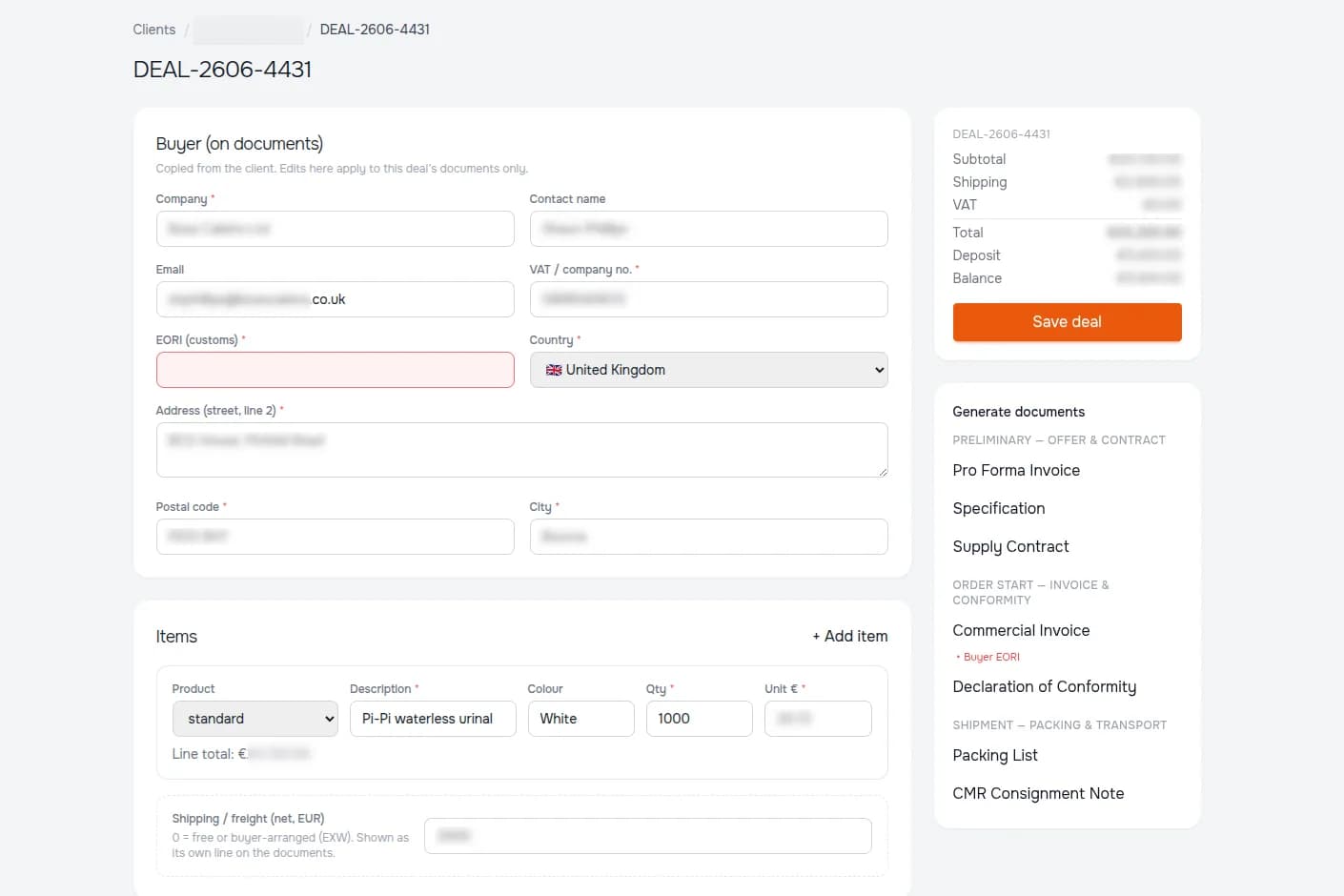
Internal sales portal that turns a wholesale deal into a full set of trade paperwork – pro forma, contract, commercial invoice, packing list, CMR and more –
A bot your customers or staff actually use – orders, bookings, support, internal lookups – plus Mini Apps with payments inside Telegram. From €1,600.
Based in Finland (UTC+2) · VAT-registered FI29845875 · Respond within 24 hours
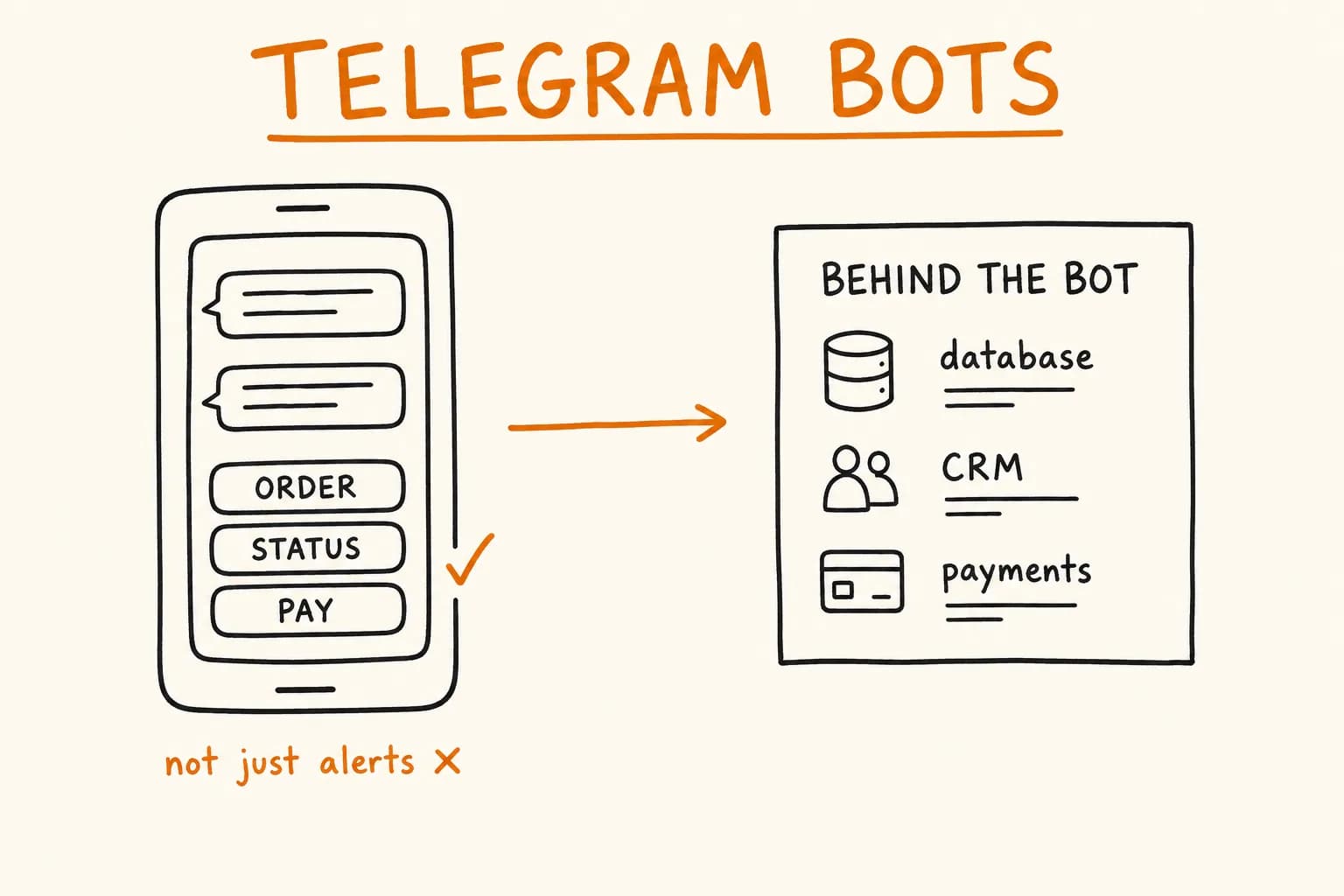
A bot is not a notification channel. Sending an alert into a chat takes an afternoon. A bot is a product: it has a conversation flow, it remembers state between messages, it reads and writes your real data, it takes payments, and someone has to be able to run it after launch. Those are two completely different pieces of work, and mixing them up is why so many bots are abandoned within a month.
Telegram is worth building on for one blunt reason: there is nothing to install and nothing to log into. No app store review, no password reset, no onboarding funnel – your customer taps a link and is inside your product. For a booking flow, an order status lookup, or a support queue, that removes most of the friction that kills adoption. Mini Apps go further: a full web interface running inside the chat, with Telegram handling identity and payments.
What I build: bots that do a job in your business, not demos. Ordering and booking flows, support triage that routes to a human when it should, internal tools where staff look something up or approve something without opening a laptop, and Mini Apps where the interface needs to be more than a chat.
For context on the platform: I’ve run Telegram in production as an operational channel – alerting for an open-source site-monitoring tool and execution notifications for an event-driven trading system. The bot work builds on the same API, with the product layer on top.
These are two different builds with two different price tags, and the wrong choice is expensive. The rule of thumb is how much interface the task needs:
One sentence: what should a person be able to do in the bot that they can’t do easily today? If we can’t write that sentence, the bot shouldn’t be built yet.
Every screen, every button, every dead end – including what the bot does with a message it doesn’t understand and where a human takes over.
You get a working bot to poke at early, not a demo at the end. Payments and integrations are tested against sandbox environments first.
Deployed with monitoring and logging, source code and credentials handed to you, and a short written walkthrough of how to run it and what to do when something breaks.
From €1,600 for a bot with a defined flow, storage, and one integration. Mini Apps and payment flows are quoted on top, after the scope is written down.
Hosting runs in your accounts and is billed by the provider, not by me – typically a few euros a month.
Ongoing changes after handover are hourly or a small monthly retainer, your choice. No lock-in: the code is yours.
Internal sales portal that turns a wholesale deal into a full set of trade paperwork – pro forma, contract, commercial invoice, packing list, CMR and more –

Role-gated admin dashboard for the HTPBE? SaaS platform – real-time KPIs, per-user quota tracking, and a zero-dependency bar chart, all server-rendered via
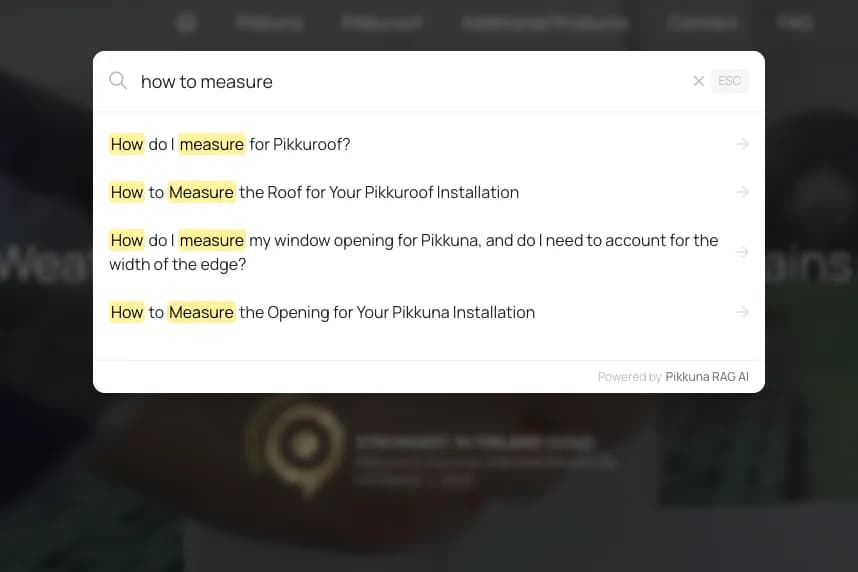
RAG system on OpenAI and Upstash Vector with 30 language support. Includes streaming chatbot, hybrid search (semantic + keyword), AI ticket classifier, and
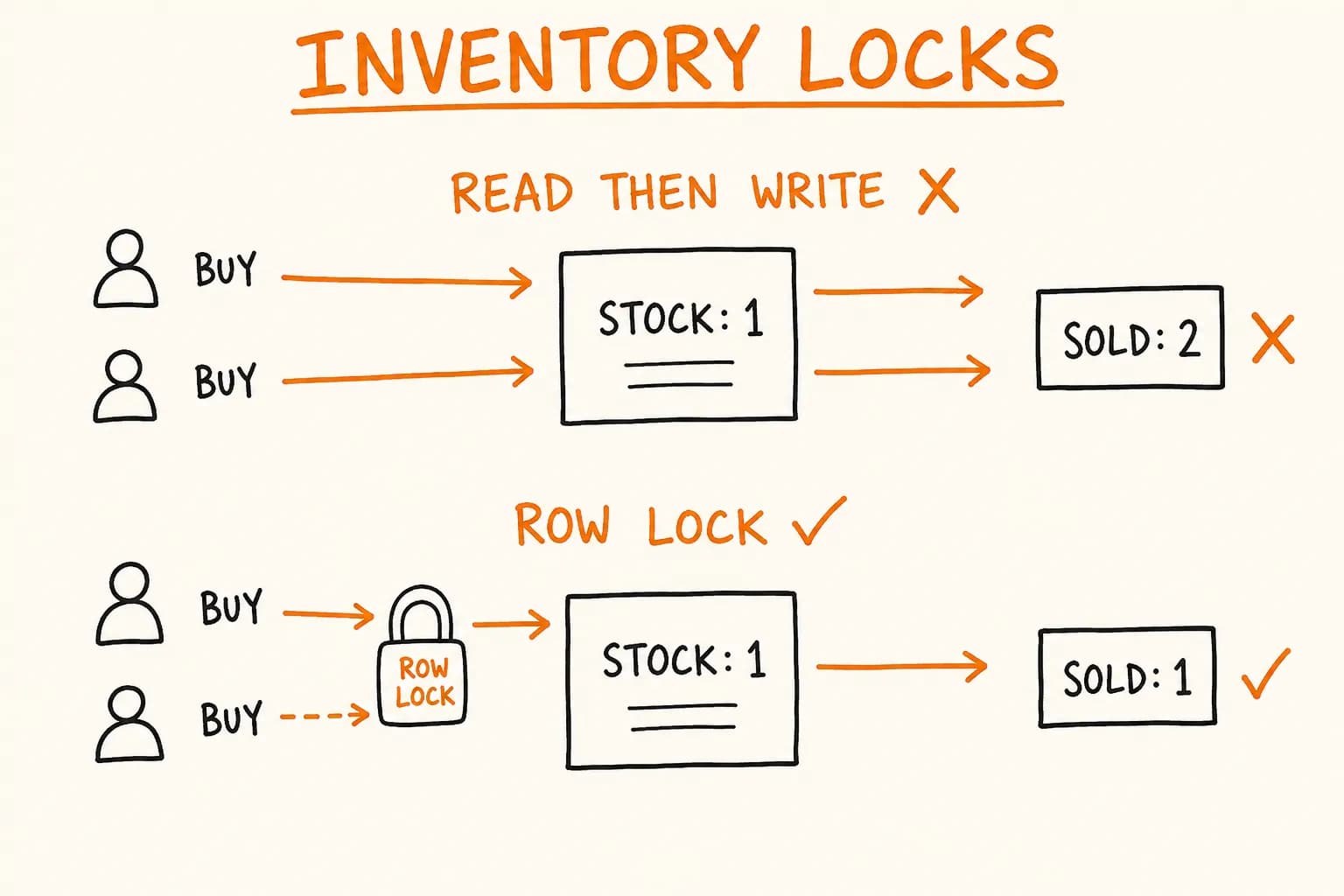
Prevent overselling under concurrent checkouts: reservations vs hard decrements, SELECT FOR UPDATE, deadlock-safe multi-line carts, and the payment window.
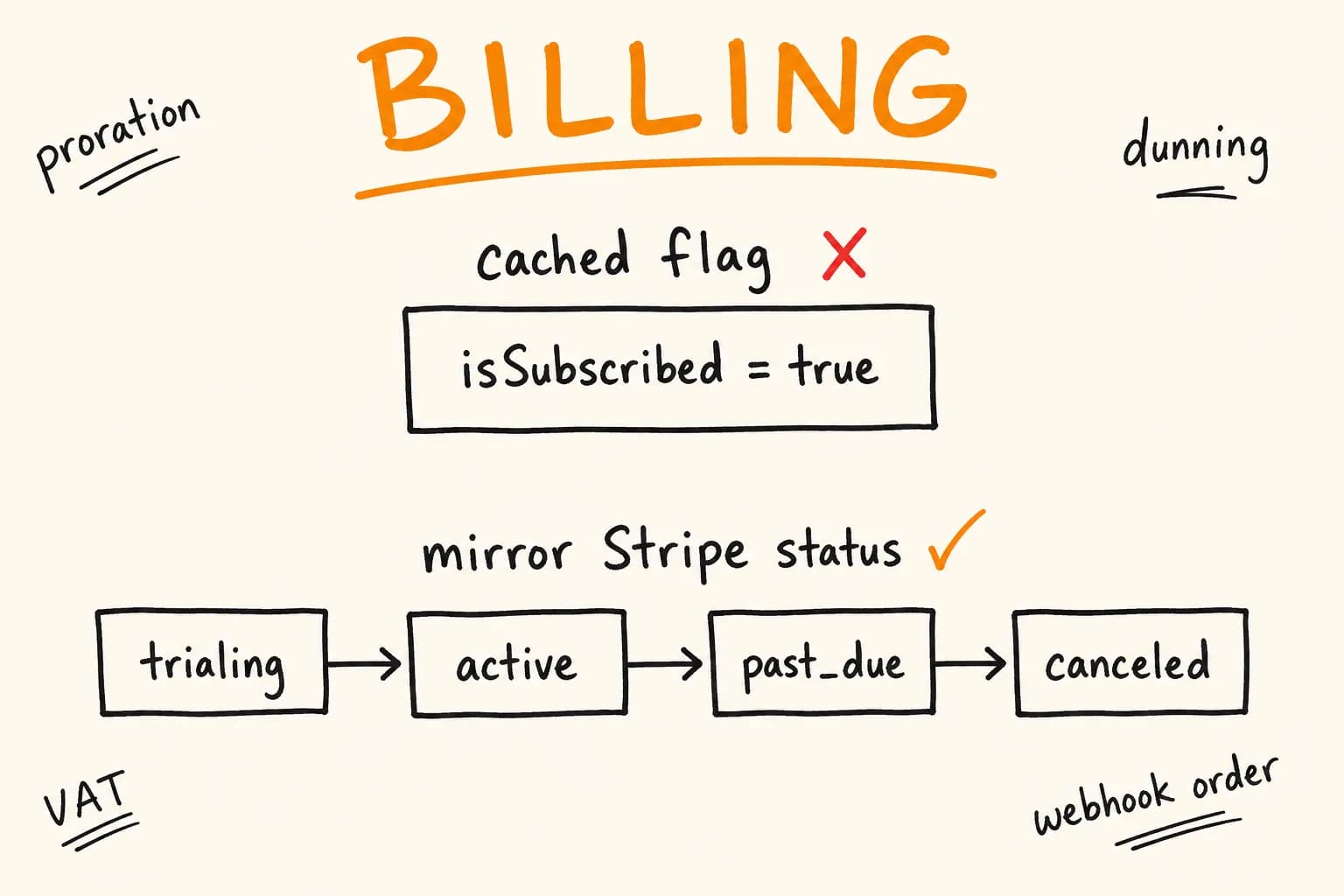
Subscription billing edge cases Stripe glosses over: proration, dunning, the state machine, cancellation timing, refunds, VAT, and webhook ordering.
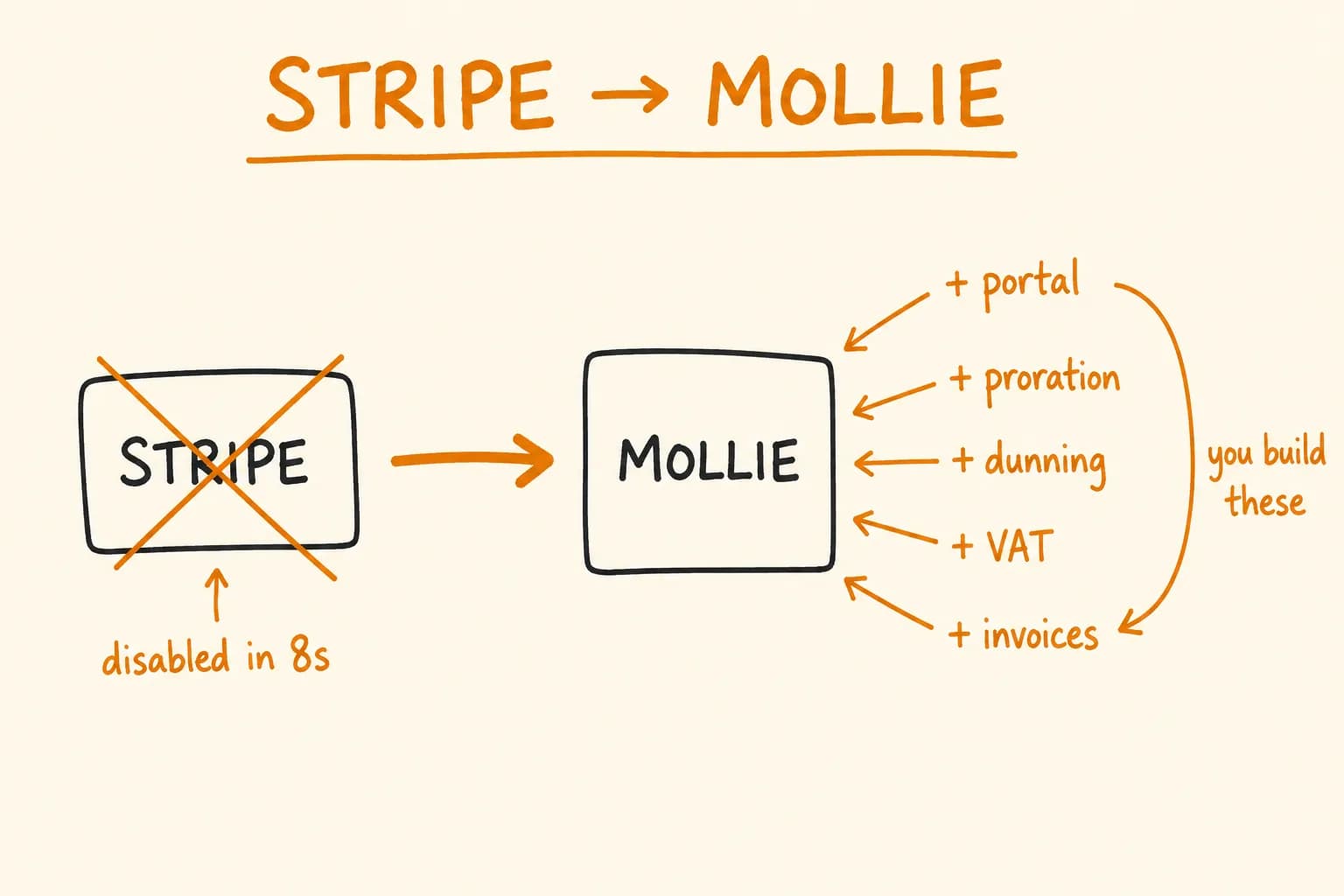
Stripe to Mollie migration in production: mandates instead of Subscriptions, thin webhooks, no proration, no portal, no Tax. What you rebuild yourself.
Iurii set up a second Telegram bot just for our side of the business. Once a month it sends me every invoice and accounting document I need without anyone having to dig through folders, and it
Tatiana 🇪🇪
Accountant, pi-pi.ee
Services
After the webshop launched, Iurii added a Telegram bot that pushes a notification for every order the moment it comes in, plus a daily sales summary so I don’t have to open the admin panel to know
Mark Tamm 🇪🇪
Account Manager, pi-pi.ee
Services
 Available
Ready to discuss your telegram bots & mini apps project?
Tell me what you’re building or stuck with. I’ll reply within 24 hours.