


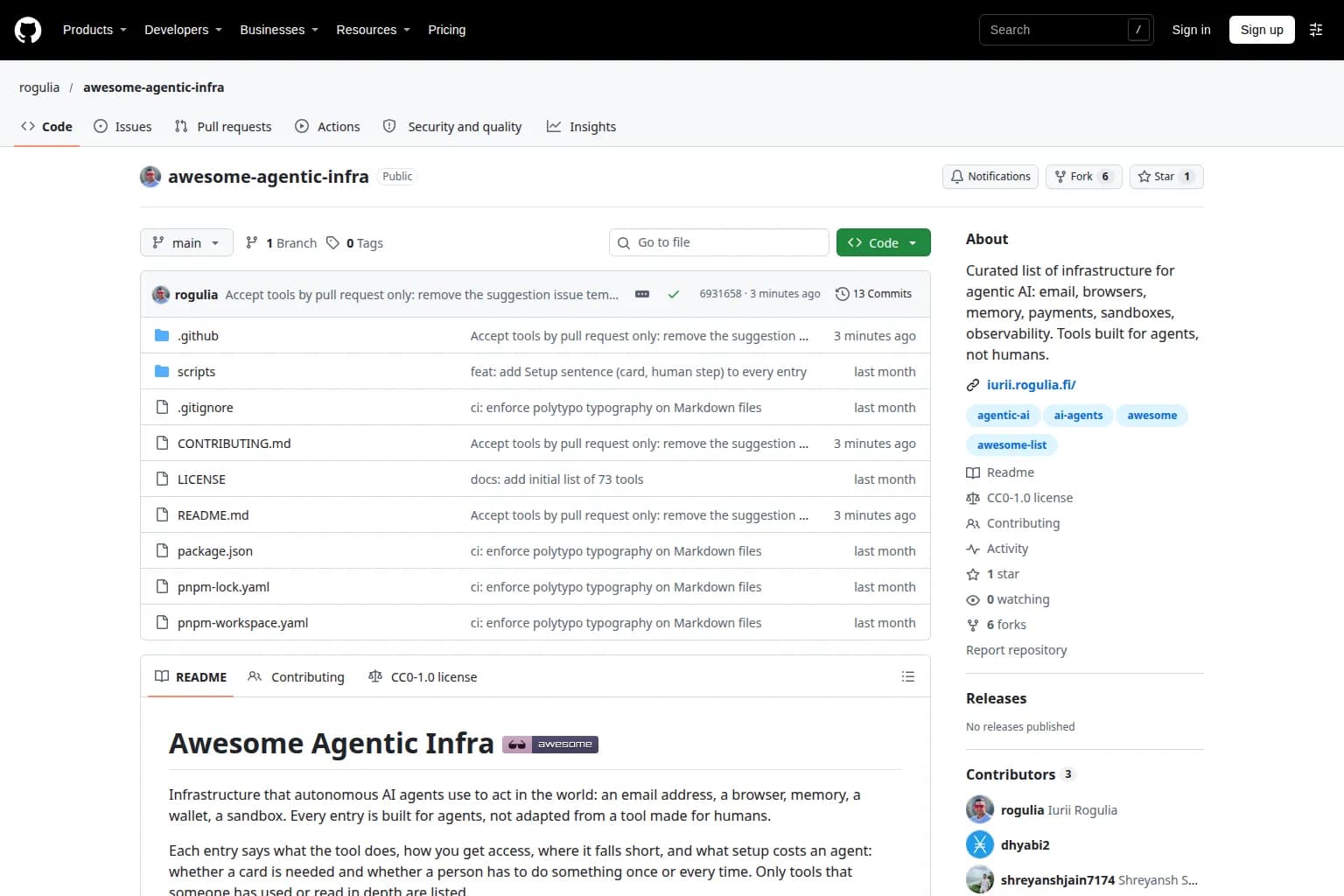
Curated open list of 77 tools that AI agents use to act in the world, from email and browsers to payments and sandboxes. Setup cost stated for each.
AI features, agents and chatbots built to run in production, by one engineer who owns the work from the first prompt to monitoring. I also tell you when AI is the wrong tool.
Based in Finland (UTC+2) · VAT-registered FI29845875 · Respond within 24 hours
Recent client work
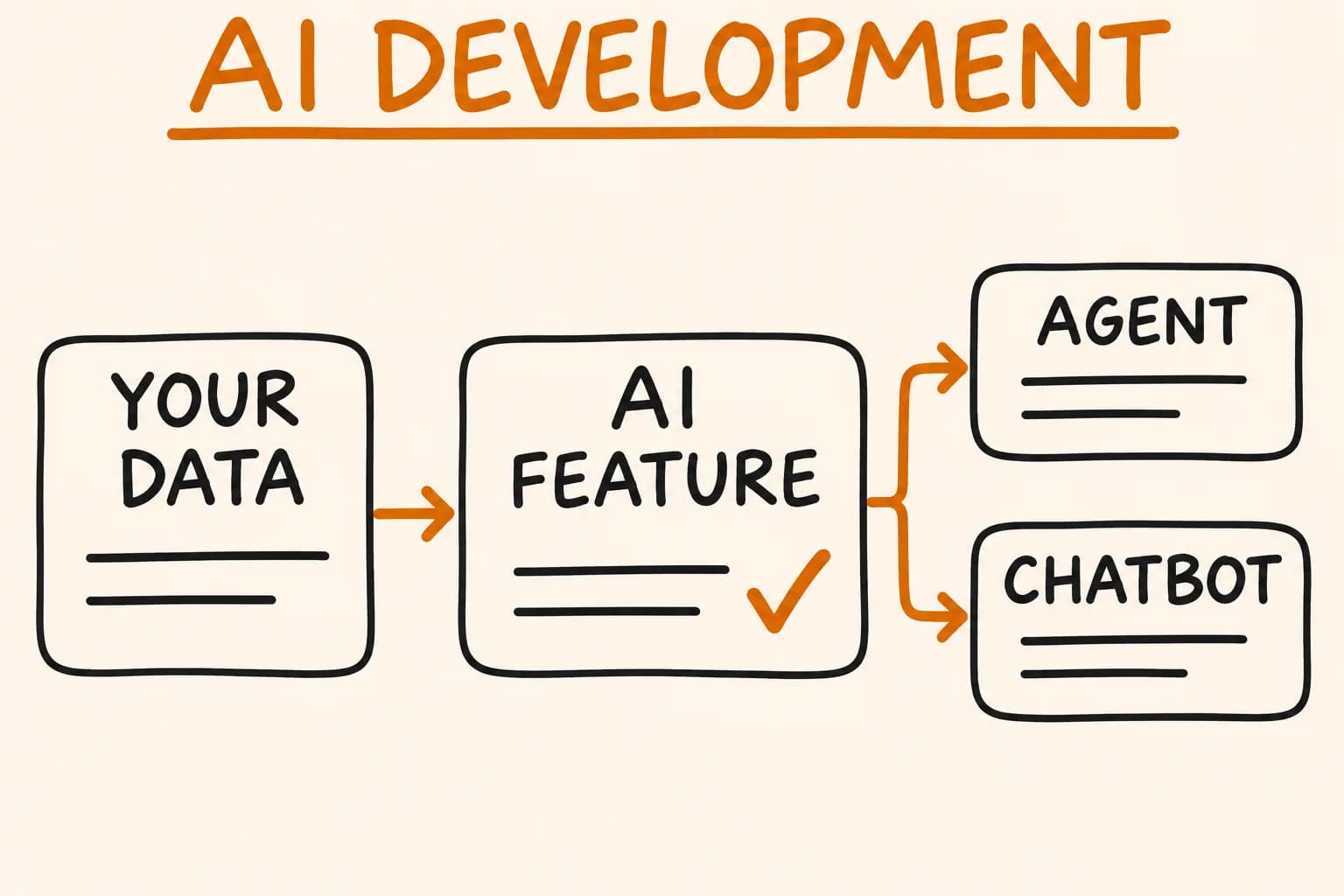
Each one has its own page with scope, process and projects.
AI integration services for your existing product. Whether it’s a chatbot, document processing, or smart recommendations – I’ll plug it in cleanly.
See detailsAgents that run a multi-step workflow, such as reading inbound email, researching the sender and scoring the lead, with validation, retries and a person making the final call.
See detailsA chatbot that answers from your own documents, in the customer’s language, and hands off to a person when it isn’t sure. Built on retrieval, not on guesses.
See detailsIndependent advice for teams deciding where AI pays off, whether to build or buy, and how to keep quality and API cost under control.
See detailsI’m a senior AI developer and LLM engineer, available for hire as an independent contractor. I build AI that has a job in a real system: answering customer questions in 30 languages, reading inbound email and scoring it, keeping a translation catalogue in sync, exposing a tool to an assistant through MCP. The model is one component. The rest is retrieval, validation, retries, permissions, logging and a way to measure whether it works.
I work remotely as a freelance AI engineer for companies, usually next to an existing product and an existing team, on contract or as a fixed project. My background is software engineering, not model research. I build generative AI features on LLM APIs (OpenAI, Anthropic, Gemini on Google Cloud); I don’t train models.
The work splits into four kinds of engagement, each with its own page: adding AI to a product you already have, building agents that run a multi-step workflow, building a chatbot that answers from your own data, and advisory work when you have not decided yet whether to build anything. Not sure which one you need? Describe the problem and I’ll say which fits, including when none of them does.
What should the system do, which mistakes are expensive, and what does a person still decide? If a rule or a plain query solves it, I say so before anything is built.
Prompting, retrieval or an agent pipeline are different costs and risks. I pick the lightest one that meets the quality bar on your data.
See AI Integration for existing productsI assemble labelled examples early and run every prompt or model change against them, looking at the costly errors first.
Output validation, timeouts, retries, usage and cost logging, alerts on failure. Your team gets the code and the runbook.
Curated open list of 77 tools that AI agents use to act in the world, from email and browsers to payments and sandboxes. Setup cost stated for each.
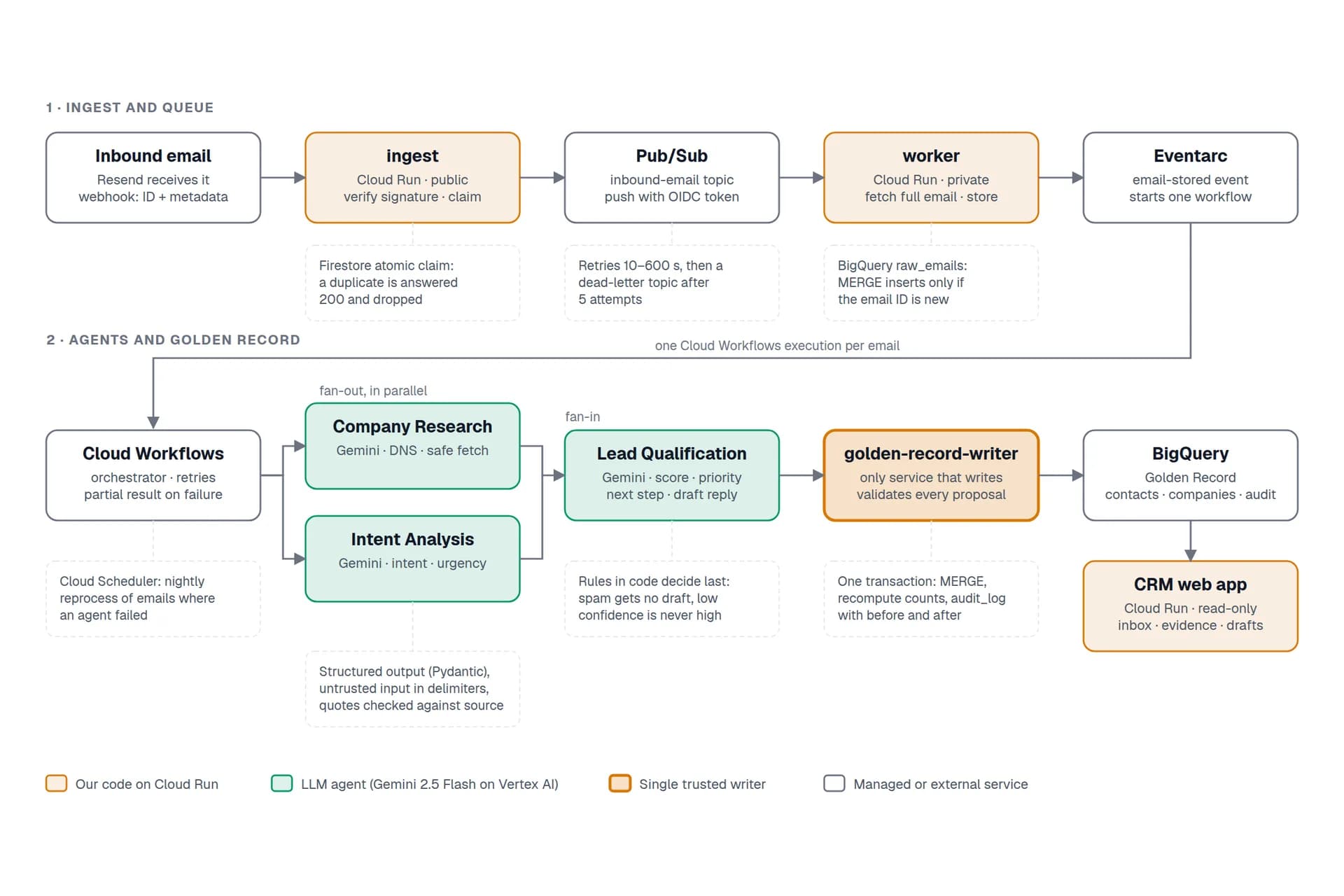
Three Gemini agents on Google Cloud research the sender, read the intent and score each inbound email. One trusted service writes the CRM data.
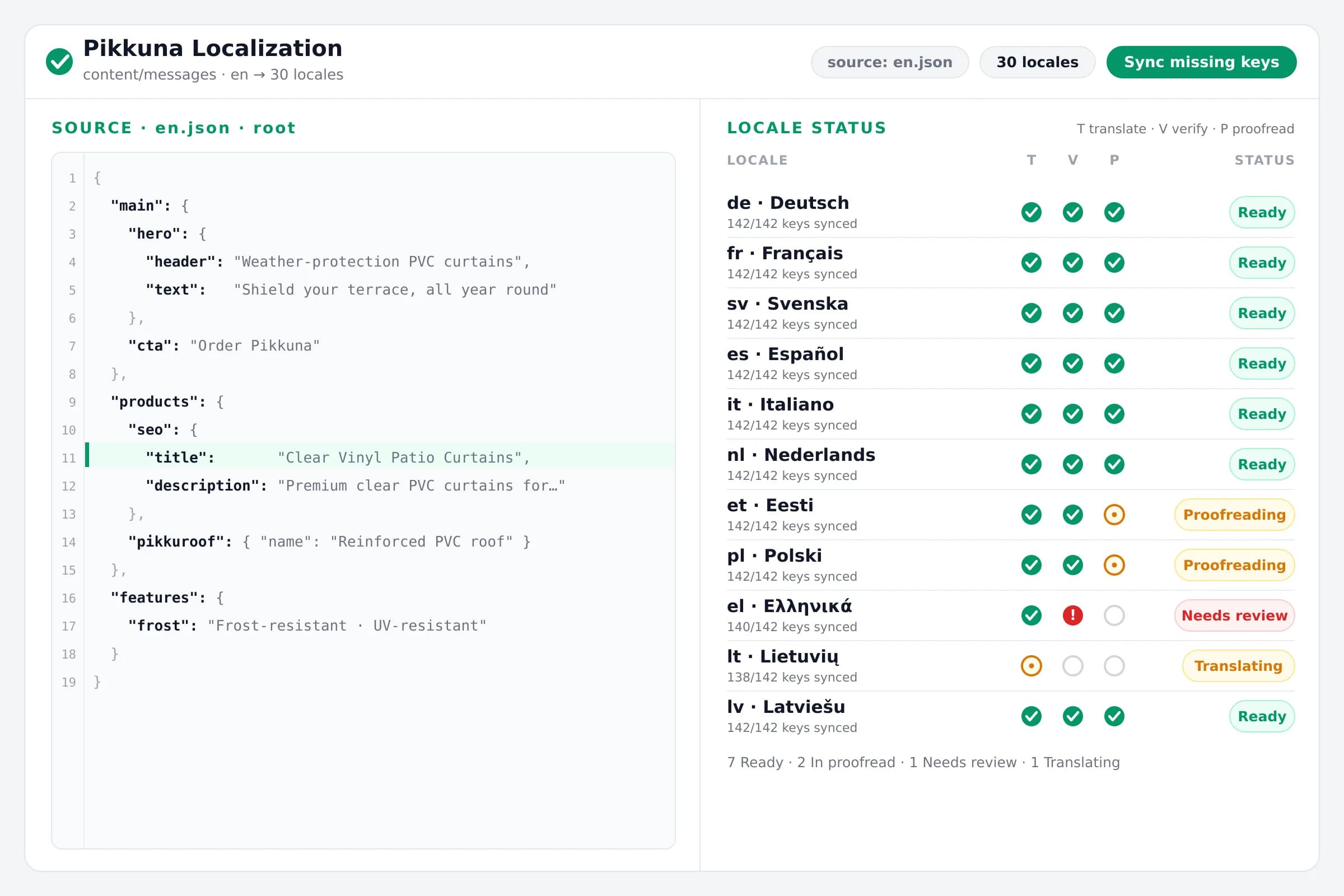
A production localization pipeline: OpenAI translates, another vendor’s model verifies, a separate AI agent proofreads, pytest guards structure.
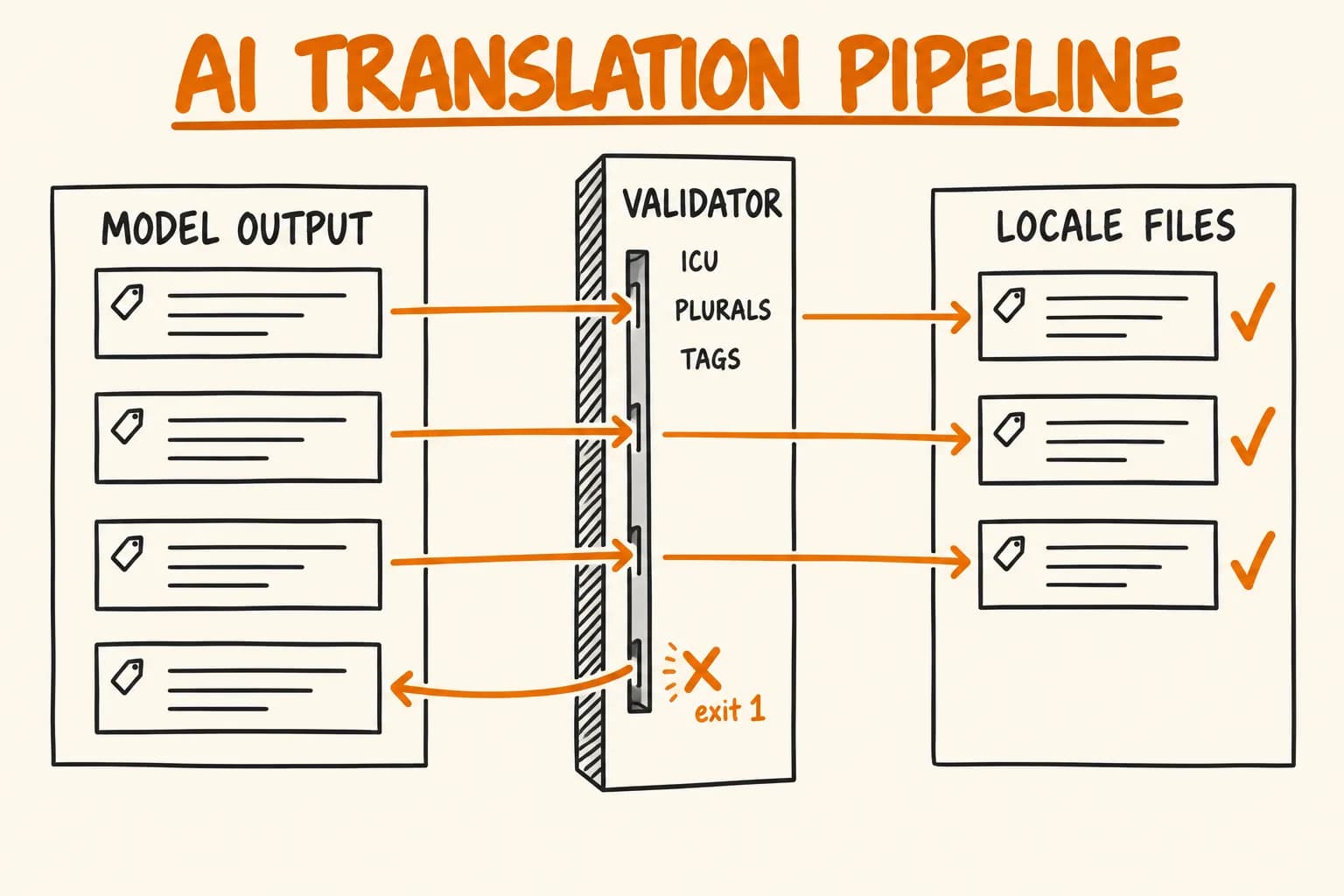
An AI translation pipeline around model calls: a missing-key diff, ICU and plural validation before every write, and a glossary checked at commit time.
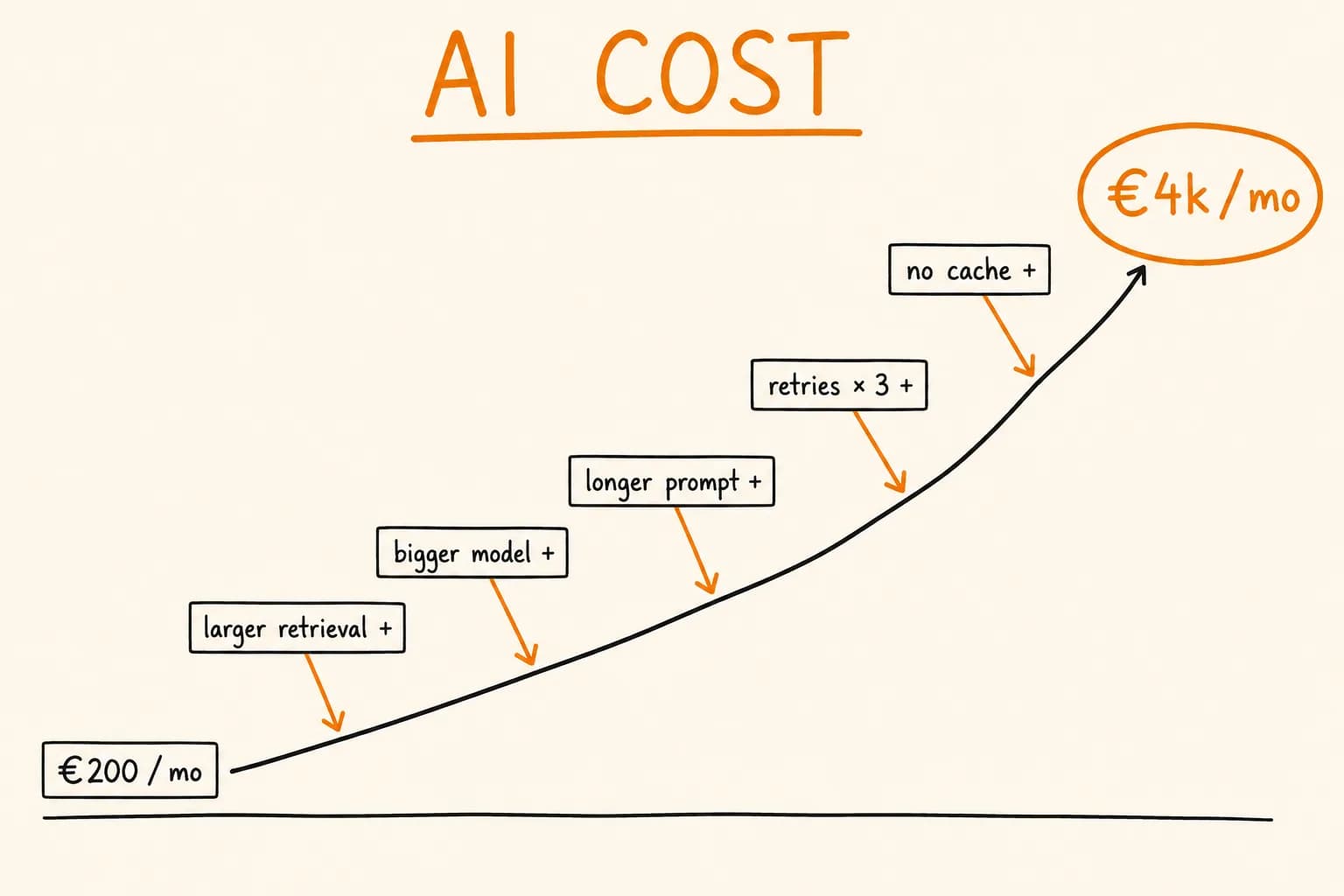
OpenAI API cost optimization: where the money goes in production, prompt caching, model routing, budget controls, and observability that shows overspend.
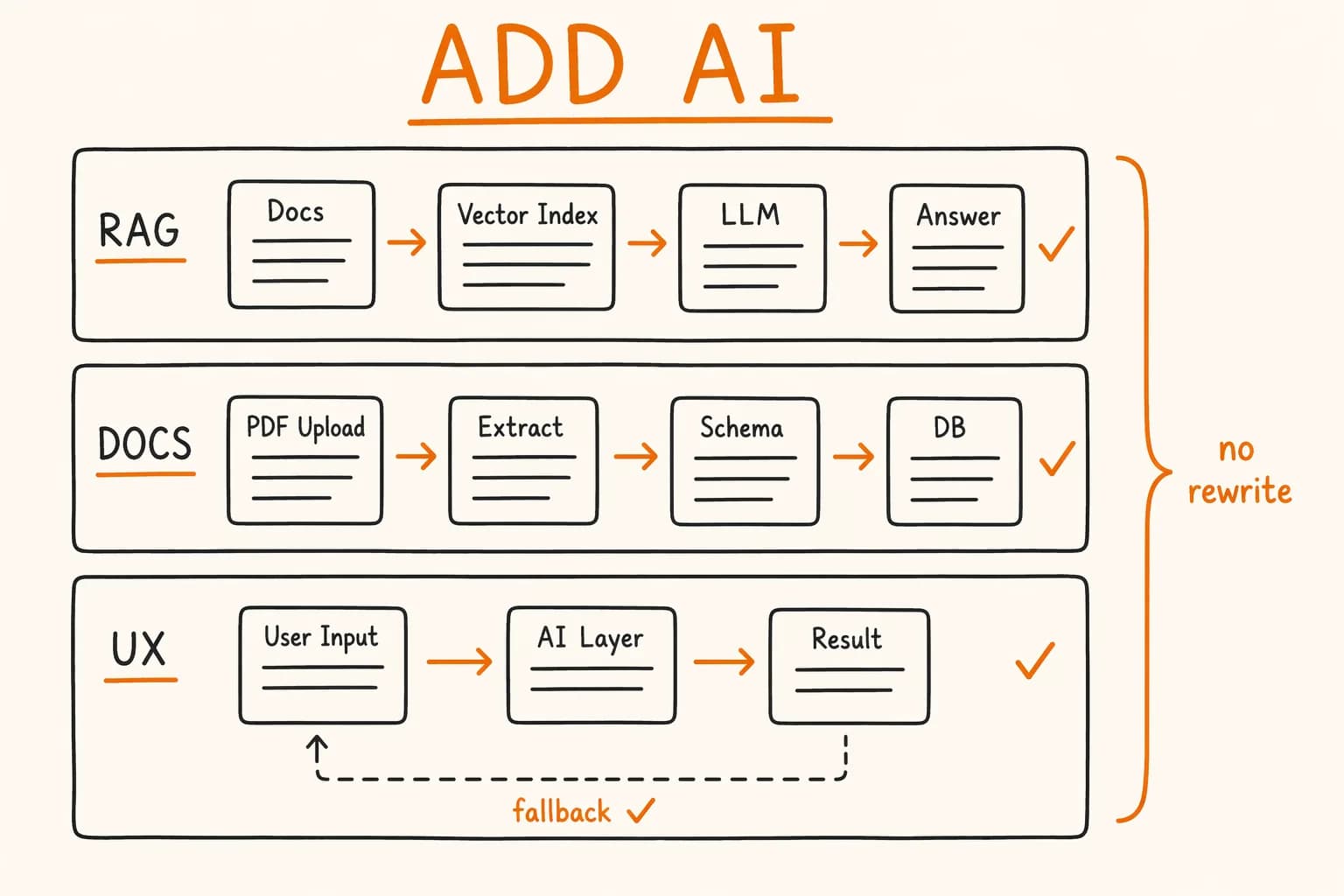
Add AI to an existing product without a rebuild. Three integration patterns, how to pick the right one, and what production-ready AI actually demands.
 Available
Ready to discuss your ai development project?
Tell me what you’re building or stuck with. I’ll reply within 24 hours.
