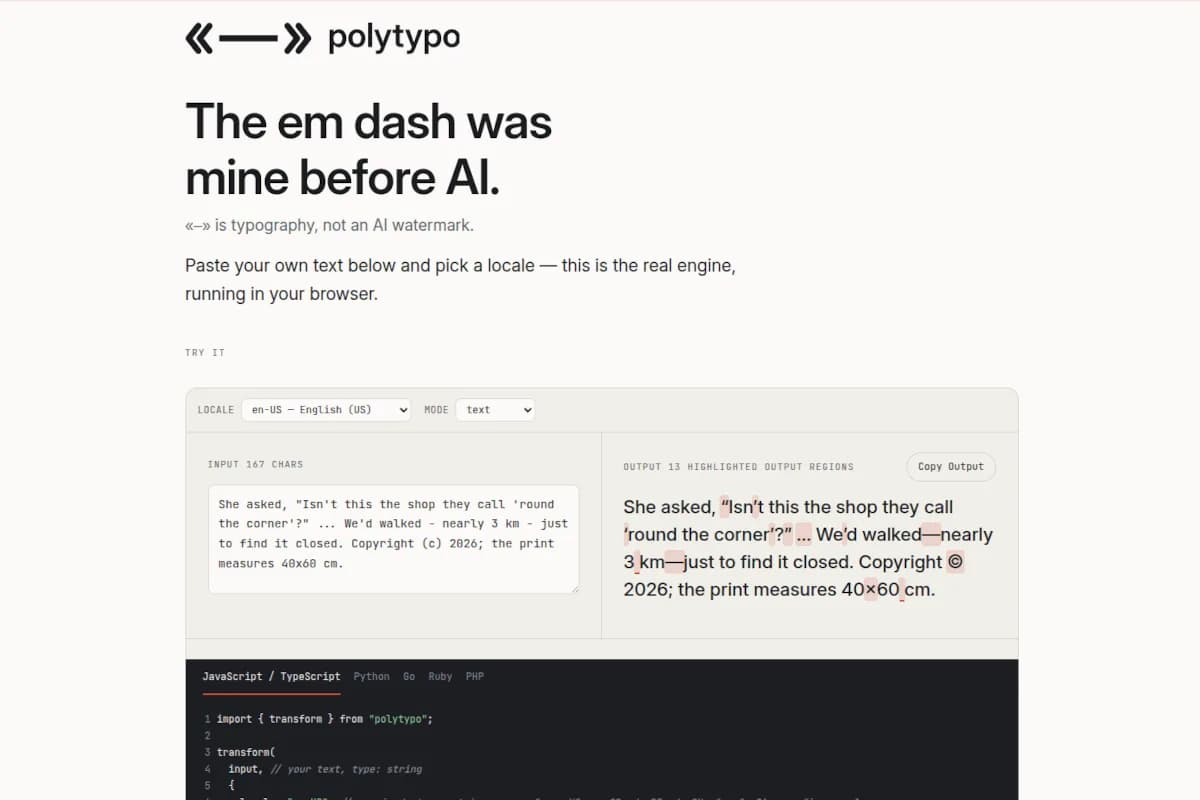
Open-source spec and engine for locale-correct typography: curly quotes, dashes, ellipses and no-break spaces in 20+ locales. Live in-browser playground.
Curated open list of 77 tools that AI agents use to act in the world, from email and browsers to payments and sandboxes. Setup cost stated for each.
Key Results
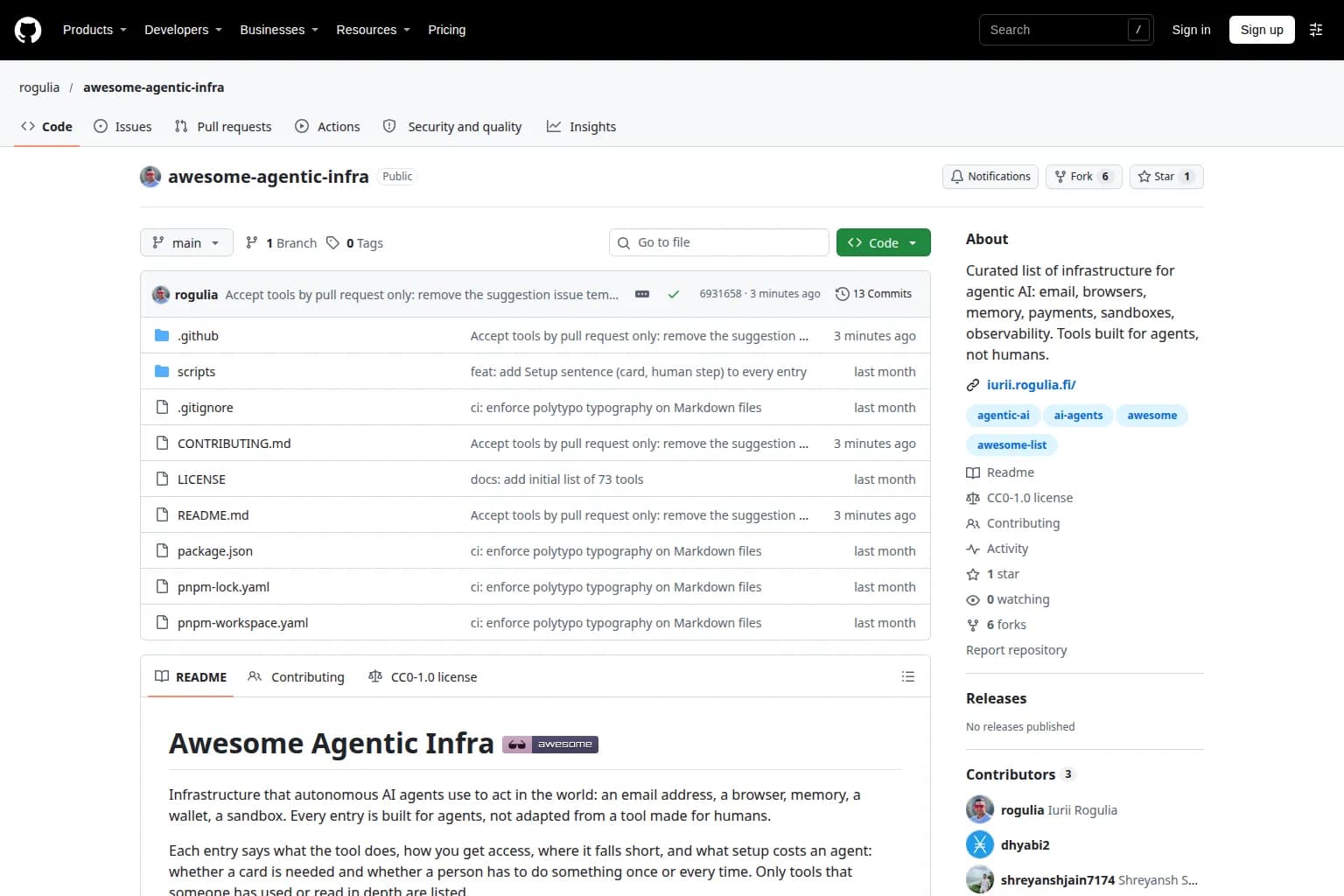

Most ‘AI agent tools’ lists are catalogues of products built for people and then given an API. For an autonomous agent the question is narrower: can it create and use the resource on its own? An agent that needs an email address, a browser session or a wallet cannot solve a CAPTCHA, click through a confirmation email or type a card number.
A list has to answer that before anything else, and most don’t. They also mix tools with agents, orchestration frameworks and thin wrappers over an LLM API, so the infrastructure is hard to find among the products that sit on top of it.
I built a list that admits a tool only when it meets four rules. It has to be agent-native: resources are created through an API or SDK, with at most one human step at the start, and that step is named. It has to be alive, with activity in the last 12 months. It has to be accessible, with public documentation and a free tier, trial or open-source release. And it has to be infrastructure, not an agent or an orchestration framework.
Each entry follows one format: what the tool does, the pricing model, the main limitation, and a Setup: sentence. The setup sentence is the part that matters for agents. It says whether a card is needed and whether a person has to do something once or every time. Two tools with the same feature list can differ completely there, and that is usually what decides whether an agent can use one.
Only tools that someone has used or read in depth are listed. When a suggestion arrives, I check it against the rules before it goes in; where a claim can be tested, I test it. For one web-extraction server that meant calling the keyless endpoint and confirming it returned a page for free before the ‘free tier’ wording went into the entry.
Curation by hand does not hold up as a list grows, so the repository enforces what can be enforced. CI runs four jobs on every pull request: awesome-lint for the list conventions, a check of the entry format, a link check, and a typography check with polytypo so punctuation stays consistent across contributors.
Contributions come by pull request only, one tool per PR, in alphabetical order inside its section. Contributors get a specific comment on what to change and the PR merges when the checks pass. A submission that fails the rules is closed with the reason, and the author can resubmit.
The Setup line is only as good as the check behind it, and it goes stale when a vendor changes its signup flow. CI verifies the format and the links, not whether a vendor’s claims are still true.
 Available
Need something similar?
I build custom solutions – from APIs to full products. Let’s talk about your project.
Open-source spec and engine for locale-correct typography: curly quotes, dashes, ellipses and no-break spaces in 20+ locales. Live in-browser playground.
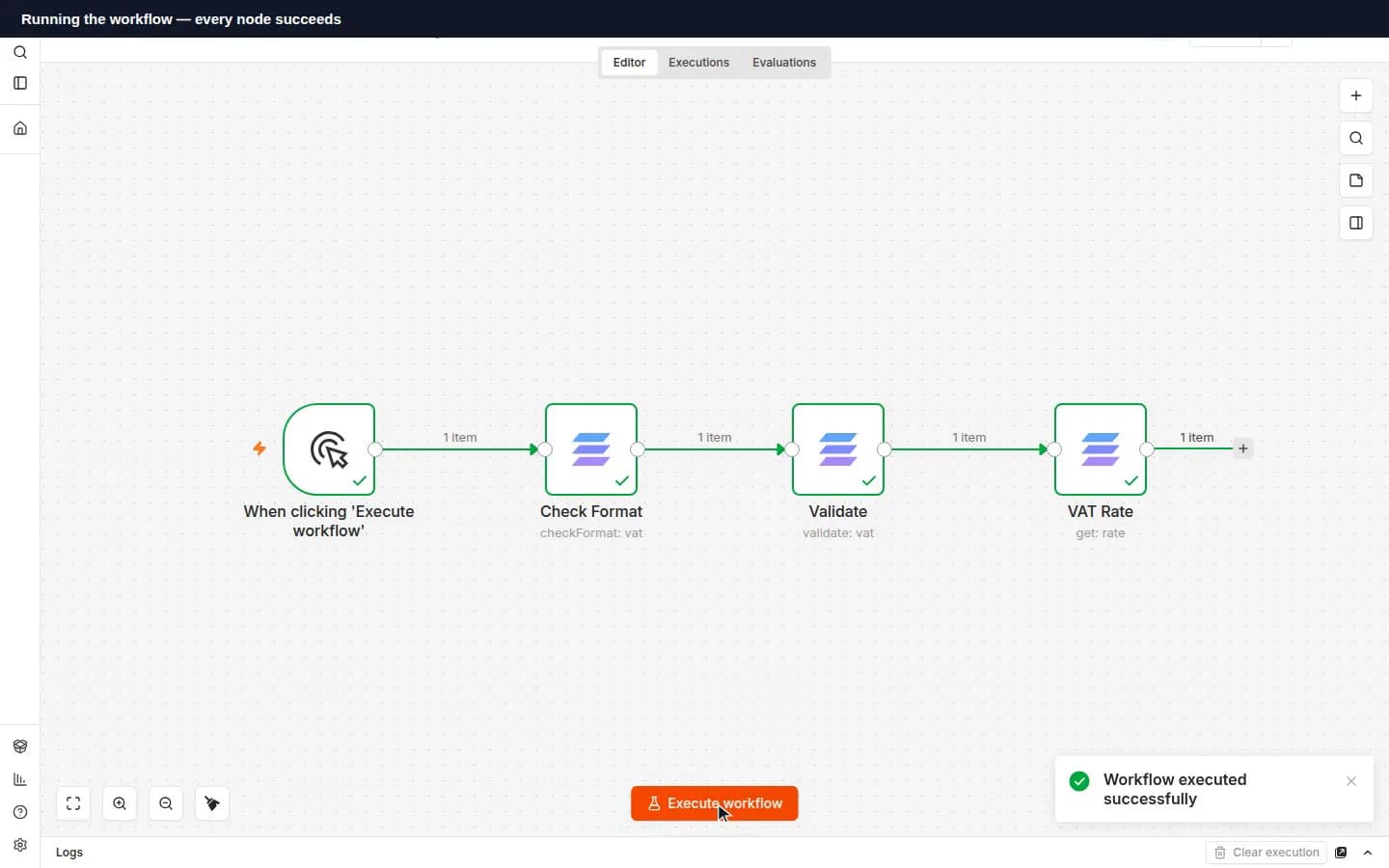
Verified n8n node for VIES VAT validation and EU rate lookups in a workflow, so onboarding or invoicing acts on a real VAT number, not a well-formed one.
Stack
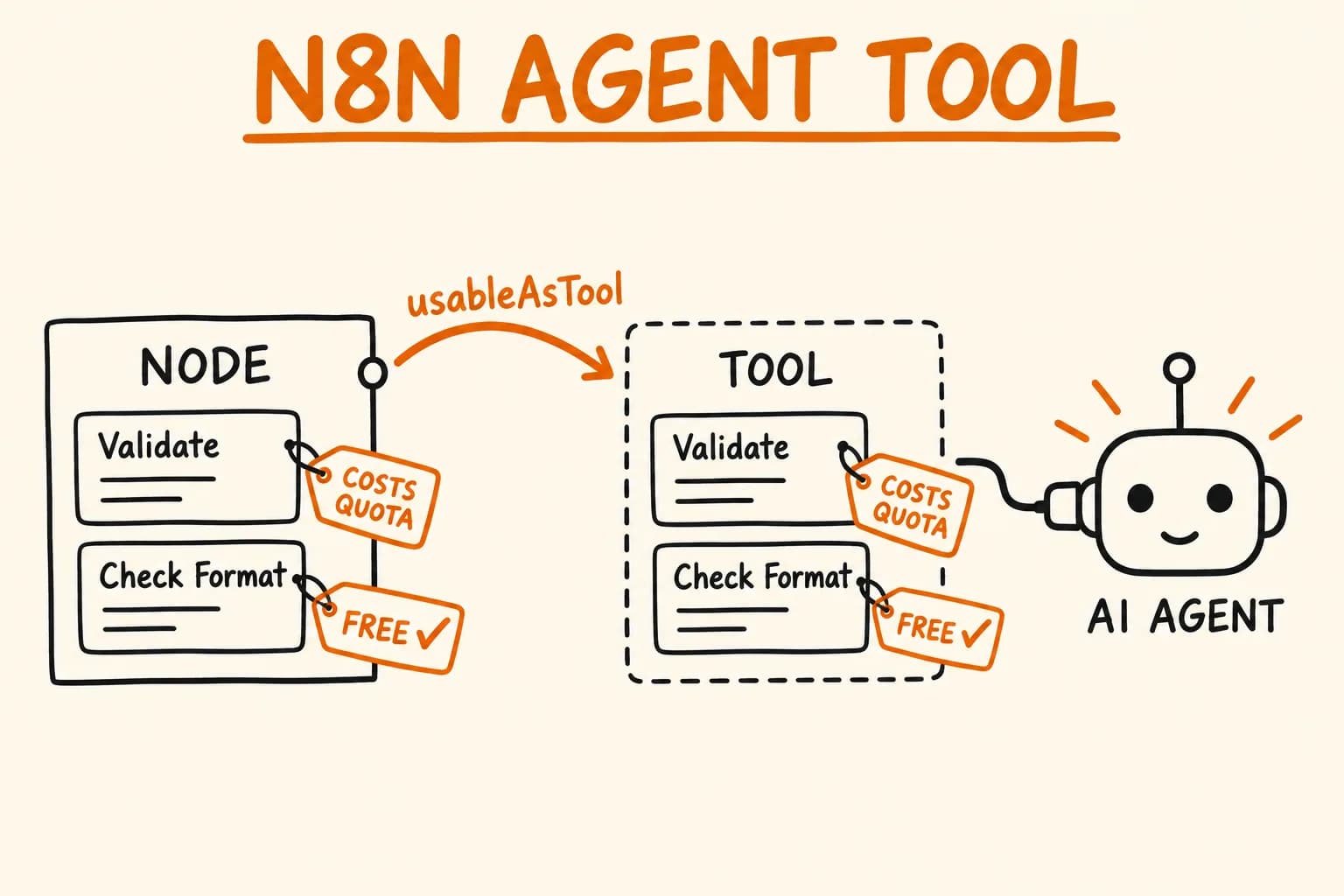
n8n custom node development: how usableAsTool builds an AI agent Tool variant, why your descriptions are its contract, and what verification checks.
Stack
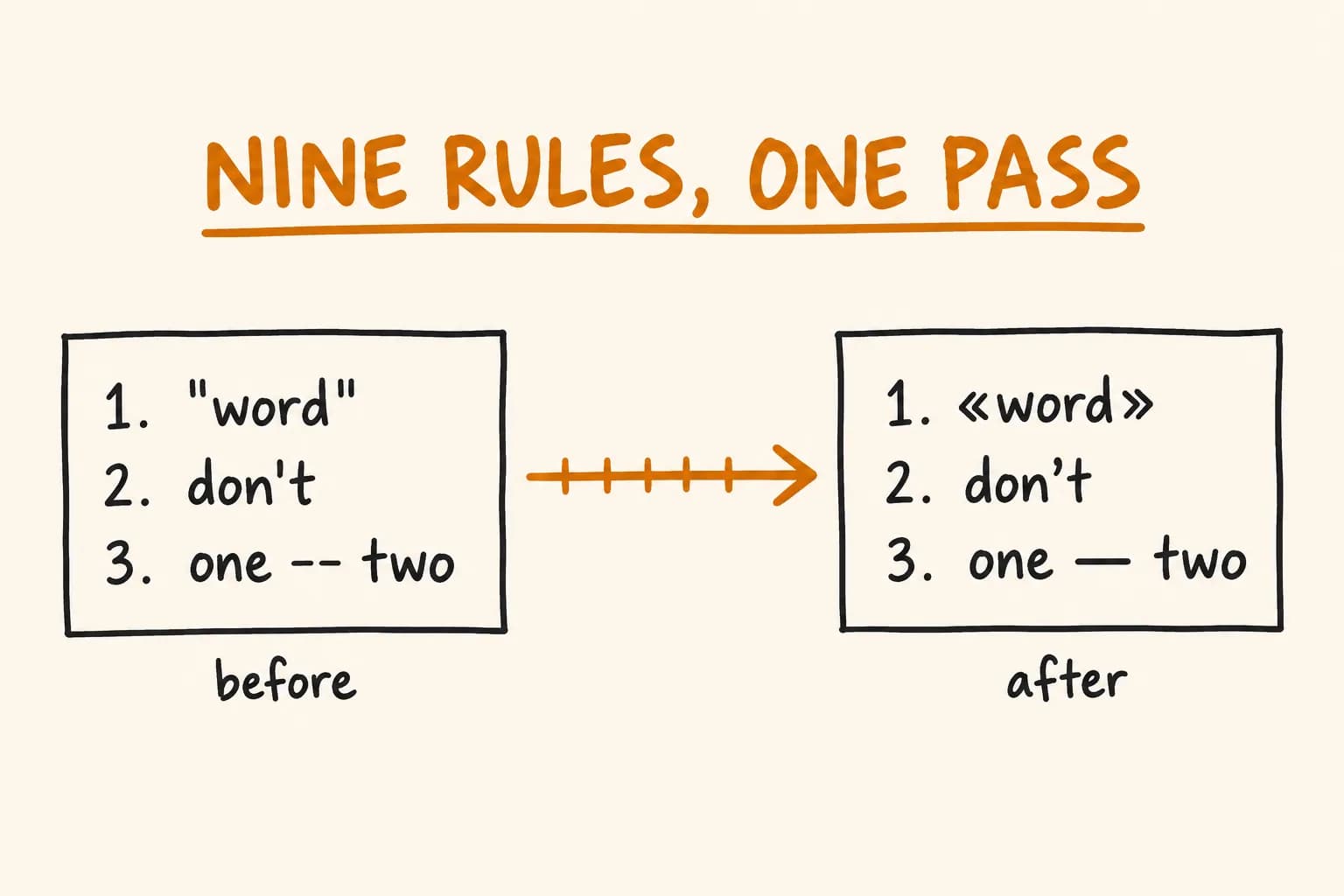
polytypo’s typography engine is a nine-rule pipeline that locates and rewrites text without ever building or reprinting an AST.
Stack