
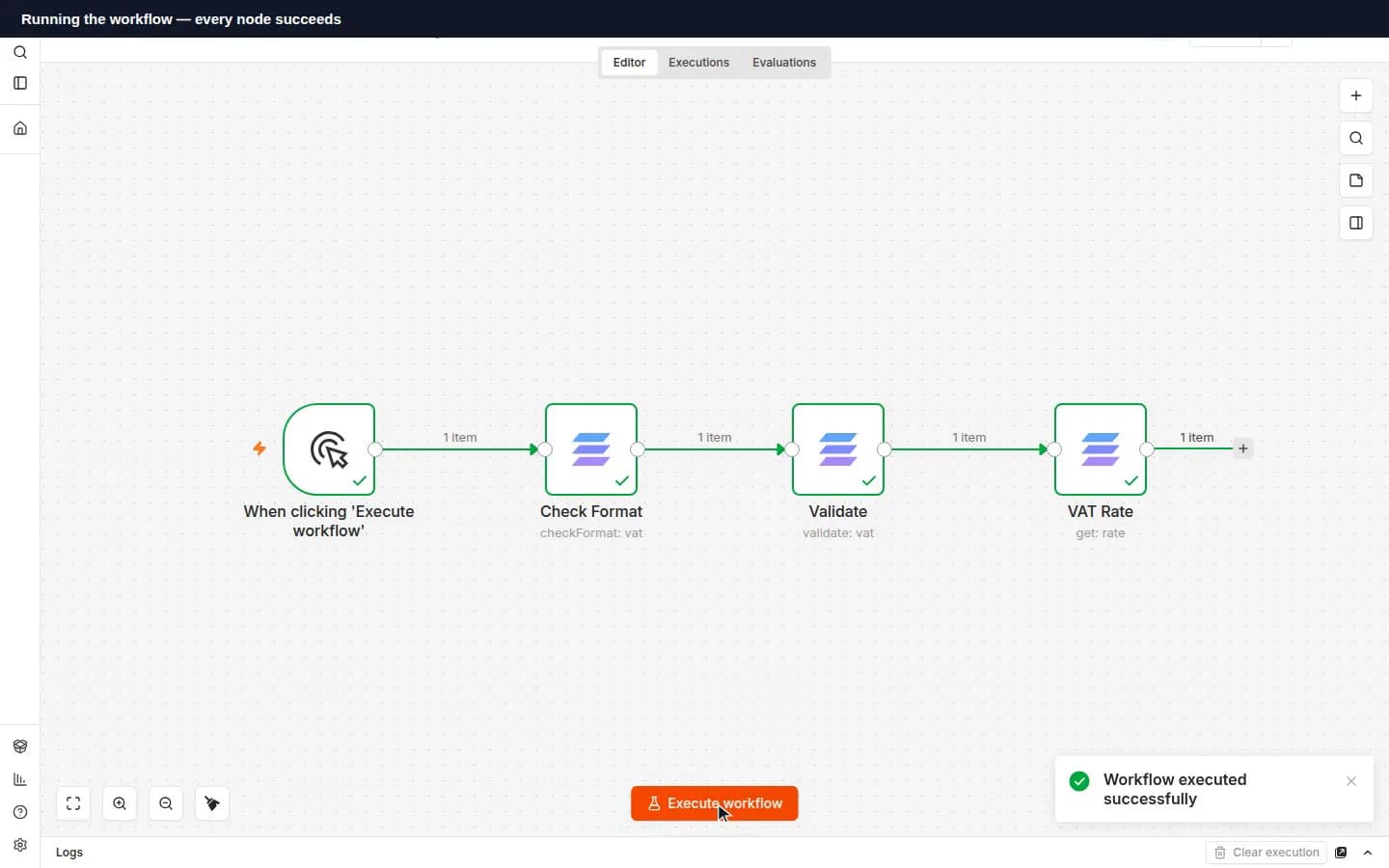
Verified n8n node for VIES VAT validation and EU rate lookups in a workflow, so onboarding or invoicing acts on a real VAT number, not a well-formed one.
n8n workflows for the repetitive work between your tools, and custom nodes when an API has no ready-made one.
Based in Finland (UTC+2) · VAT-registered FI29845875 · Respond within 24 hours
Recent client work
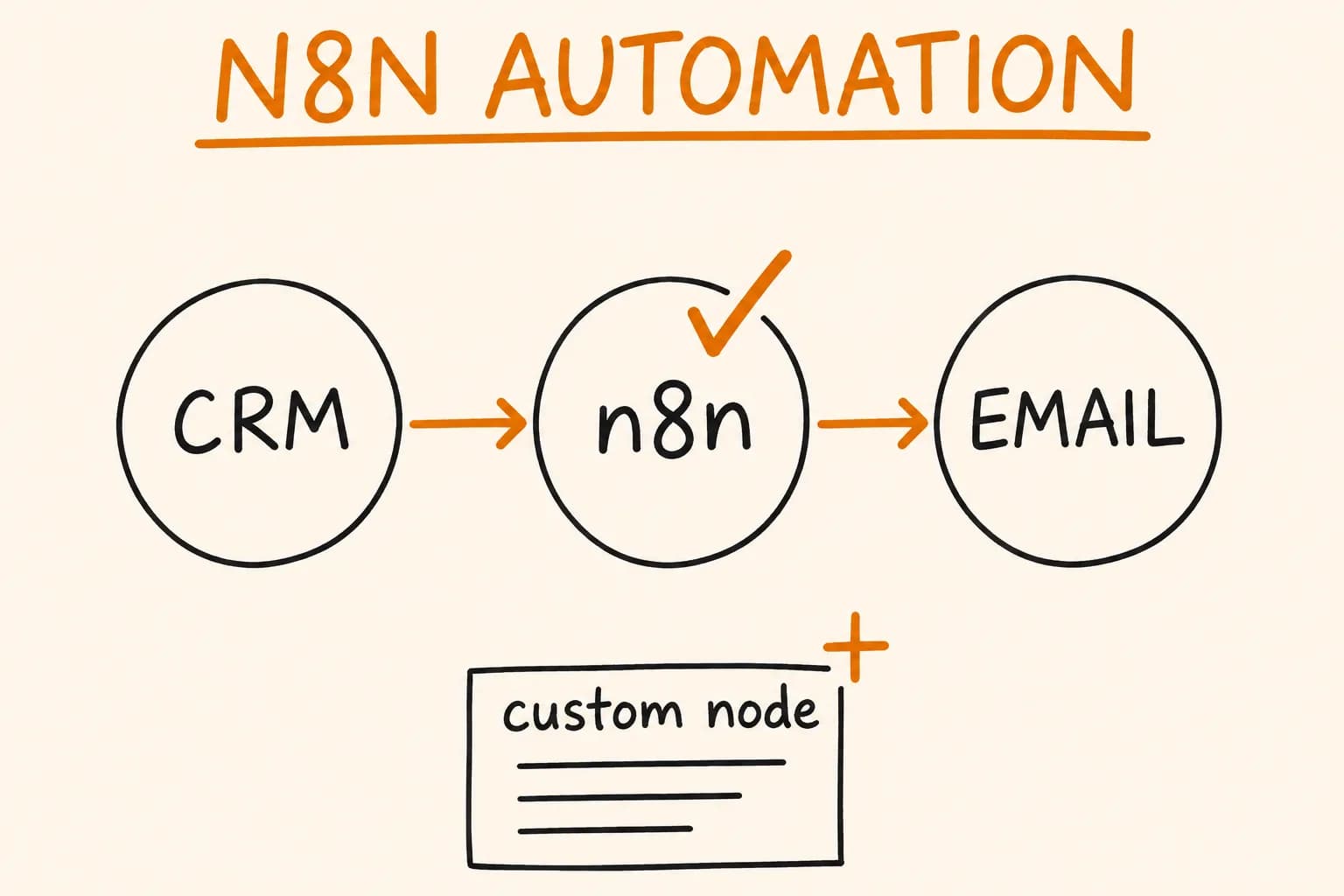
n8n automation suits a process that crosses several tools without needing a custom application: onboarding, invoicing steps, data sync, notifications. I am an n8n developer and consultant, and I build these workflows so that they fail visibly, handle one bad record without stopping the batch, and can be read by the next person who opens them.
I also write the parts n8n doesn’t ship. I published n8n-nodes-vatnode, a community node for EU VAT validation that n8n verified and lists on n8n Cloud. It has two resources and four operations, a credential test that spends no quota, per-item error handling that honours continue-on-fail, and it can be called as a tool by an n8n AI agent. That is the same skill you need when your own API or an obscure vendor needs a proper node instead of a pile of HTTP Request steps.
n8n isn’t always the answer. When a flow needs transactions, heavy logic or strict testing, I say so and build it in code instead. You get a recommendation on which side of that line your process sits, not a default.
Every step, every exception. The exceptions decide whether n8n is enough or whether the flow needs code.
What runs in n8n, what stays manual, and what belongs in a proper service. In writing, before the build.
See Automation & WorkflowsRetries where they are safe, alerts where a person has to look, and one bad item that doesn’t stop the rest.
The workflow runs next to the manual process until the results match. Then you cut over.
Verified n8n node for VIES VAT validation and EU rate lookups in a workflow, so onboarding or invoicing acts on a real VAT number, not a well-formed one.
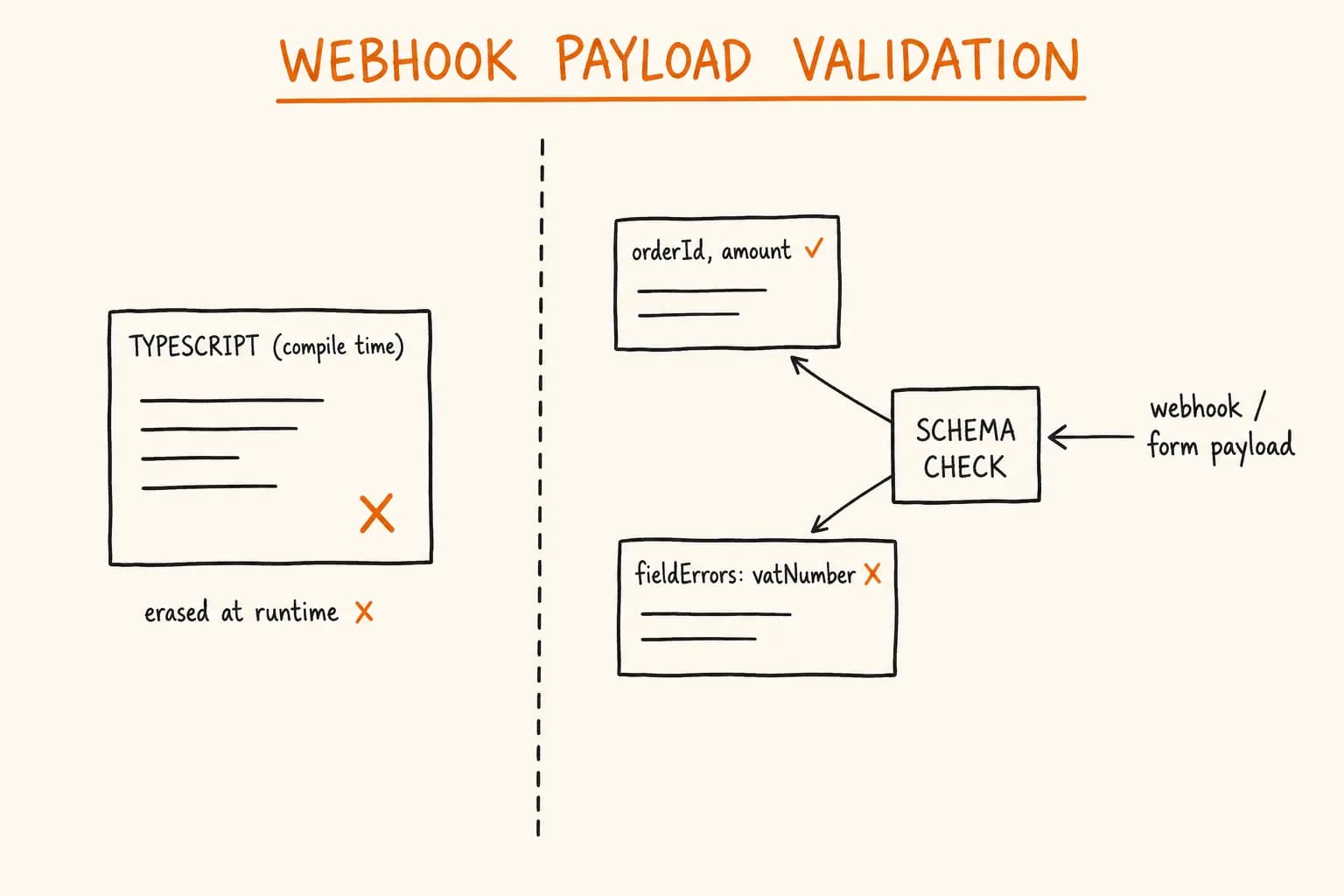
Why TypeScript types disappear at runtime, and how to use Zod to validate webhook payloads and form submissions at the boundary.
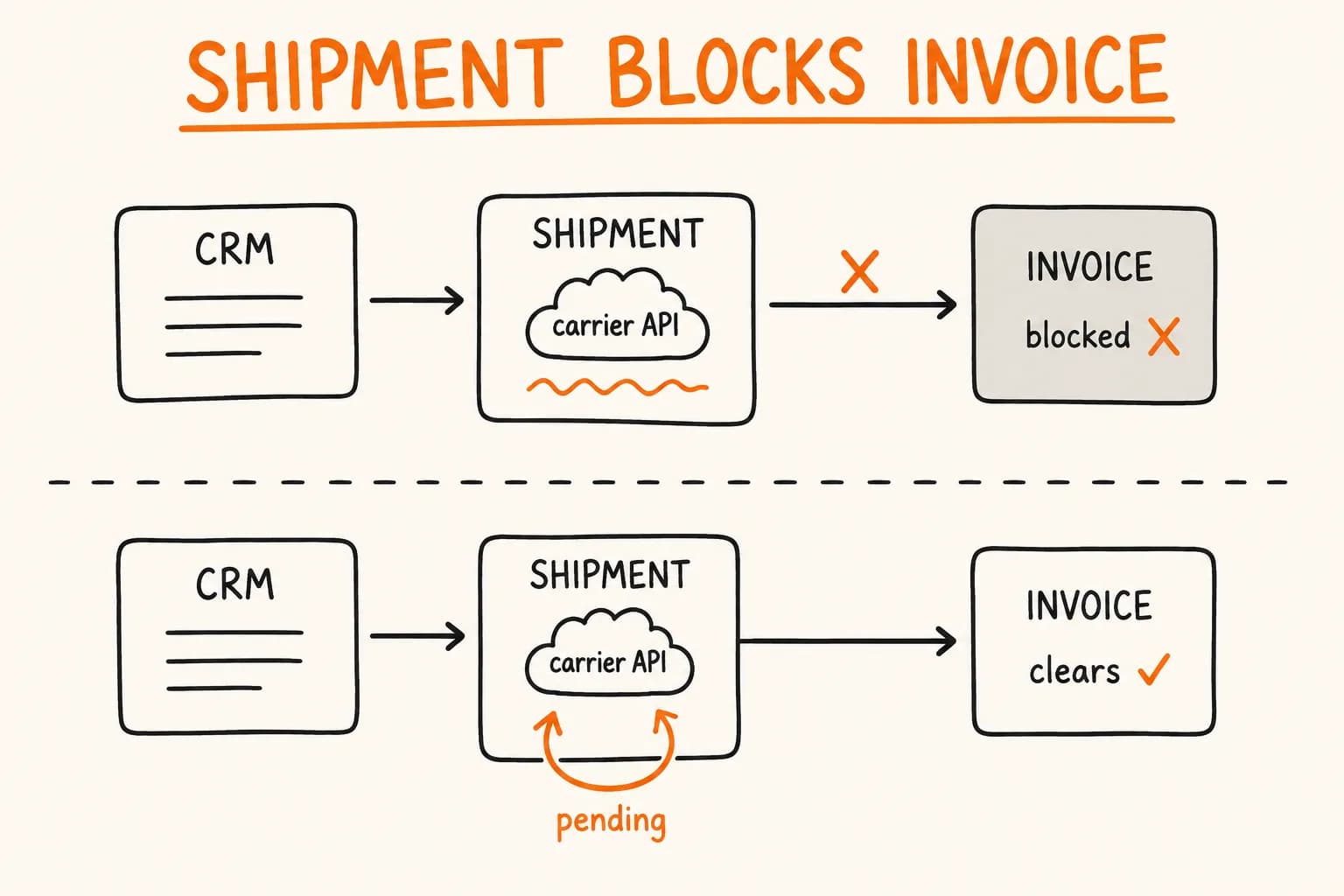
How to call a logistics provider’s API from an order-processing worker, and why some booking APIs answer immediately and others don’t.
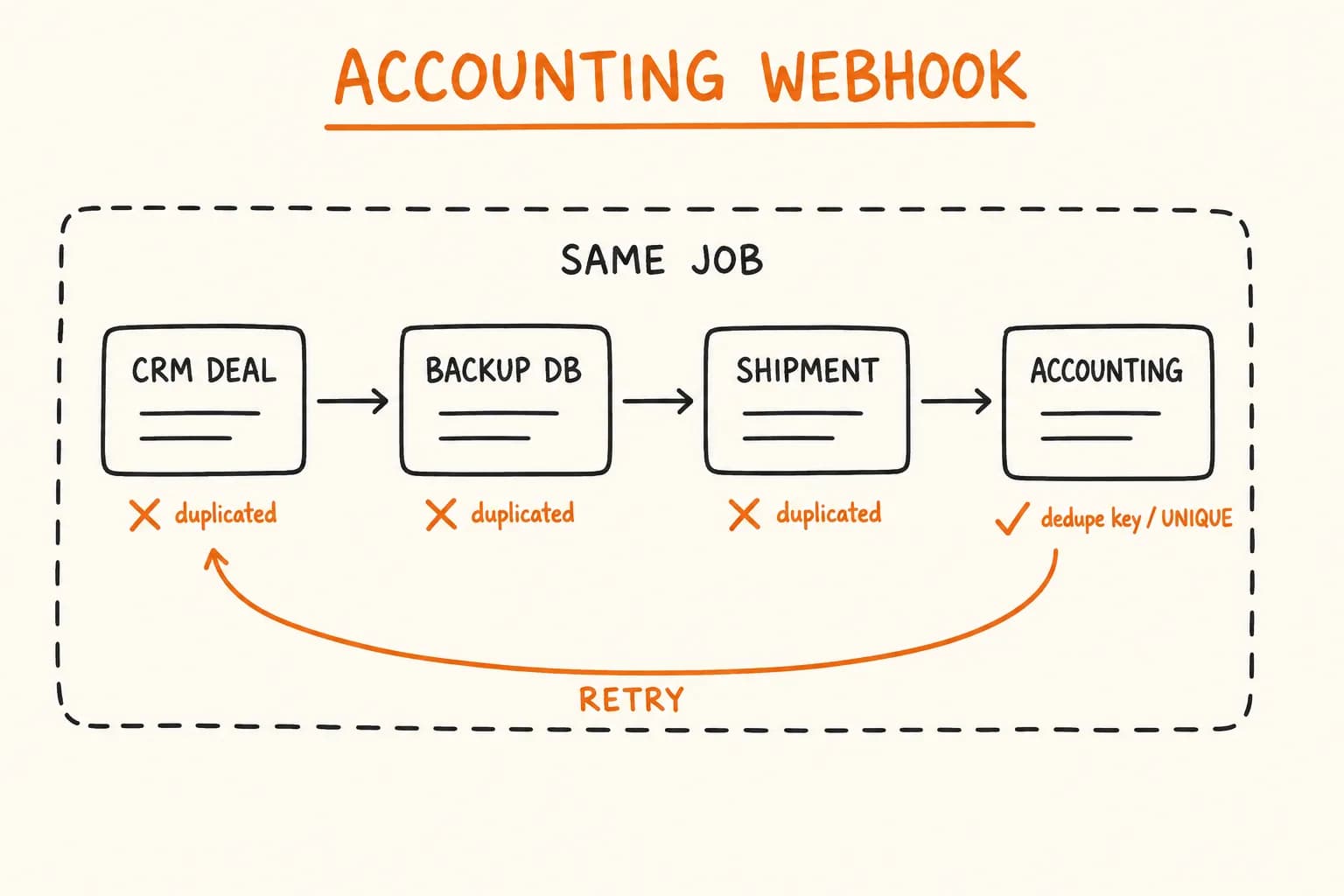
How to wire an external accounting or bookkeeping API into a payment flow, and why the call belongs in the queued worker, not the webhook handler.
 Available
Ready to discuss your n8n project?
Tell me what you’re building or stuck with. I’ll reply within 24 hours.